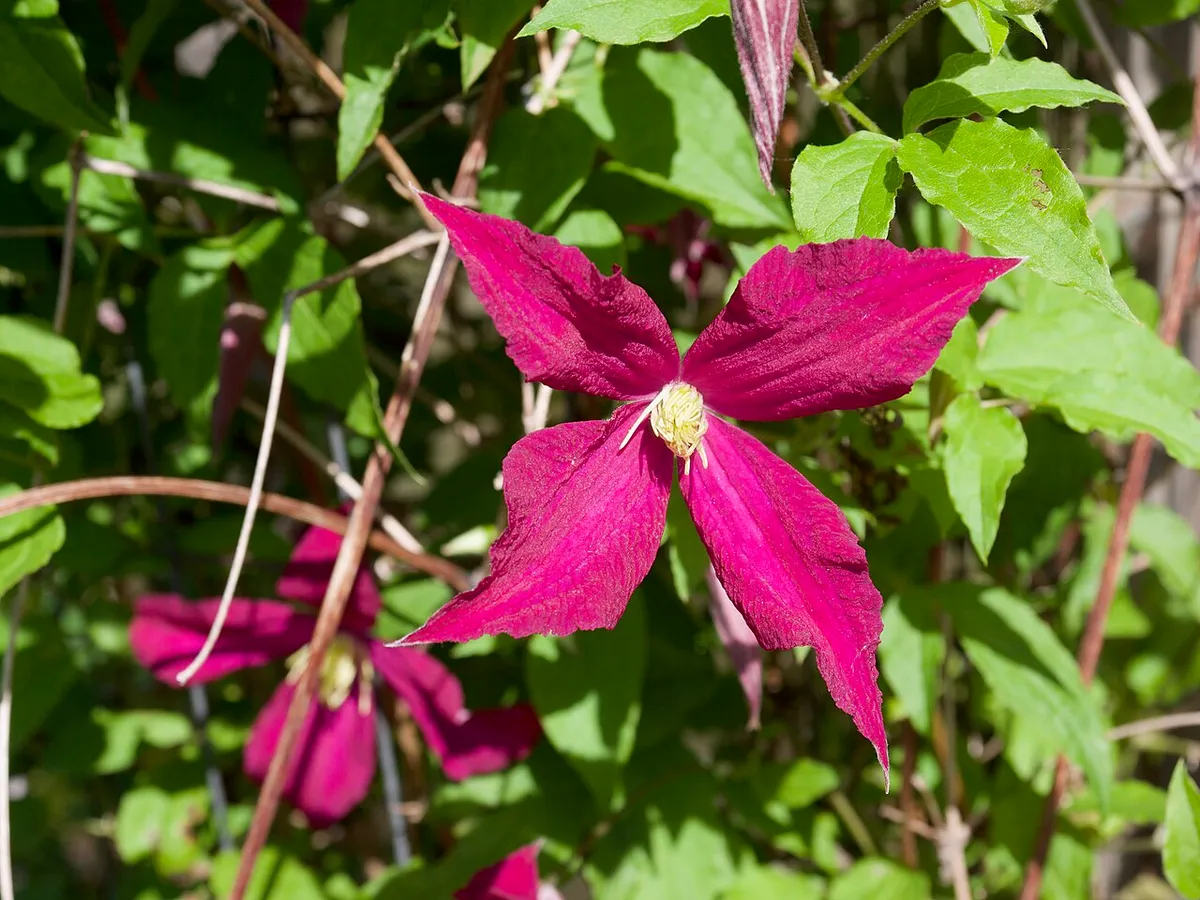
Clematis confusion starts the moment you bring one home. You’ve got a beautiful vine covered in flowers, and then someone tells you to prune it. Cut it back hard? Light prune? Wait until next year? The contradictory advice exists because clematis isn’t one plant type, it’s three, and they each want different things.
The entire confusion around clematis pruning reduces to one question: which pruning group is yours?
Understanding the Three Groups
Clematis divides cleanly into three groups based on when the flowers appear. Where those flowers come from, old wood from last year or new growth from this year, determines when and how hard you prune.
Group 1: Early-Flowering Clematis
Group 1 clematis blooms on old wood. These are your early bloomers in Western Washington, flowering February through May. The flower buds form in fall and sit dormant all winter on the woody stems from the previous year. When spring warmth arrives, those buds break and flower.
Common Group 1 varieties include Clematis montana, C. armandii, C. alpina, and C. macropetala.
Because the flowers are already determined before winter arrives, hard pruning in February is a disaster. You’ll cut off next spring’s entire flower show. Instead, prune Group 1 immediately after flowering ends, typically by late May in the Puget Sound. At that point, you can thin out tangled stems and remove any dead wood. Keep it light. The goal is tidying, not hard pruning.
If you inherit an overgrown Group 1 clematis, you have two options: live with one year without flowers while you renew it (prune hard in late spring right after flowering), or prune it lightly for the next few years while it gradually opens up.
Group 2: Large-Flowered Hybrids
Group 2 clematis blooms on both old and new wood, giving you two flower flushes. The spring flush comes from last year’s stems, then that stem grows new shoots that flower in summer.
This group includes popular varieties like ‘Nelly Moser’, ‘Henryi’, and ‘The President’.
In Western Washington, Group 2 gets a light pruning in February. Remove dead stems entirely and cut living stems back to the first strong, outward-facing bud. This is not hard pruning. You’re aiming to remove maybe one-third of the top growth, stimulating new shoots while keeping that spring flush on old wood intact.
Hard pruning a Group 2 in February removes the spring bloom. You’ll get a summer flush on the new growth, but you’ll miss the delicate first wave of flowers that makes this group special. If you’re tempted to prune hard because your clematis is enormous, wait until right after the spring flush finishes (mid-June) to do renovative work.
Group 3: Late-Flowering Clematis
Group 3 clematis blooms only on new wood. All the flowers come from stems that grew this year, so you can prune as hard as you want in early spring without losing a single flower.
This group includes C. viticella, C. texensis, C. ‘Jackmanii’, and ‘Comtesse de Bouchaud’. In Western Washington, these flower July through September.
In February, cut everything back to 12 to 18 inches from the ground. You can make a single cut across the whole plant. Yes, it looks drastic. By June, you’ll have a full, flowering vine. This is the forgiving group, the one beginners should choose. Same hard pruning every single year, and you can’t go wrong.
The Most Common Mistake
The number one clematis problem in Western Washington gardens is hard-pruning Groups 1 and 2 in February, then spending spring wondering why there are no flowers. The gardener assumes the plant is diseased or dead, when really they just cut off next spring’s flower buds.
If you’ve made this mistake, the plant will recover next year. Group 1 and 2 vines will regrow from the base and often flower later in summer on new wood, giving you a salvaged bloom season.
Clematis Wilt
The one true disease problem you might face is clematis wilt, caused by the fungus Callospora clematidea. A healthy stem suddenly collapses, blackens, and dies. It’s alarming but rarely fatal.
When you see a wilted stem, cut it below the blackened section, removing the diseased portion entirely. The plant will regrow from the base. If wilt takes multiple stems, prune the entire affected area back to healthy wood.
Wilt typically strikes in late spring or early summer when conditions are warm and humid. There’s no chemical cure, but the plant usually recovers on its own. Pruning out the dead section is your main intervention. Some gardeners in very wilt-prone microclimates choose Group 3 varieties, which you’ll be pruning hard annually anyway.
Timing in the Western Washington Calendar
Group 1 clematis flowers March through May in the Puget Sound region. Prune immediately after flowering ends.
Group 2 clematis gets a light prune in February, before new growth starts. The spring flush flowers April through June, then a second flush appears on new growth in August and September.
Group 3 clematis gets hard-pruned in February and flowers July through September.
Seasonal Action Summary
| Month | Group 1 | Group 2 | Group 3 |
|---|---|---|---|
| February | Monitor for dead wood | Light prune: remove dead stems, cut to strong buds | Hard prune to 12-18 inches |
| March-May | Flowering; prune immediately after | Spring flush flowers; monitor | Emerging growth |
| June | Post-pruning growth | Summer growth begins | Full leafy vine; monitor for wilt |
| July-September | Mature vine; monitor for pests | Second flush flowers | Main flowering period |
| October-January | Dormant; avoid pruning | Dormant; avoid hard pruning | Dormant; remove debris |
Sources
Clematis International. Clematis Pruning Groups. https://www.clematisinternational.org/
Koletski, Judy. 2006. The Clematis, An American Society of Gardeners Publication. Timber Press.
Oregon State University Extension. Clematis Pruning. https://extension.oregonstate.edu/