The Advice You Have Heard
Someone told you not to use wood chips in your garden because they rob the soil of nitrogen. Maybe it was a neighbor, a garden center employee, or a Master Gardener column from the 1990s. The claim sounds reasonable: wood is high in carbon, soil microbes need nitrogen to break down carbon, therefore wood chips on your soil steal nitrogen from your plants.
It is one of the most persistent myths in horticulture. And for surface-applied mulch, it is wrong.
What Actually Happens at the Surface
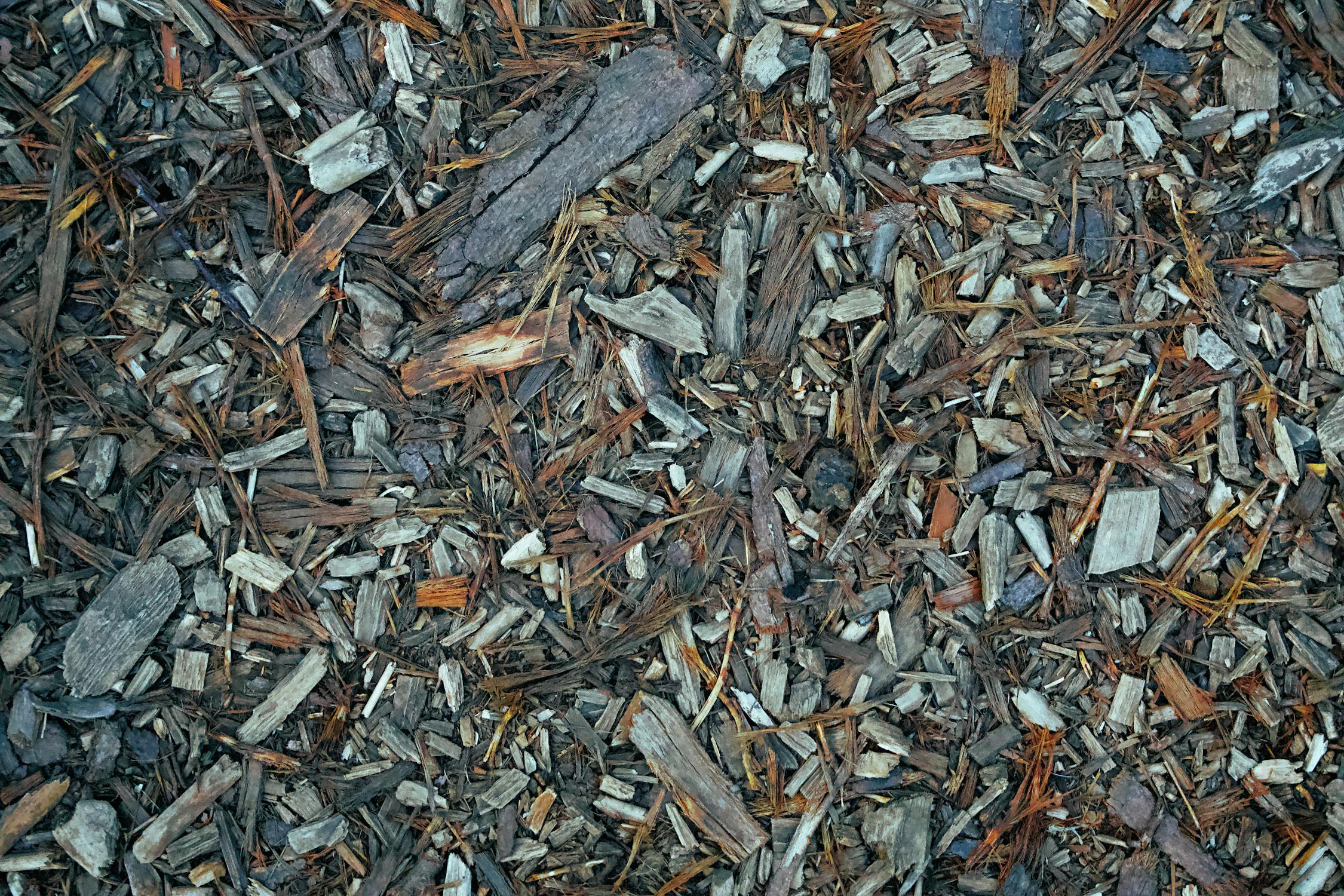
When wood chips sit on top of the soil as mulch, decomposer fungi and bacteria colonize the bottom of the chip layer where it contacts the ground. Those microbes do consume nitrogen as they work. But the zone of reduced nitrogen is razor-thin: roughly the top half-inch of soil at the mulch-soil interface. Below that boundary, nitrogen levels are unaffected.
Your plant roots are not feeding in that top half-inch. Feeder roots work in the upper 6 to 12 inches of the soil profile, well below the interface where microbial activity is drawing nitrogen. The plants never notice.
A two-year study tested wood chip mulch at three depths (3, 6, and 10 inches) on two tree species and found soil nitrate levels across all mulch depths ranged from 9.8 to 10.3 ppm, with no significant difference between mulched and unmulched plots. The researchers concluded there was “no immediate nutrient binding danger from surface wood mulches.”
That thin nitrogen-depleted layer at the surface is not a defect. It is a feature. Weed seeds germinating in that zone encounter nitrogen-poor conditions and fail to establish. The mulch suppresses weeds in part because of the very mechanism people worry about.
When the Concern Is Real
There is one scenario where wood chips genuinely do cause nitrogen problems: when they are tilled or dug into the root zone.
Mix wood chips into your soil and you have distributed high-carbon material throughout the space where roots feed. Now the microbial nitrogen demand is not confined to a thin surface layer; it is competing directly with plant roots across the entire amended zone. Plants in that situation can show classic nitrogen deficiency: pale leaves, stunted growth, poor vigor.
This is almost certainly where the myth started. Someone observed the real effect of incorporated wood and applied it to surface mulch, where the mechanism does not work the same way. The distinction is critical: chips on top of the soil feed the system. Chips mixed into the soil starve it, at least temporarily.
The Longer Story Is Even Better
Over time, surface-applied wood chips do not just avoid stealing nitrogen. They increase it. As the chip layer slowly decomposes (a process that takes three to five years for arborist chips), it builds organic matter in the topsoil. That organic matter holds nutrients, supports microbial communities that cycle nitrogen, and improves soil structure.
A five-year study in compacted urban soil found that trees mulched with wood chips produced 170% more total biomass than unmulched controls. The wood chip treatment improved soil moisture, organic matter, and microbial respiration, even though it delivered less direct nitrogen than compost. The physical and biological soil improvements mattered more than the nitrogen arithmetic.
Here in the Puget Sound lowlands, this matters more than most places. Our heavy winter rains leach soluble nitrogen out of bare soil fast. A layer of decomposing wood chips acts as a slow-release nutrient bank, holding nitrogen in organic form that resists leaching and feeds plants across the growing season. Bare soil loses what wood-chip-covered soil keeps.
What This Means for Your Garden
If you are using arborist wood chips as surface mulch (2 to 4 inches deep, pulled back from plant stems, not tilled in), you do not have a nitrogen problem. You have a nitrogen solution working on a three-to-five-year timeline.
If you want to incorporate wood products into your soil as an amendment, that is a different practice with different rules. Compost the chips first, or add supplemental nitrogen to offset the microbial demand during the first year of decomposition.
One sourcing note for this region: when you request a chip drop from a local arborist or through ChipDrop, ask them to hold the English holly and cherry laurel. Holly chips are full of spines that make spreading mulch miserable on your hands and knees, and whole berries that survive the chipper can sprout new holly seedlings across your beds. English holly is already a King County noxious weed; spreading it through your own mulch is the last thing you want. Cherry laurel releases hydrogen cyanide when freshly chipped, enough to burn your nose over a fresh pile and potentially damage plants it contacts. One report documented fresh shredded laurel killing grass within three days. The toxicity dissipates as the chips age, but there is no reason to take the risk when most loads in this area can be clean conifer and deciduous hardwood instead. Both species are among the most commonly removed in the Puget Sound area, so loads will be heavy with them if you do not ask.
For everything else, the advice in our mulching guide applies: arborist chips on the surface, 2 to 4 inches deep, pulled back from trunks. Free from local arborists, better than bark in every measurable way, and no threat to your soil nitrogen.
Sources
Greenly, K.M. & Rakow, D.A. 1995. “The Effect of Wood Mulch Type and Depth on Weed and Tree Growth and Certain Soil Parameters.” Arboriculture & Urban Forestry 21(5): 225-232.
Scharenbroch, B.C. & Watson, G.W. 2014. “Wood Chips and Compost Improve Soil Quality and Increase Growth of Acer rubrum and Betula nigra in Compacted Urban Soil.” Arboriculture & Urban Forestry 40(6): 319-331.
Chalker-Scott, L. & Downer, A.J. 2022. “Garden Myth-Busting for Extension Educators: The Science Behind the Use of Arborist Wood Chips as Landscape Mulches.” Journal of the NACAA 15(2).
Chalker-Scott, L. 2015. “Using Arborist Wood Chips as a Landscape Mulch.” WSU Extension Fact Sheet FS160E.
UC Agriculture and Natural Resources. 2019. “Mulches for Landscapes.” Publication 8672.