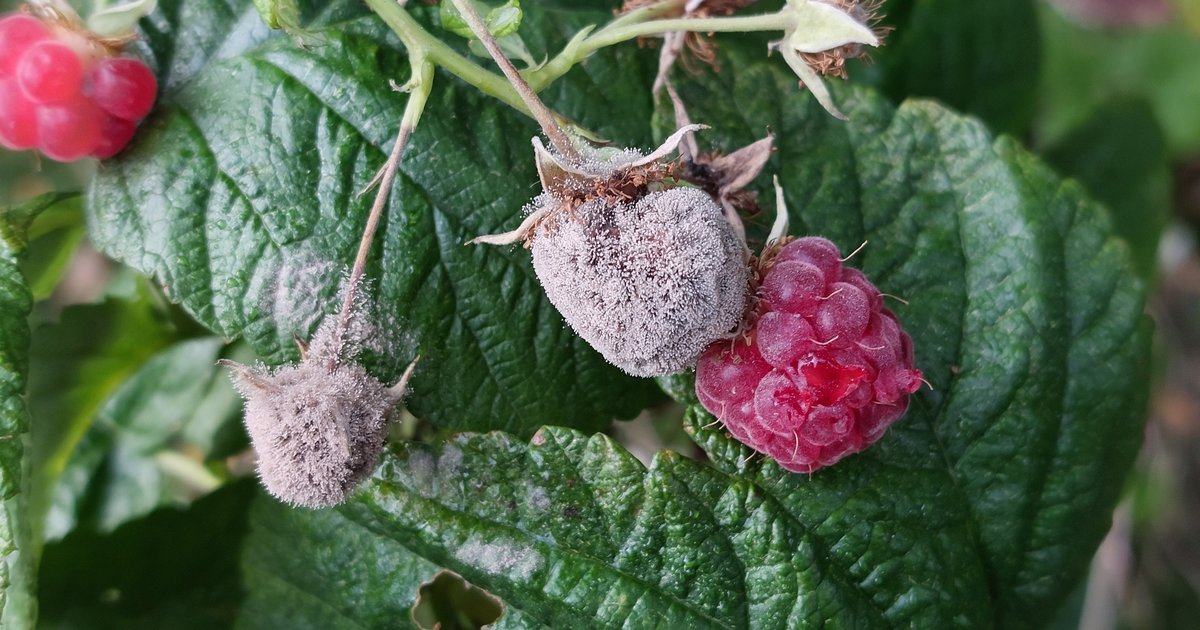
You find it on a Monday morning in May. The strawberry you were planning to pick tomorrow is covered in a gray, dusty fur. The peony buds you have been watching for weeks are brown and stuck shut, as if they were dipped in wet paper. Your blueberry blossoms have gone from white to water-soaked brown overnight, and when you touch them, a puff of grayish dust lifts into the air.
That dust is the disease. Each particle is a spore of Botrytis cinerea, and the gray fuzz is not mold growing on a dead plant; it is the fungus reproducing on tissue it killed. Gray mold is not a berry disease or a flower disease. It infects more than 200 plant species across every category in a home garden: fruit, ornamental, vegetable, herb. If you garden in the Puget Sound lowlands, you have met this fungus, whether or not you knew its name.
The question worth asking is not “how do I get rid of it” but “why does it keep showing up here?” The answer is your climate. March through June delivers exactly the conditions B. cinerea needs: cool temperatures, persistent moisture, and slow-drying foliage. National gardening guides treat botrytis-favorable weather as an occasional event to react to. Here, it is the baseline.
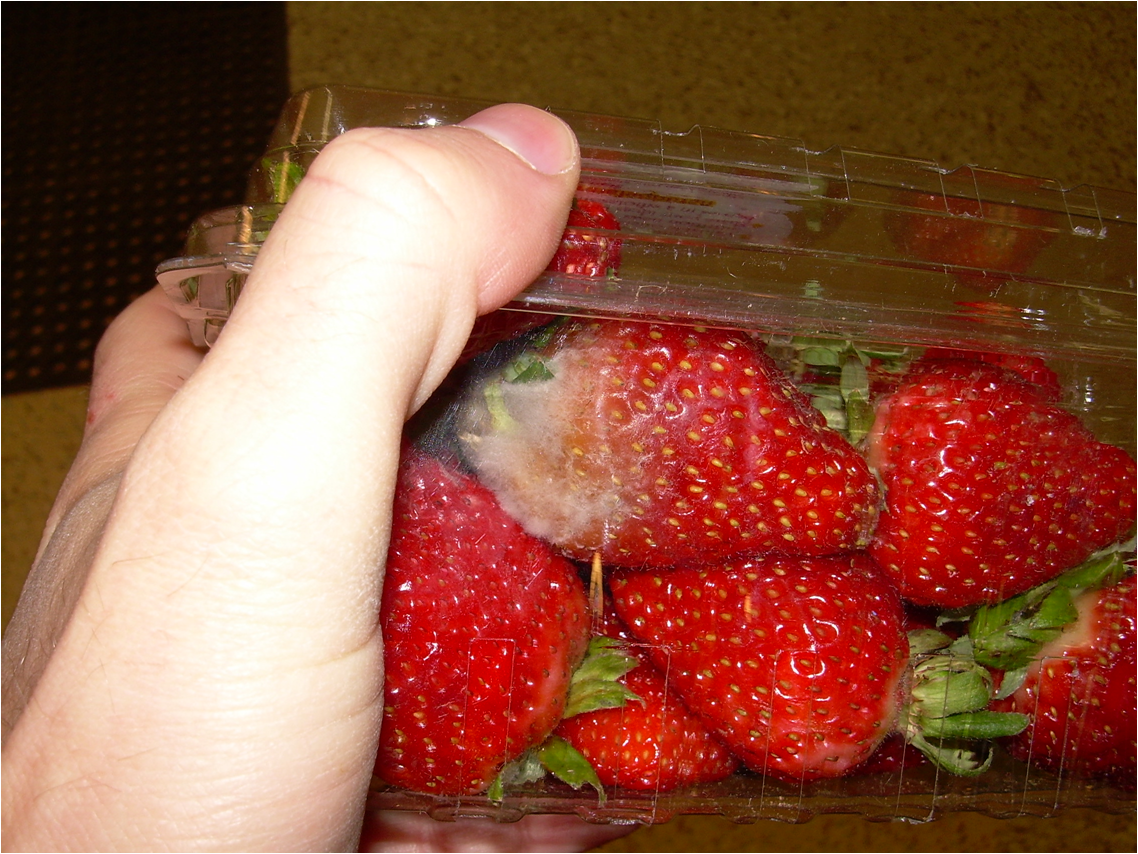 Gray mold sporulating on strawberry fruit, showing the diagnostic fuzzy gray conidial mass. Photo: Ninjatacoshell, Wikimedia Commons, CC BY-SA 3.0.
What You Are Looking At
Gray mold announces itself in stages. The first sign is a water-soaked spot on a petal, a stem, or a developing fruit. The tissue looks bruised, translucent at the edges, darker at the center. Within a day or two, depending on humidity, the gray sporulation appears: a dense, velvety-to-powdery coating that produces visible clouds of spores when disturbed. This is the diagnostic signature. No other common garden disease produces that specific gray, dusty mass on the surface of dying tissue.
On flowers, the infection typically starts at the petal tips or where petals overlap and trap moisture. Peony buds can be destroyed before they open, the entire bud turning brown and collapsing. Rose petals develop small tan spots (“petal blight”) that expand rapidly in wet weather, and spent blooms left on the plant become incubators for the next round of spores. Rhododendron flower clusters turn brown from the tips inward.
On fruit, the pattern depends on the crop. Strawberries develop soft, light brown spots that quickly colonize the entire berry, then sprout the telltale gray fuzz. Blueberries show a brown, water-soaked calyx end that spreads to consume the fruit. Raspberries rot from the inside out, often appearing normal on the outside until you pick them and the fruit collapses in your hand. Grapes develop bunch rot, where a single infected berry in a tight cluster spreads to its neighbors through contact.
On stems and leaves, you will see tan-to-brown lesions that girdle young shoots. Succulent growth at the tips of herbaceous plants is particularly vulnerable. In severe cases, entire shoot tips wilt and die back, bleaching to gray as the fungus sporulates on the dead tissue.
What it is not. Powdery mildew produces a white-to-gray coating, but it is powdery and dry, appears on living green tissue (usually leaf surfaces), and does not cause the water-soaked collapse that precedes gray mold sporulation. Downy mildew produces fuzzy growth on the underside of leaves, not on flowers or fruit. Brown rot on stone fruit creates firm, mummified fruit with concentric rings of tan sporulation, not the loose gray fuzz of botrytis.
If you are seeing it right now: remove every piece of infected tissue you can find. Cut stems back to healthy tissue. Pick off affected flowers and fruit, including the ones on the ground. Bag it and put it in the yard waste bin, not your compost. Gray mold kills tissue, not plants. Your peony will come back next year. Your rose bush is fine. Your blueberry will produce again on the flowers that were not infected. What you are dealing with is a cleanup and a prevention problem, not a plant replacement problem.
How Four Hours of Rain Becomes a Ruined Strawberry
Every dead twig, every mummified berry, every leaf left on the ground through winter is a potential launch pad. Botrytis cinerea survives the cold as sclerotia (hard black resting structures) and dormant mycelium embedded in that debris. When spring rains arrive and temperatures climb past 50°F, these structures begin producing conidia: asexual spores so light they travel on the slightest air current.
The spores land on everything, but they need moisture to germinate. As few as four to six hours of continuous free water on plant surfaces at 65 to 73°F is sufficient to establish infection. On grapes, significant infection has been documented after just four hours of wetness at 72°F. The fungus is functional across a broader window of 50 to 80°F; it simply needs longer wetness periods at the temperature extremes.
Flowers are the primary entry point, not leaves or fruit directly. The petals provide a nutrient-rich landing pad where spores germinate and penetrate tissue within hours. From the flower, the infection can move into the developing fruit behind it, into the stem below it, or simply sporulate on the dead petal tissue and launch a new round of conidia into the air. This is why deadheading matters: a spent flower left on the plant is not just unsightly. It is a spore factory.
A single infected strawberry left in the row can generate enough spores to infect the berries on either side within one wet cycle. That is why sanitation matters as much as prevention.
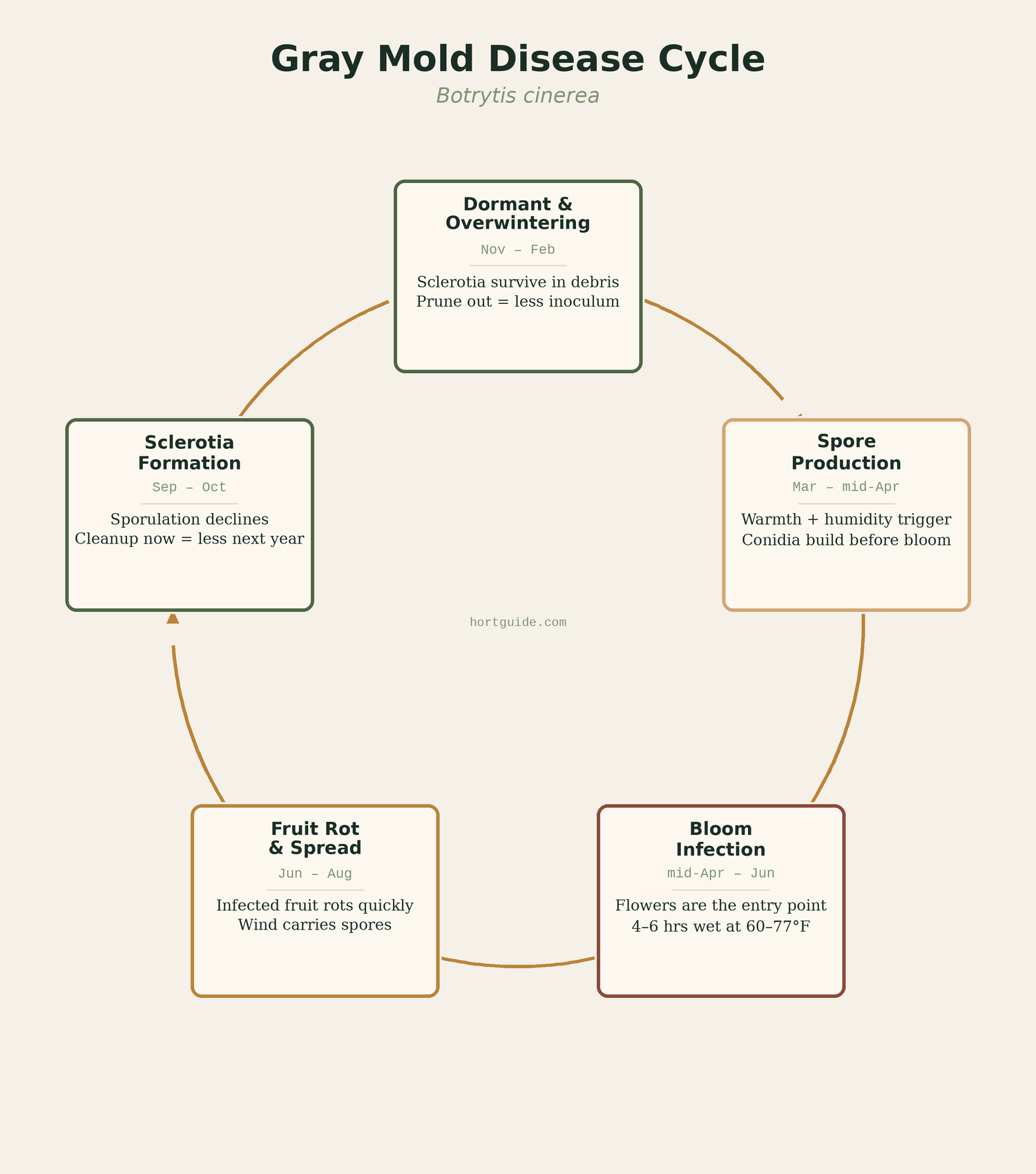 Gray mold disease cycle: dormant overwintering through bloom infection to post-harvest sclerotia formation. Diagram: hortguide.com.
You can use this threshold to make real-time decisions. Check the HFG weather dashboard for your nearest station. If the forecast shows rain arriving when temperatures are between 55 and 75°F, and conditions will stay wet for four or more hours, treat that as an infection event. Deadhead anything in bloom before the rain arrives. If you are a professional running a spray program, that is your application trigger. In the Puget Sound lowlands from mid-April through mid-June, nearly every rain event during bloom meets those conditions.
Who Gets Hit
Gray mold does not discriminate by plant type, but some hosts suffer more than others in this climate.
Soft fruit takes the hardest hit because bloom and harvest overlap with the wettest months. Strawberry is the single most common botrytis complaint in Puget Sound home gardens. Blueberry loses flowers before fruit can set. Raspberry hides the infection inside the berry until you pick it and it collapses in your hand. Grape bunch rot spreads berry to berry in tight clusters.
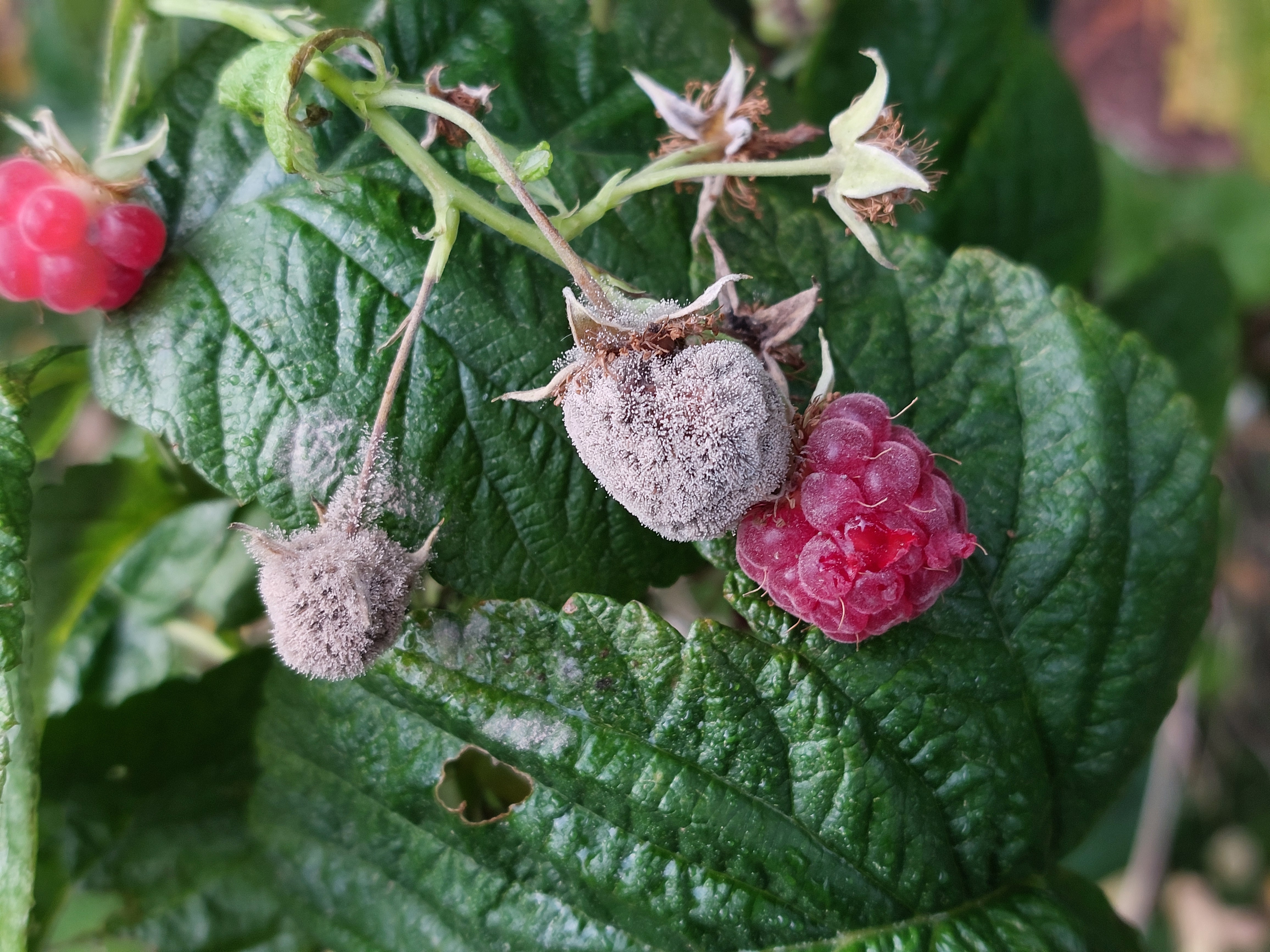 Botrytis cinerea on raspberry. Photo: Josef Schlaghecken, Wikimedia Commons, CC BY 4.0.
Ornamental flowers are the second most visible category. Peonies are the iconic host: bud blast from botrytis is the reason more peonies fail to bloom in this region than any other cause. Roses, geraniums (Pelargonium), and rhododendrons all lose flowers to gray mold during wet spring weather, and spent blooms left on the plant become spore factories for the next cycle.
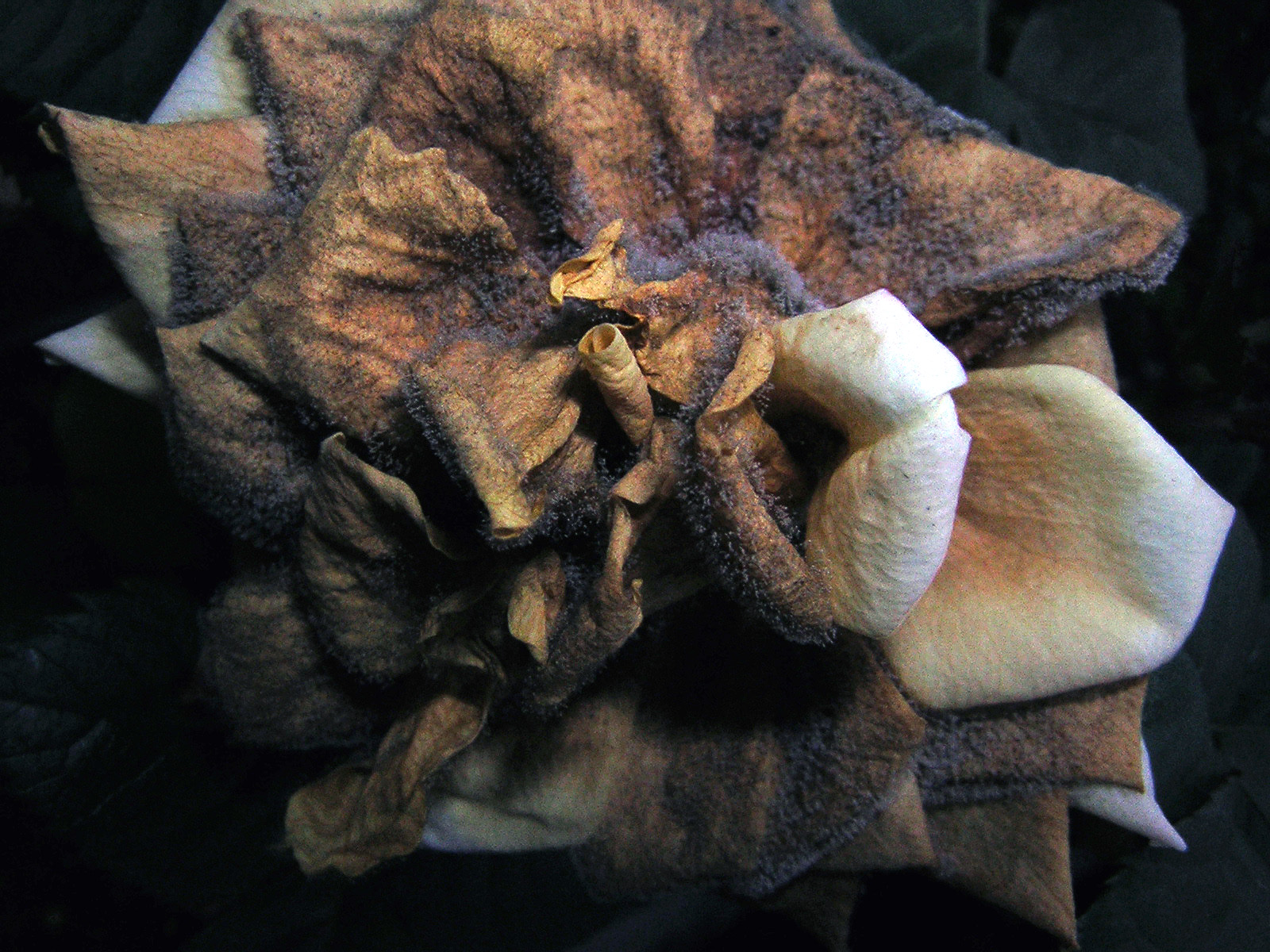 Gray mold petal blight on rose. Photo: Flowersabc, Wikimedia Commons, CC BY-SA 2.0.
Vegetables and herbs round out the list. Tomato ghost spot, lettuce basal rot, bean pod rot, and onion neck rot (caused by the related B. allii) are all common in cool, wet conditions. Basil and parsley are vulnerable during the shoulder seasons when growth is soft and air circulation is poor.
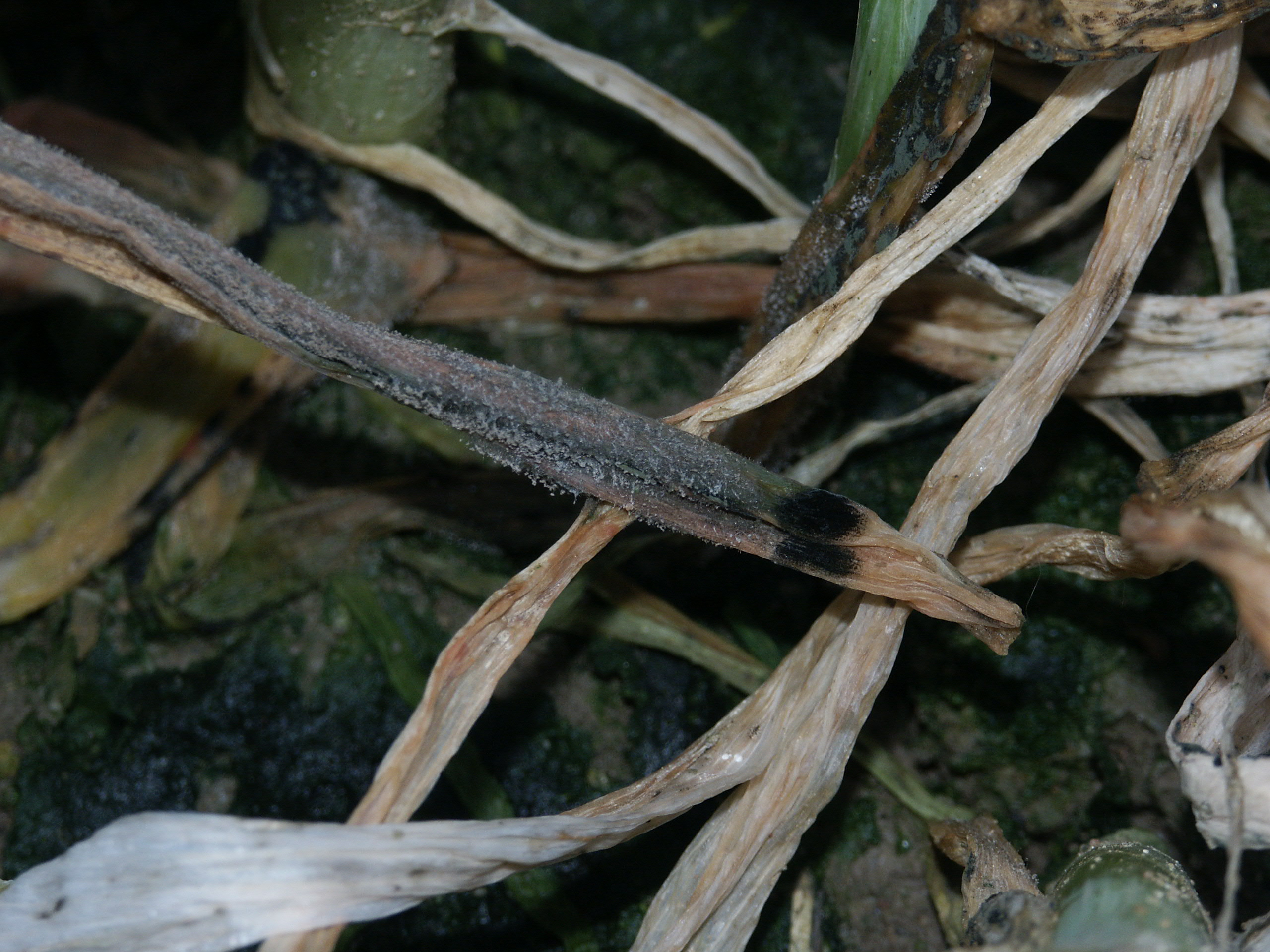 Botrytis cinerea on onion leaf. Photo: Jochen Kreiselmaier, Wikimedia Commons, CC BY-SA 4.0.
What makes a plant susceptible: thick petals that hold moisture, dense canopy that restricts airflow, retained dead tissue, proximity to soil where splash moves spores upward, and succulent new growth. If a plant has three or more of those traits, assume botrytis will find it.
What Works
Air circulation
This is the single most important factor. Every cultural control recommendation for botrytis comes back to one principle: keep plant surfaces dry faster. Spacing plants to allow airflow between and through the canopy reduces the leaf wetness duration that the fungus needs to infect. For berry canes, thin to four to five canes per foot of row. For roses, open the center of the bush during dormant pruning so air moves through the interior. For peonies, plant with 3 feet between crowns and stake heavy heads upright so flowers stay out of wet mulch. For vegetable gardens, resist the temptation to plant in tight blocks; that basil and parsley need room for the air to move, especially during cool May mornings.
Site selection matters as much as spacing. A bed against a fence with no morning sun will stay wet two hours longer than an open site with eastern exposure. Those two hours can be the difference between a four-hour wetness period (below infection threshold) and a six-hour period (above it). When you plan a garden bed for berries, susceptible ornamentals, or herbs, think about where the morning sun hits first.
Water management
Switch to drip irrigation for every susceptible crop. Overhead watering, especially in the evening, extends leaf wetness duration exactly when temperatures are in the infection range. If overhead is unavoidable, water early enough that foliage dries by midday. July and August are reliably dry here and the disease goes quiet, but during the spring rain season and the fall return of moisture, water management is critical.
Sanitation
Deadhead spent flowers before they sporulate. This applies to roses, peonies, rhododendrons, geraniums, and any ornamental that holds its spent blooms. Remove infected tissue as soon as you see it, not at the end of the week. Pick up fallen fruit and petals from the ground surface. For herbs like basil and parsley, pinch off any leaves showing water-soaked spots and improve airflow by thinning the densest growth. Every piece of infected tissue you remove is a spore source eliminated from the next infection cycle.
For berry growers, post-harvest cleanup is equally important: remove mummified fruit, cut out blighted canes, rake debris. All of it goes in municipal yard waste, not home compost; home piles rarely reach the temperatures needed to kill sclerotia. Winter pruning is the third sanitation window. The goal is to enter spring with as little overwintering inoculum as possible near your plants.
Harvest timing
Pick fruit at first ripeness and refrigerate immediately. Do not wait for peak sweetness while a rain event moves in. Check strawberry beds every day during harvest season, not every two or three days; a berry that was clean on Monday can be fully colonized by Wednesday after one wet night.
Cultivar selection
Raspberry is the only crop where named resistant cultivars exist. WSU and PNW Handbook data identify moderate resistance in ‘Meeker’, ‘Chilliwack’, ‘Comox’, and ‘Fairview’; cane-infection resistance in ‘Chilcotin’, ‘Nootka’, and ‘Willamette’. Primocane types like ‘Heritage’ that get mowed to the ground each winter have a built-in sanitation advantage.
For everything else, cultivar selection is about avoidance, not resistance. Choose strawberry varieties that ripen early to shorten the overlap with the wet season. Choose loose-cluster grapes (‘Interlaken’, ‘Canadice’) over tight-cluster types that trap moisture. For ornamentals, there is no meaningful resistance breeding; peonies, roses, and rhododendrons are managed through the other four practices.
What About Spraying?
For home gardeners, the five practices above are more effective than any spray program for gray mold in this climate. The UK, which shares our maritime conditions, manages botrytis without any approved home-garden fungicides.
For professionals, fungicides remain part of the program, but the toolbox is compromised. By 2014, 70 percent of Washington small fruit fields harbored Botrytis populations resistant to boscalid (FRAC Group 7). Subsequent sampling found resistance to four of the five registered fungicide classes. The pattern is consistent: selection pressure from repeated applications drives population-level adaptation faster than FRAC rotation can compensate.
The practical consequence: protectant fungicides applied before rain during bloom still work because they prevent spore germination on the plant surface. Curative products applied after infection are increasingly unreliable because the systemic chemistries most affected by resistance are the ones that need to penetrate tissue. Multi-site protectants (captan, thiram) face the least resistance pressure. Among single-site options, combination products (FRAC 9 + 3 or FRAC 12 + 7) retain more efficacy than solo SDHI (FRAC 7) products, which are the most compromised class in Puget Sound fields. Limit any single FRAC group to two applications per season, and check current WSU extension updates before committing to a rotation.
Biocontrol products based on Trichoderma and Bacillus species show 33 to 69 percent efficacy in greenhouse studies, but field performance in the maritime PNW has been limited. The cool, wet springs that favor botrytis also suppress some biocontrol organisms. Treat these as supplements to cultural controls, not replacements.
Seasonal Management Calendar
| When | What | Why |
|---|---|---|
| November through February | Remove mummified fruit, dead wood, and debris. Prune for open canopy structure. | Eliminates overwintering sclerotia and mycelium. Winter is the highest-leverage sanitation window. |
| March through mid-April | Verify air circulation around susceptible plants. Switch to drip irrigation. Thin dense berry cane growth. Remove any debris missed in winter. | Spores are accumulating as temperatures rise. This is your last chance to improve conditions before flowers open. |
| Mid-April through mid-June | Deadhead spent flowers daily. Avoid overhead watering during bloom. Harvest ripe fruit the same day. Professionals: protectant fungicide before forecasted rain. | Flowers are open and vulnerable. Every rain event in this window that delivers 4+ hours of wetness at 50 to 80°F is an infection event. |
| Mid-June through August | Pick fruit at first ripeness. Refrigerate immediately. Remove and discard any fruit showing gray mold. Keep picking even unmarketable fruit. | Fruit infections from bloom are developing into visible rot. Removing infected fruit breaks the secondary cycle. |
| September through October | Final harvest and cleanup. Cut out infected canes. Rake and remove leaf debris. Compost only healthy material (infected material to municipal yard waste). | The fungus is forming sclerotia for next year. What you clean now determines next spring’s starting pressure. |
Sources: PNW Plant Disease Management Handbook (Pscheidt & Ocamb, eds.); WSU Extension, “Which New Fungicides Can I Use to Fight Gray Mold in My Berries?” (2021); Plant Disease, “Population Evolution of Botrytis cinerea” (2020); NC State Extension, “Botrytis Gray Mold of Tomato”; UC IPM, Caneberry Gray Mold; Royal Horticultural Society, Grey Mould; Bulger et al., Phytopathology (1987); Holz et al., ScienceDirect (2003); Clemson HGIC, Gray Mold.
Always follow the manufacturer’s label when applying any pesticide. Labels are legal documents. If the label and this guide disagree, the label wins.
Botrytis conditions are tracked at seven stations across the Puget Sound lowlands. Get seasonal timing updates through the Field Brief.