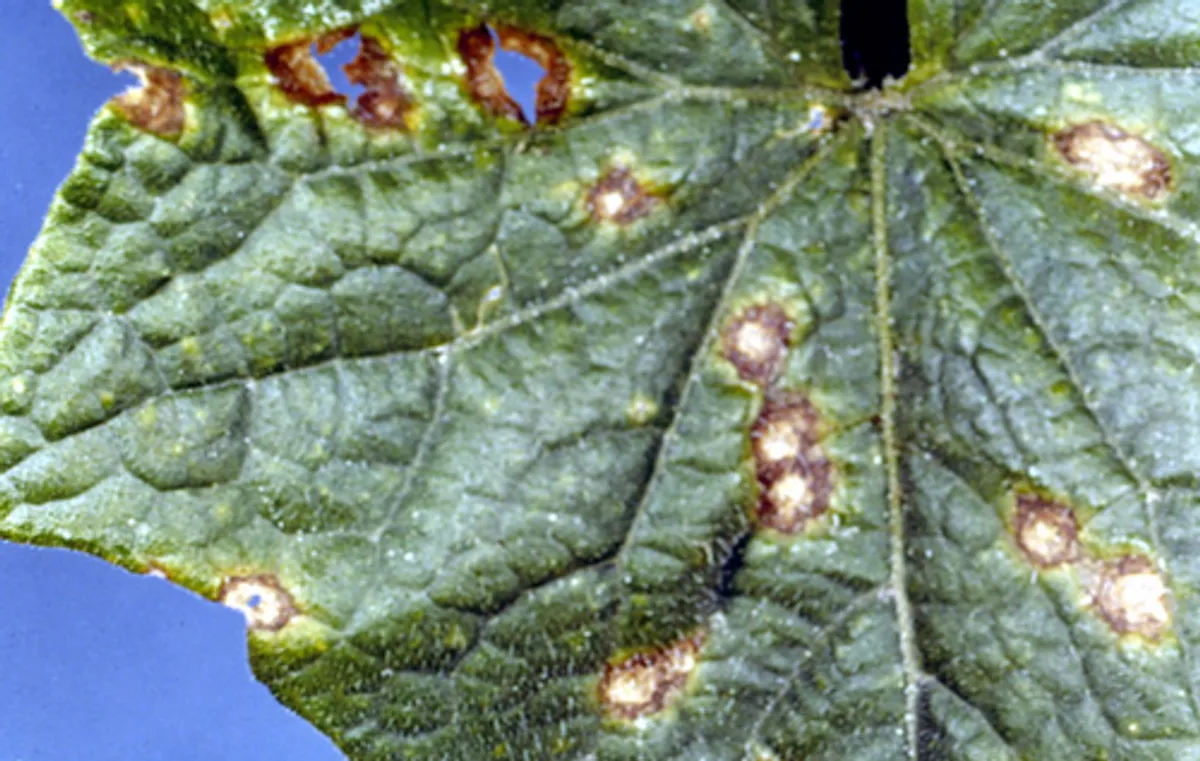
Every spring around late April, leaf spots appear. Blotches on your maple. Scorch on your sycamore. Dead twigs on branches that looked fine two weeks earlier. You panic, post a photo online, get five different diagnoses, and by June the damage stops and you forget the whole thing happened.
Except if you have a dogwood. Then the damage never stops.
Anthracnose is a fungal disease that affects at least 14 tree species in this region. On maples and oaks, anthracnose is a spring cosmetic problem that your tree solves on its own. On dogwoods, it is a progressive canker disease that slowly kills the tree from the inside. Most resources lump them together under one name, which is why you get confused, why you spray fungicide on trees that do not need it, and why you might miss the one form that actually threatens your dogwood’s survival.
The key is learning which disease you have.
Leaf Spot Anthracnose: Maples, Oaks, and Sycamores
On maples, anthracnose shows up as irregular brown blotches scattered across new leaves, often concentrated between the veins in a pattern that looks almost geometric. Early in the season, during wet weather, the spots develop a pinkish-gray spore mass visible with a hand lens. On sycamores, the spots coalesce into larger areas of dead tissue, and heavy leaf drop follows. The damage is dramatic. The tree looks scorched by late May.
Twig cankers also develop. You see sunken, dark lesions on small branches. Sometimes a complete ring of dead tissue encircles the twig, cutting off water and nutrient transport. Everything beyond that girdle dies. You prune out dead branch tips and find that the dead wood extends well below where the damage was visible from the ground.
Then something happens: the weather dries out. June arrives. The leaf spots stay on the surviving leaves but no new infection occurs. By late summer, your tree looks almost normal again. The cankers persist through the year, but the cosmetic damage resolves itself.
This is what anthracnose does on most hosts in this region. It exploits the spring wet period and then retreats.
The Pathogen and the Season
Anthracnose is not one disease but a group caused by related fungi in several genera. On shade trees, the pathogens are host-specific: Apiognomonia veneta on sycamore, Discula and Kabatiella species on maple, Apiognomonia quercina on oak, and Discula destructiva on dogwood. (Colletotrichum, the genus most associated with “anthracnose” in agriculture, causes the disease on berries and vegetables but not on shade trees.) The spores overwinter in infected twigs, dead branches, and fallen leaves scattered around the base of your tree. They are waiting.
When your tree puts out new growth in spring, those spores activate. They need a continuous film of moisture on the leaf or twig surface to germinate, and cool temperatures in the 50-57°F range during bud break and early leaf development favor infection. Research on dogwood anthracnose (Discula destructiva) indicates that 12 or more hours of continuous leaf wetness drives infection at these temperatures. The typical spring weather here, with frequent light rain and cool temperatures that sit squarely in that range, delivers exactly those conditions. WSU HortSense describes the same moisture-dependency mechanism that makes April and May the peak infection window in the Puget Sound region.
New leaves and tender twigs are most vulnerable. Older, toughened tissue resists infection. This is why the heaviest damage concentrates on the spring flush of growth. Once that growth hardens off, once the cuticle thickens, infection pressure drops.
By June, when our air actually dries out, anthracnose largely shuts down. You can have significant foliar damage in May and then watch the tree recover through the summer. The disease cycle peaks April through May, with a smaller secondary peak in fall if October and November bring extended wet periods. June through September, when humidity stays low, the disease is essentially dormant.
The twig cankers are different. Once the fungus establishes inside woody tissue, it persists through the summer without needing external moisture. This is why pruning infected twigs matters and why the timing of your pruning matters.
Host List: Who Gets Hit and When
Anthracnose affects multiple species in this region with varying severity.
Sycamores and plane trees (Platanus spp.) develop the most dramatic symptoms. You see heavy defoliation, branch canker development, and a tree that looks nearly dead by late May. Then it leafs out again from branch tips and looks almost normal by midsummer. The fear is worse than the actual damage.
Maples get hit regularly. Silver maple (Acer saccharinum) is most susceptible, followed by Japanese maple. The damage appears as leaf spots and twig cankers. Defoliation is rare. The tree usually recovers completely. Norway maple (Acer platanoides) develops anthracnose less frequently in this region.
Oaks develop leaf spots and occasionally cankers on twigs, but the damage rarely becomes serious in managed landscapes.
Dogwoods (Cornus spp.) are the exception. Flowering dogwood (Cornus florida) and to a lesser extent Pacific dogwood (Cornus nuttallii) are vulnerable. Where humidity stays high and leaves stay wet, dogwood anthracnose caused by Discula destructiva becomes a twig and canker disease that progressively weakens the tree structure over years.
Lower-risk hosts include birch, viburnum, and serviceberry. Symptoms are usually minor.
The pattern is clear: wet springs mean more anthracnose. Dogwood anthracnose is the exception that threatens tree survival. Everything else is mostly a spring cosmetic problem that your tree solves on its own.
Management for Leaf Spot Forms: Maples, Oaks, Sycamores
Do nothing this spring. The disease will peak in May. By June it will slow down. By July it will have largely stopped. Your tree will heal itself through the summer. The cosmetic damage is real but it does not threaten survival.
If the appearance bothers you, use this approach:
Sanitation. Rake up fallen leaves in fall and destroy them. Do not compost diseased leaves if you plan to use the compost in your garden. Prune out dead and diseased twigs during dormancy. Remove mummified fruit if your tree bore fruit. These steps reduce inoculum, the reservoir of spores waiting in your yard.
Air circulation. If possible, improve airflow around your tree. Thin the canopy during dormant pruning. Remove lower branches that shade the understory. Avoid overhead irrigation. If you water, apply it early in the morning so leaves dry quickly. Wet foliage is the infection pathway.
Fungicide as a last resort. If your tree has a history of severe defoliation two or three years running and you want to suppress the disease, fungicide timing is critical. Apply when new leaves are emerging in February through April, during wet conditions. You need multiple applications spaced 7 to 14 days apart. Chlorothalonil, sulfur, and copper-based products carry homeowner labels in Washington. The window closes in May when weather dries out. Once you see the damage, the infection already happened. Spraying at that point is too late.
For most trees, this approach is unnecessary. Your tree recovers on its own most years.
Management for Dogwood Anthracnose: A Different Disease
Dogwood anthracnose is not just a cosmetic leaf spot disease. It is a progressive canker disease that girdles twigs, weakens branch structure, and eventually kills the tree over years. Once established in your dogwood, it creates enough dead wood that the entire tree declines.
The disease started in the eastern United States in the 1970s and has spread to the Pacific Northwest. Susceptible dogwoods in areas with high humidity and extended spring wetness face real risk.
Species selection matters. If you are choosing a dogwood, start with resistance. Kousa dogwood (Cornus kousa) shows strong resistance. Pacific dogwood (Cornus nuttallii) is susceptible but tends to be less severely impacted than eastern flowering dogwood (Cornus florida), which suffers the worst disease progression. Hybrid cultivars bred specifically for anthracnose resistance, including ‘Venus’, ‘Starlight’, ‘Celestial’, and ‘Stellar Pink’ (C. kousa × C. florida crosses from the Rutgers program), are the most reliable choices for this region.
Sanitation for existing trees. If you have a mature flowering dogwood, monitor it for cankers, dead twigs, and branch dieback. Prune out dead and diseased twigs as soon as you see them. Cut at least 6 inches below any visible damage. Remove and destroy all pruned material. Do not leave it lying around or chip it on-site. Sterilize your pruning tools between cuts.
Improve the site. Anthracnose severity increases where foliage stays wet. Improve air circulation. Do not use overhead irrigation. If you must water, use drip irrigation early in the morning. Plant dogwoods in sites with good drainage and morning sun exposure if possible.
Fungicide for high-risk trees. If you have a young or valuable flowering dogwood in an area with chronic anthracnose pressure, preventive fungicide treatment may be justified. Start in late winter (February) before growth begins and continue through April at 2-week intervals. Use sulfur or copper products with homeowner labels in Washington. Do not expect fungicides to cure an already established canker disease. They slow new infection in susceptible trees. That is all.
Consider replacement. Some dogwood cultivars are simply too prone to anthracnose in this region to maintain without ongoing intervention. If your eastern flowering dogwood develops serious canker disease and you are tired of managing it, replace it with a kousa or hybrid cultivar. The problem disappears.
Why Regional Context Matters
Most gardening websites and extension bulletins from warmer regions treat anthracnose as a serious disease requiring intensive fungicide spraying. That advice is partially correct for the Southeast and Midwest, where summer humidity stays high and disease pressure continues through July and August.
In this region, that is not how it works. Our dry summers stop anthracnose cold. Fungicide is rarely justified for the leaf spot forms on maples, oaks, and sycamores because the disease naturally declines in June. Spraying in May for damage that already happened does not prevent it.
The exception is dogwood anthracnose, which truly is a canker disease requiring management. The second exception is in commercial settings. If you are running a nursery or landscape maintenance operation and aesthetic standards require pristine plant material in May, fungicide programs are justified. For homeowners, the teaching point is simple: anthracnose looks worse than it acts on most trees in this region.
Seasonal Management Calendar
| When | What | Why |
|---|---|---|
| December to January | Prune out dead twigs and cankers during dormancy | Remove fungal spore sources before spring growth activates. On dogwoods, this is essential. On maples, it reduces inoculum. Cut 6 inches below visible damage. |
| February to April | Scout for leaf emergence and wet weather patterns | Watch when new leaves flush and when extended wet periods occur. This is your infection window. |
| February to April (preventive only) | Apply fungicide on high-risk dogwoods if treating | Timing is critical. Start before growth begins; stop by late April. Multiple applications at 2-week intervals. Sulfur or copper products. |
| April to May | Monitor leaf symptoms as they develop | Peak infection period. Observe extent and pattern. Symptoms worsen in wet weeks, slow in drier periods. |
| May to June | Continue observation as weather dries | Most leaf infection stops. Cankers continue developing but internal growth is invisible from outside. |
| Late June to August | No action needed | Disease inactive in the dry season. Trees heal. |
| September to October | Watch for disease reactivation if fall brings wet weather | Secondary infection period possible but usually minor in this region. |
| October to November | Rake up fallen leaves; destroy them | Final sanitation. Do not leave diseased leaves under the tree to overwinter. |
| Year-round (dogwoods) | Monitor for cankers and branch dieback | Early detection means earlier removal of infected wood. |
Disclaimer: This article is a reference document. All management recommendations come from research-based extension publications specific to the Pacific Northwest climate. Fungicide product names and labels are valid for Washington homeowner use as of 2026. Always read and follow the complete label before application.
Sources
Disease management:
- WSU HortSense Anthracnose Fact Sheet
- PNW Plant Disease Management Handbook
- Cornell University Plant Pathology
- UC Davis IPM Anthracnose Management
Research:
- Redlin SC. 1991. “Discula destructiva, cause of dogwood anthracnose.” Journal of Forestry. 89: 34-37.
- Sinclair WA, Lyon HH. 2005. Diseases of Trees and Shrubs. 2nd ed. Cornell University Press. (Apiognomonia taxonomy and host-specific pathogen identification)
Pathogen taxonomy and shade tree anthracnose:
- Morton Arboretum: Anthracnose of Shade Trees
- Penn State Extension: Anthracnose on Shade Trees
- NC State Extension: Anthracnose Diseases of Trees
Dogwood resistance:
General reference: