Beaked Hazelnut
Corylus cornuta
Betulaceae · broadleaf deciduous shrub · native
Last updated
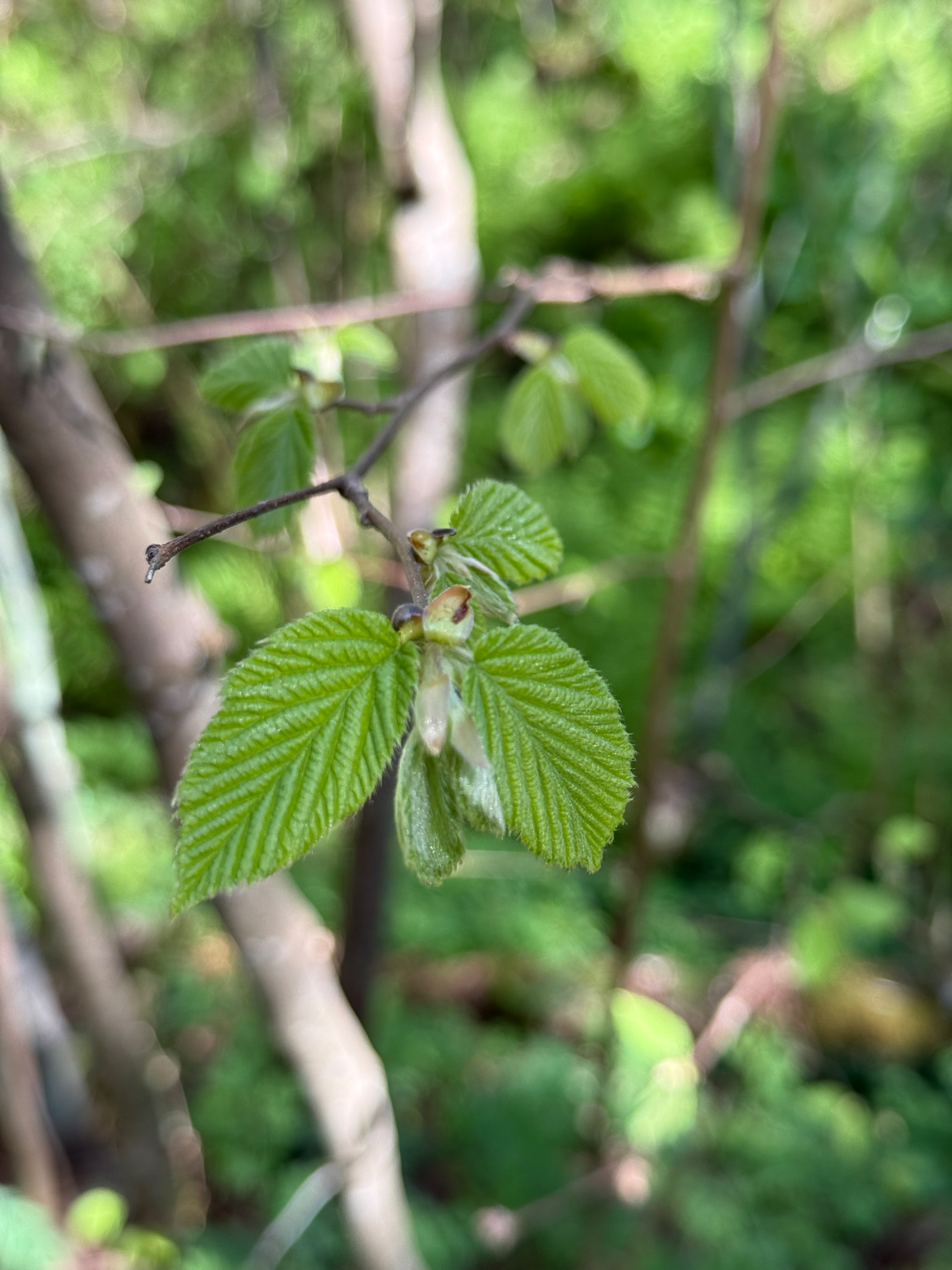
Beaked hazelnut (Corylus cornuta, Betulaceae) is a native deciduous shrub from Canada and the United States, reaching 4 to 14 feet tall with a spread of 6 to 12 feet. It forms thickets via root suckers. Male flowers appear as drooping yellowish catkins from February to April, while tiny red female flowers are concealed in bracts. The fruit is an edible nut enclosed in a distinctive outward-extending beak-shaped husk.
Beaked hazelnut grows in sun to part shade on moist, well-drained, acidic soils (pH below 6.0) across clay, loam, and sand, hardy in Zones 4a to 8b. Maintenance is high due to suckering that requires regular removal. No cultivars are documented. The edible nuts have been gathered by indigenous peoples for over 7,000 years.
Quick Facts
Field Observations
Phenological Calendar
| Stage | Typical Window |
|---|---|
| new leaves BBCH 11 | — |