False Lily-of-the-Valley
Maianthemum dilatatum
Asparagaceae · perennial · native
Last updated
Quick Facts
Winter-Spring Feeding
Field Observations
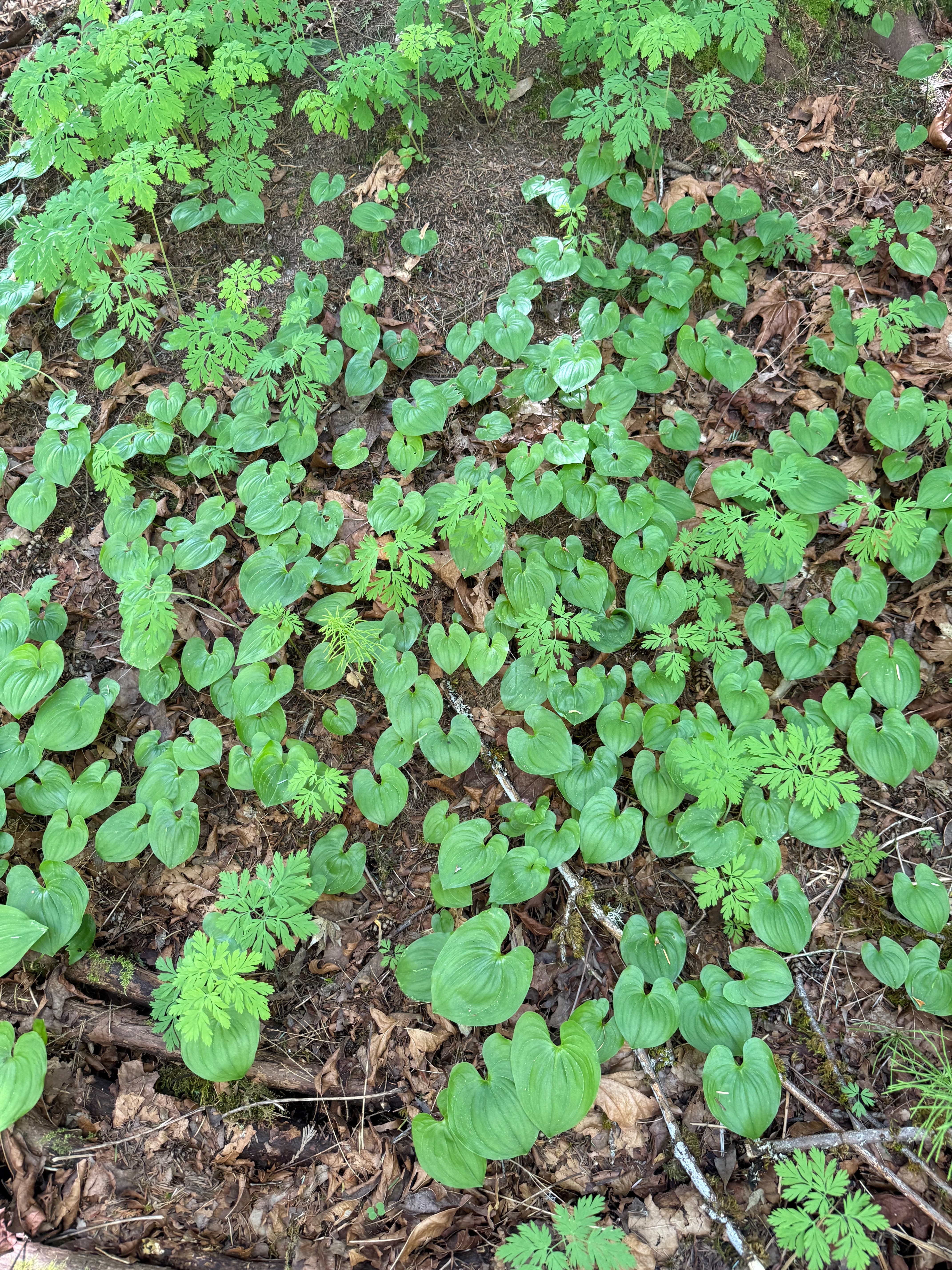
Phenological Calendar
As of May 18, 2026, Puget Sound stations range from 2022.7 to 2224.5 GDD₃₂. False Lily-of-the-Valley has passed new leaves (1580 GDD₃₂).
Regional Season Tracker
GDD₃₂ accumulation across 7 Puget Sound stations · as of May 18, 2026| Station | GDD₃₂ | Current Stage | Next | To Go |
|---|---|---|---|---|
| Issaquah / East King | 2,225 | new leaves | — | — |
| Kent / Auburn | 2,194 | new leaves | — | — |
| Seattle / UW | 2,164 | new leaves | — | — |
| Olympia / Tumwater | 2,128 | new leaves | — | — |
| Bellingham / Whatcom | 2,098 | new leaves | — | — |
| Tacoma / Puyallup | 2,092 | new leaves | — | — |
| Sequim / Rain Shadow | 2,023 | new leaves | — | — |
| Stage | GDD32 | Typical Window |
|---|---|---|
| ● new leaves BBCH 11 NOW | 1580 | April-May |
Source: Field observation, Auburn WA. About GDD₃₂ →
Season tracker for Kent / Auburn as of May 18, 2026. Predicted dates use 16-day weather forecast through Jun 3, 2026, then climate normals.
Pests: Other Associations (2)
Common native groundcover throughout moist Puget Sound forests, where it forms dense colonies in the conifer understory. Documented as a dominant understory species in Sitka spruce stands along the outer Olympic and Cascade-foothill coastlines. In Puget Sound lowland gardens it associates well with sword fern (Polystichum munitum) and salal (Gaultheria shallon), occupying the same moist, humus-rich, partially shaded niches. Field-observed in cultivation at Soos Creek Botanical Garden (Auburn, WA) in late April 2026, with first leaves fully unfolded at ~1,580 GDD₃₂ at the Kent station. The species is robust enough to be considered weedy in ideal conditions; rhizomes spread aggressively in moist beds, which is why it works well as a contained groundcover but can overrun smaller companion plantings.
— Chris Welch, ISA Certified Arborist