The Tree Everyone Asks About
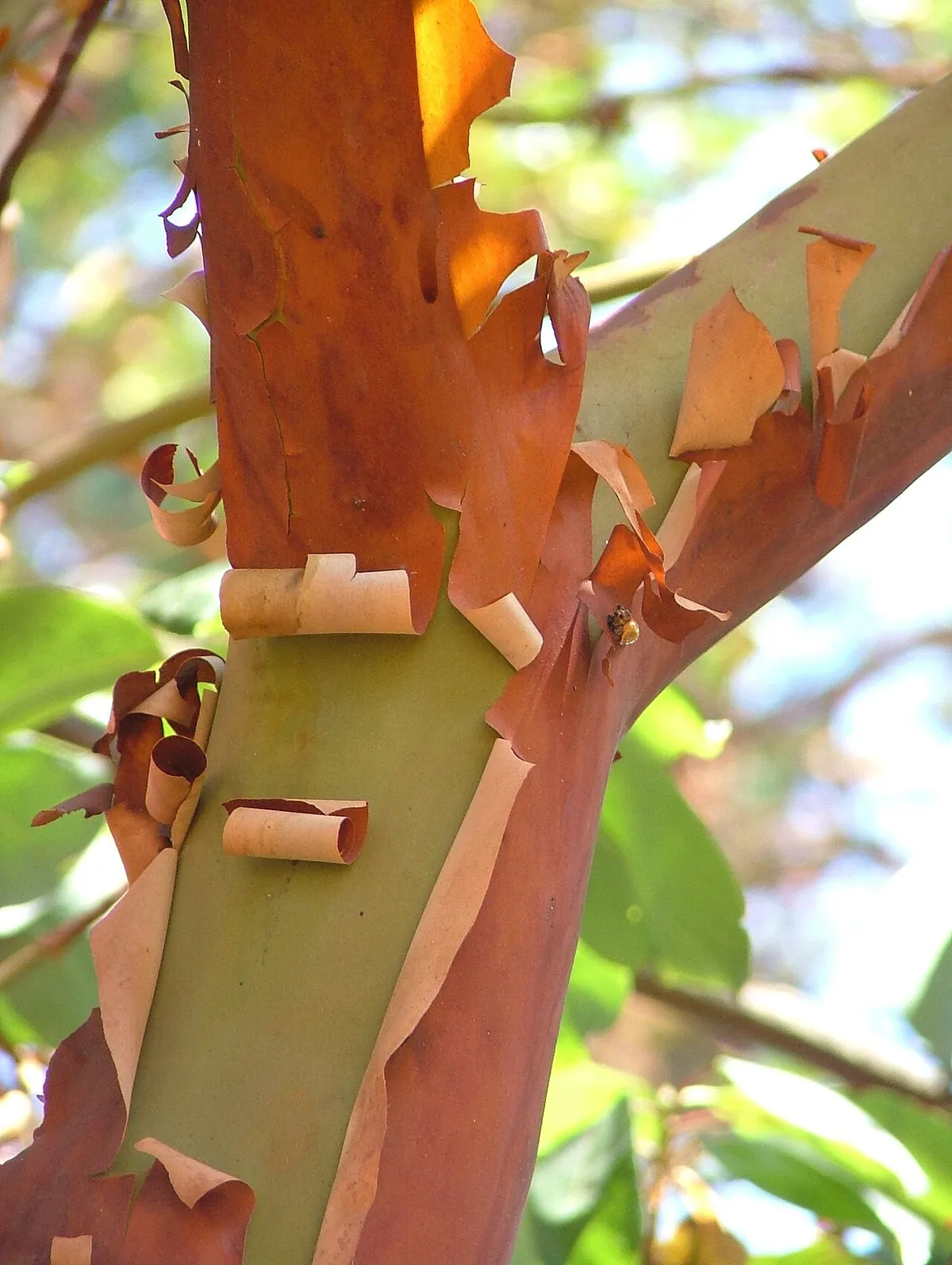
The bark gets all the attention. Copper-red to deep green, peeling away in thin papery sheets to reveal smooth satin underneath, madrone seems impossibly sculpted, as if someone spent years hand-polishing the wood. You see it leaning over the bluffs at Discovery Park, clinging to rocky slopes above Puget Sound near Indianola, anchoring itself to near-vertical banks of glacial till where nothing else has a chance.
For centuries, it has been the quiet anchor of our drier margins. Ecologically, it defines the zone between the wet conifer forest and the exposed rocky outcrops. Aesthetically, it’s one of the few trees in this region that works as sculpture, art object, and functional plant all at once. But here’s what you need to know before you plant one: Pacific Madrone will test your patience and reward precision over hope.
The Tree: What You’re Really Looking At
Pacific Madrone (Arbutus menziesii) belongs to the Ericaceae family, the same family that gives us rhododendrons, heathers, and blueberries. This matters more than you might think. It means madrone has the same picky soil requirements as its relatives, the same cultural preferences for good drainage and acidic conditions, and the same susceptibility to root rot when soil stays wet. It’s a broadleaf evergreen native to the Pacific coast from Baja California north to British Columbia, but the northern edge of its range sits right here, in Zones 8a and 8b, making this region a marginal growing zone where success depends almost entirely on microclimate and site selection.
The tree grows slowly. Very slowly. Expect about 25 feet of height in 20 years, which means you’re playing the long game from the start. At maturity in our region, most madrones top out around 40 to 50 feet, though taller specimens reaching 80 feet occur on ideal sites, and rare old-growth trees in protected canyons have exceeded 100 feet. But those are the exceptions. Plan on a mature madrone in your landscape being 35 to 45 feet tall and about 30 to 40 feet wide, with a spreading, somewhat irregular canopy that leans toward the light and wind.
The bark is the signature feature, and it earns that reputation. Young stems emerge green and waxy, then gradually exfoliate into thin papery sheets that peel away to reveal red-orange wood underneath. The older the tree, the deeper the red-orange, and the more dramatic the contrast with the surrounding landscape. This isn’t purely decorative, either; the exfoliation helps the tree shed snow, ice, and accumulated debris, and it seems to help with disease suppression in the damp Pacific Northwest climate. The bark stays warm even on cold days, another adaptation to the tree’s preferred sunny, dry microsites.
The leaves are thick and leathery, dark green on top, paler underneath, waxy and frost-resistant. They persist year-round, making madrone an evergreen presence in the winter landscape when nearly everything else is deciduous. The leaves don’t drop all at once in fall; instead, they cycle gradually, maintaining foliage density year-round.
Flowering occurs in spring, typically April through May in the Puget Sound region. The flowers are small, about 1 centimeter long, white or pale pink, urn-shaped, and arranged in upright panicles. They’re fragrant and pollinated by native bees and hummingbirds, which means you’ll attract beneficial insects if you grow madrone. The flowers themselves are subtle and easy to miss unless you’re looking for them, but they set the stage for fall fruit.
The fruit is an ellipsoid berry about 10 to 13 millimeters across, bright orange-red when mature in late summer and fall. Birds love them. Varied thrushes, cedar waxwings, and robins will strip the berries from your tree if you have one established in good habitat. This is what you want; it means your madrone is functioning as part of the native ecosystem, feeding wildlife as it has for millennia.
The tree was named after Archibald Menzies, a Scottish botanist and naturalist who sailed with Captain George Vancouver and documented many Pacific Northwest plants in the 1790s. When you plant a madrone, you’re planting a piece of botanical history and a connection to the early European exploration of this region.
One final detail that matters for long-term survival: Pacific Madrone has a lignotuber, an underground burl at the base of the tree that stores energy and dormant buds. This structure allows the tree to survive fire by resprouting from the base even if the entire above-ground portion is burned. In the ecology of the Pacific Northwest, this is critical. Madrone depends on periodic fire to keep its competition in check, particularly Douglas-fir and other conifers that would otherwise shade it out. The tree’s entire life strategy revolves around fire-maintained landscapes. That’s important context for understanding why madrone is declining across its range and why restoration of fire is crucial to its conservation.
What This Tree Does Well: The Win Column
Pacific Madrone is drought tolerant, and we mean reliably drought tolerant. Once established, it asks very little of you. Low water needs, no fertilizer, minimal pruning. In a region increasingly concerned about water availability and summer drought, madrone is a smart choice if you have the right site.
The tree’s root system is massive and fibrous, penetrating deep into rocky soil and securing itself to cliff faces and exposed slopes where nothing else would have a chance. This makes madrone an excellent erosion control plant on sloped terrain. The roots don’t compete aggressively with other plants in the way that some trees do; instead, they seem to coexist well with native shrubs and perennials in the understory. Plant madrone with kinnikinnick, manzanita, Oregon-grape, or sword fern, and you’re recreating the native plant associations that madrone naturally grows alongside.
Year-round interest is another strength. The bark is a winter focal point; the spring flowers bring fragrance and pollinator activity; the summer and fall berries feed wildlife; the evergreen foliage maintains structure when deciduous trees are bare. From November through March, when so much of the landscape is skeletal and gray, a well-positioned madrone provides color, texture, and visual warmth. This is particularly valuable in the maritime Pacific Northwest where winter extends for months and the low angle of the sun seems to ask for plants with some visual presence.
Madrone flowers are relatively early in the spring calendar, appearing before many other native plants have leafed out. If you’re designing for pollinators, this matters. The tree attracts bees at a time when they’re hungry and few other nectar sources are available. Hummingbirds, too, will visit madrone flowers if you have the tree in your garden, and they’ll come back repeatedly over several weeks.
The tree lives an extraordinarily long time. Three hundred years is not unusual for wild Pacific Madrones, and the oldest known specimen, located on Hornby Island in British Columbia, is estimated at over 350 years old. In a garden context, this means you’re planting something that could outlive you, your children, and probably your grandchildren. That kind of longevity carries weight. It means the location you choose matters deeply, and the care you give in the first few years will compound across centuries.
Madrone’s ecological role is as an anchor of dry, rocky sites throughout the Puget Sound lowlands. It defines entire plant communities. Where madrone grows, you find a specific suite of plants adapted to low water availability and well-drained soil. If you want a landscape that feels rooted in the actual ecology of the Puget Sound region, madrone is a foundational plant to build around.
Finally, the visual impact is undeniable. A 50-year-old Pacific Madrone has no equal as a sculptural accent in a landscape. The branching pattern, the bark, the spread, the presence, the way light moves across the foliage, all of it makes madrone worth the effort.
What Goes Wrong: The Reality Check
Pacific Madrone is not a low-maintenance plant here, and you need to understand the specific problems you’re likely to encounter before you commit to growing one.
Leaf Blight and Leaf Spot: The #1 Aesthetic Issue
Leaf blight and leaf spot diseases are the most common problem you’ll face with Pacific Madrone in the wet Pacific Northwest climate. Multiple fungal pathogens cause brown blotches on the foliage, often starting in spring during wet periods and becoming worse as the summer progresses if conditions remain humid. In some cases, the infected leaves drop prematurely, which is particularly noticeable on an evergreen tree. The tree doesn’t die from this; it recovers and produces new foliage. But aesthetically, it’s disappointing. You’re looking at a tree that’s partly defoliated, spotty, and not at its best.
This is the central irony of growing Pacific Madrone here: the tree is supremely drought tolerant and evolved for dry conditions, yet the region’s wet winters and humid springs create perfect conditions for fungal diseases that attack the foliage. You can’t change the climate, so you manage the disease by ensuring excellent air circulation around the tree (don’t plant it in a tight space), pruning out any dead or diseased branches promptly, and avoiding overhead watering. If you irrigate at all (and in most of this region, you won’t need to), water at the base of the tree, never the foliage.
Phytophthora Canker and Collar Rot: The Overwatering Problem
Phytophthora (literally “plant destroyer”) is a water mold that thrives in saturated soil. It causes cankers on the trunk and collar rot where the tree meets the soil. Here, with our winter rains and frequent wet soil conditions, Phytophthora is a serious threat. The disease manifests as sunken cankers on the trunk, often with reddish exudate or a darkened area of bark. As the canker enlarges, it can girdle the tree and kill it.
The prevention strategy is straightforward but demanding: ensure that the planting site has excellent drainage. We’re not talking about “adequately drained” soil. We’re talking about fast-draining, well-drained, close-to-sandy soil that doesn’t hold water. If your site has clay, if it’s in a low spot that collects water, if runoff from surrounding slopes flows past your tree during winter rains, madrone will struggle. Plant it on a slope or mound. Create a berm if necessary. The tree’s native habitat is rocky outcrops and exposed bluffs where water drains away quickly. Replicate that in your garden, or don’t plant the tree.
This also means no supplemental irrigation once the tree is established. None. You will kill it with kindness. The Pacific Northwest’s annual rainfall is sufficient for an established madrone. The tree was designed by millennia of evolution for these rainfall patterns, and when you add supplemental water, you’re essentially telling the tree that it’s growing in a wetter climate than it actually is, and the fungal diseases respond accordingly.
Madrone Canker: Branch Dieback
Madrone canker is a fungal disease that causes localized areas of dead bark on branches and small trunks, often with sunken margins. The branch beyond the canker dies, and you’re left with dead wood that looks unsightly. Unlike the other problems, madrone canker can be somewhat managed through pruning. Remove the affected branch back to the collar, clean your pruning tools with a 10% bleach solution between cuts, and dispose of the infected material in the garbage, not your compost.
Twig Dieback: Multiple Causes
Madrone can experience twig dieback from several causes: environmental stress, disease, or insect damage. Sometimes it’s hard to pinpoint the exact cause. The symptoms are the same: small branches at the tips of the canopy die back, leaving dead wood mixed with living foliage. It’s rarely fatal to the tree, but it’s aesthetically problematic. The best approach is to prune out the dead wood, ensure the tree is sited correctly (full sun, good drainage, no supplemental water), and give it time. Often, twig dieback diminishes as the tree matures and establishes.
Leaf Gall (Exobasidium): Cosmetic but Strange-Looking
Leaf gall fungus causes distorted, fleshy growths on leaves and young shoots, making the foliage look diseased or insect-damaged. It’s purely cosmetic; it doesn’t harm the tree. Remove the affected foliage if it bothers you, or simply accept it as part of growing madrone in a humid climate. Many gardeners don’t notice it or don’t care.
Madrone Leafminer: Cosmetic Pest
Leafminers are larval insects that tunnel inside the leaves, creating pale, squiggly trails visible on the foliage. It looks worse than it is. The tree recovers, the pest is rarely a serious problem, and you don’t need to treat for it. Simply prune out severely affected foliage if desired.
Shield Bearer and Other Pests: Minor Issues
There are seven documented pests associated with Pacific Madrone, but most of them cause only cosmetic damage and don’t threaten the health of the tree. Focus your energy on preventing the three serious fungal problems: leaf blight, Phytophthora, and madrone canker. If you get those right, your madrone will thrive.
The Transplanting Problem: The Thing Everyone Gets Wrong
This is where most madrone plantings fail.
Pacific Madrone does not transplant well. This is not a personality quirk or a cultural preference. This is a fundamental characteristic of the tree’s biology. The roots are fibrous and deep-penetrating, and they’re highly susceptible to disturbance. When you lift a madrone from a nursery container or from the ground at a nursery, you’re severing a huge percentage of the root system. The tree responds to this injury by struggling to reestablish, and if the root system was already marginal from growing in a nursery container, the transplant shock is often fatal or near-fatal.
Here’s the rule: plant a Pacific Madrone when it’s small, under 1 foot tall, or don’t plant it at all. Transplant mortality becomes significant once trees reach 30 centimeters (about 12 inches) in height. A 3-foot madrone from a nursery has perhaps a 50% chance of surviving the transplant. A 6-foot madrone has maybe a 25% chance. This isn’t pessimism; this is documented experience from nursery professionals, arborists, and native plant specialists throughout the Pacific Northwest.
If you’re going to grow Pacific Madrone, buy the smallest seedling available, ideally bare-root or in a small nursery pot. Plant it in its final location immediately. Don’t think about moving it later; plan to keep it there for 300 years. Dig a planting hole that’s exactly as deep as the root ball and about twice as wide. Use native soil amended only with a bit of compost to improve soil structure, not fertility. Don’t use peat moss, which can create a barrier that prevents roots from expanding into native soil. Water it in thoroughly at planting, then step back and let it grow.
For the first two years, monitor it closely during summer months. If the region experiences drought (which it will, on average, during a few months of summer), water the tree deeply and infrequently. But the key word is “infrequently.” Once every two to three weeks during hot, dry periods is typically sufficient. Don’t keep the soil moist; keep it cool and give the tree water when it needs it. The tree is establishing its root system, and you want those roots to penetrate deep into the soil to find moisture on their own. If you keep the surface soil moist, the roots have no reason to go deeper, and they remain shallow and vulnerable.
After three years, the tree should be established enough that supplemental irrigation is unnecessary, even during typical summer dry periods. If you’re still watering after five years, you’ve planted in the wrong location or you’re watering too frequently. Walk away. Let the tree do its job.
Fertilizer is not your friend. Pacific Madrone evolved in nutrient-poor, well-drained soil. Adding fertilizer, especially nitrogen-rich fertilizer, actually encourages leafy growth at the expense of root development and makes the tree more susceptible to disease. Don’t fertilize. Ever. The tree doesn’t need it, and you’ll regret it.
Site selection is everything. You need:
Full sun, preferably south or west facing. Madrone at the edge of your property, in a spot that gets afternoon sun, will thrive. Madrone in partial shade under an oak or tucked into the edge of a conifer forest will struggle.
Well-drained soil. If you’re in this region with typical glacial till or clay-based soil, you may need to amend the planting site with sand or gravel to improve drainage, or plant on a mound or slope. Rocky soil is ideal. Clay soil is your enemy.
No standing water. Not in winter, not in spring, not ever. If water pools around your tree for more than a few hours after heavy rain, you’re in the wrong spot.
Low competition. Don’t plant madrone in a crowded border where it has to compete with other plants for water and root space. It will lose. Give it room, both above ground and below.
Distance from the house or structures. Madrone can live 300+ years. It will grow very large. Plant it where it will have room to reach its full potential without threatening buildings or utilities.
Protected from extreme winter wind. In the northernmost parts of its range (like here), madrone appreciates some shelter from the coldest, windiest exposures. A south or west-facing slope is ideal. Full exposure to Puget Sound winter winds is not.
When you get these factors right, Pacific Madrone is not difficult. When you get them wrong, it’s nearly impossible. There’s no middle ground. Either you’ve created habitat where the tree wants to live, or you haven’t, and the tree will tell you within a few years which category your site falls into.
The Conservation Story: Why Madrone Is Disappearing
Pacific Madrone is declining throughout its entire range, from Mexico to British Columbia. The causes are interconnected and serious. The most significant factor is fire suppression. For millennia, indigenous peoples of the Pacific Northwest used fire to maintain oak and madrone savannas, keeping the conifers at bay and creating open, parklike landscapes that supported these trees. When Europeans arrived and implemented fire suppression policies across the continent, those maintenance fires stopped. Without periodic fire, Douglas-fir and other conifers gradually overshade the madrone, shading out the understory that madrone depends on and eventually killing the madrone trees themselves.
Walk into a mature forest here where madrone used to be common, and you’ll often see dead madrone trees in the understory, shaded out by tall firs. The landscape that madrone evolved in, the one it’s perfectly adapted for, is becoming increasingly rare.
Development and habitat loss compound the problem. Madrone grows on some of the most valuable real estate in the Pacific Northwest: rocky outcrops with views, south-facing slopes with good drainage, near water. These are the exact places where humans want to build. As development spreads, madrone habitat shrinks.
Climate change is a secondary but growing concern. As temperatures warm and precipitation patterns shift, the already narrow range where madrone thrives becomes narrower. The tree is at the northern edge of its range here, and warmer, drier conditions at the southern edge of its range are reducing suitable habitat there as well.
The solution involves restoring fire-maintained ecosystems where madrone belongs. Some land management agencies, particularly on public lands, are beginning to reintroduce prescribed burns to maintain oak and madrone habitats. Conservation organizations are working to protect remaining madrone-dominated sites. But the work is slow, and there’s much more habitat being lost to development than is being restored through active management.
For home gardeners, growing Pacific Madrone is a small act of conservation. You’re maintaining a species, providing habitat for pollinators and berry-eating birds, and keeping this piece of Pacific Northwest ecology alive in your landscape. When you choose madrone for your garden, you’re choosing to participate in the tree’s survival, even if your role is small.
Seasonal Action Summary
| Season | Action |
|---|---|
| Spring (April-May) | Monitor for leaf blight during wet periods. Observe flowering and pollinator activity. Prune out any winter-damaged branches. |
| Early Summer (June-July) | Reduce supplemental watering if you’ve been irrigating young trees. Inspect foliage for signs of pests or disease. Prune only to remove dead wood. |
| Late Summer-Fall (August-October) | Monitor for berry production. Observe wildlife using the tree. Ensure tree is entering dormancy without stress. No fertilizing. |
| Winter (November-March) | Enjoy the bark. Inspect for cankers or damage after winter storms. Do not prune except to remove broken branches. Let the tree rest. |
Growing Pacific Madrone
Pacific Madrone is worth growing if you understand what you’re signing up for: a slow-growing, long-lived evergreen tree that asks for very specific growing conditions and very little else. It’s not a plant for impatient gardeners or for wet, shaded sites. It’s not a plant that tolerates frequent transplanting or amendment with rich soils. It’s not a plant for climates different from the Puget Sound region.
But if you have a south or west-facing slope, well-drained rocky soil, and genuine commitment to leaving the tree in place for decades, Pacific Madrone will reward you with a landscape feature that’s both functionally native and visually stunning. The tree connects you to the actual ecology of this region, attracts pollinators and wildlife, provides year-round interest, and becomes more beautiful with age.
Sources
Disease and pest management:
- PNW Plant Disease Management Handbook: Madrone Phytophthora Canker
- PNW Plant Disease Management Handbook: Madrone Leaf Spots and Blights
- Bennett, M. & Shaw, D. Diseases and Insect Pests of Pacific Madrone (EC 1619). Oregon State University Extension.
Transplanting and propagation:
Plant descriptions and ecology: