What Stippled Leaves Actually Mean
It starts so subtly you almost miss it. You’re deadheading roses in mid-July or checking a Japanese holly you planted last spring, and the leaves look faded. Not brown, not wilted, just less vibrant than they should be. Up close, you see fine pale dots scattered across the leaf surface, like someone dusted it with talcum powder. Touch the underside and you might find delicate webbing, threads so thin they barely catch the light.
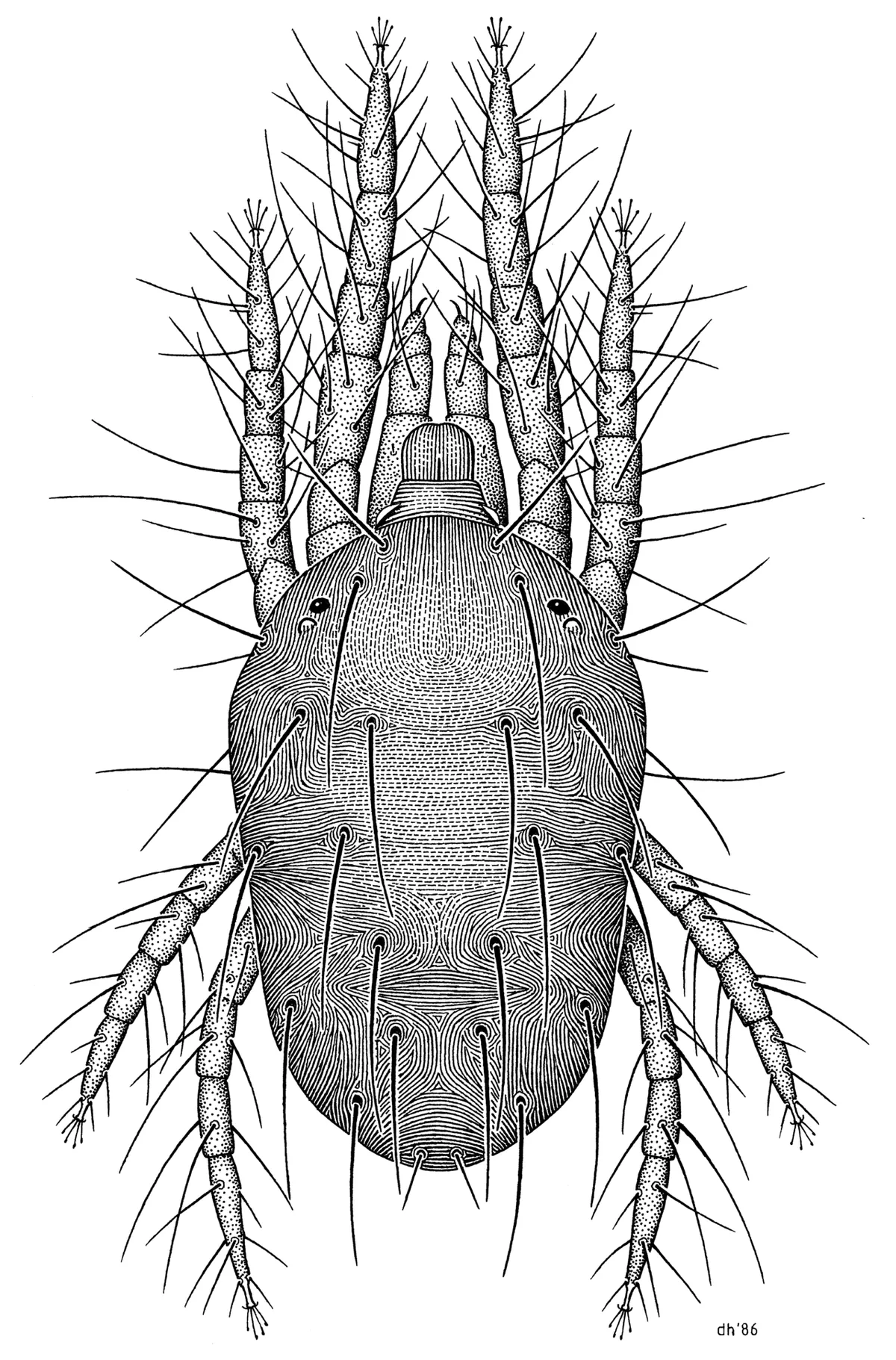
This is what spider mites do. They’re arachnids, not insects, tiny cousins of spiders and ticks. The ones in your garden are almost certainly the twospotted spider mite, Tetranychus urticae, no bigger than a grain of salt. At that size, you’ll need a hand lens to see them move. But what they lack in visibility they make up for in appetite and speed. They pierce leaf cells, drain the contents, and move on. Hundreds of them working across a single leaf can turn stippling into bronzing in a few days, then into complete defoliation in a few weeks.
The real story, though, isn’t about the mites themselves. It’s about what their presence means. Spider mites are not opportunistic invaders of healthy plants. They’re indicators of stress, and they arrive because your plant is already struggling, usually from drought. In the Puget Sound region, where springs are wet and cool winters are the norm, you can easily go years without a serious mite problem. But let the heat arrive, let the soil dry, let irrigation falter during July and August, and you’ve created a welcome mat. The mites are already there, waiting, dormant under leaf litter and in plant crevices. The moment conditions favor them, they multiply exponentially. Cornell’s integrated pest management research emphasizes this stress connection; mites attack when conditions favor the pest, not when plants are thriving.
The July-August Window
Temperature is the master control for everything spider mites do. At 80°F or above, a mite completes its entire lifecycle, from egg to egg-laying adult, in seven days. At 70°F, two weeks. Below 60°F, reproduction barely happens. This is why spider mites are so strictly seasonal in this region. Your climate is actually working against them most of the year.
From January through June, conditions are cool and moist. The mites that survived the previous summer are dormant. When spring arrives and temperatures climb, they wake up and begin feeding and reproducing, but slowly. Predatory mites, your garden’s natural defense, are also waking up and multiplying. For most of spring, populations stay low and balanced. Even if you see occasional stippling in May or June, it rarely escalates.
Then July arrives. A heat dome settles over the region, or a sustained dry spell begins, and everything changes. Daytime temperatures climb to 80°F, 85°F, sometimes higher. Humidity drops. Soil moisture dries down. If you haven’t adjusted your watering routine to account for the heat, the stress on your plants accelerates exponentially. Spider mites sense that stress. They begin laying eggs more aggressively. The predatory mites that were helping you become less effective in the heat and dryness. By early August, you’re likely to have multiple overlapping generations of spider mites on your plants, each generation laying eggs while the previous generation is still feeding. This creates an accelerating problem that can move from “I notice some stippling” to “the plant is defoliated” in three weeks flat.
August is peak spider mite season. September brings reprieve. As temperatures drop and humidity increases, the mite populations naturally crash. By October, most have died or entered dormancy. But that August window is critical, and it approaches every year with predictable timing.
Water Is Your Leverage Point
This runs counter to conventional garden wisdom, but it’s central to managing spider mites: you need to water your foliage, not just the soil. Spider mites are drought-stress specialists. They thrive in the hot, dry conditions that stress your plants. High humidity, damp foliage, and cool temperatures are their enemies.
Start with overhead watering. During July and August, particularly if temperatures exceed 80°F, apply water to your plants’ foliage once a week with overhead sprinklers or a spraying wand. Do this in early morning to minimize fungal disease risk, but understand that the mite-suppression benefit is more important than the disease risk during a heat spike. You’re creating a humid microclimate around your plants, and that humidity keeps mite reproduction in check. In a normal Western Washington summer, this preventive watering might be all you need.
If you already have a mite infestation, add a more targeted approach. Spray the undersides of leaves, where mites congregate, with a stream of water from your hose. Use moderate pressure, not full force, or you’ll damage foliage. Do this every 3-4 days during July and August. You’re physically dislodging mites and disrupting their webbing, buying time for predatory mites to catch up and for conditions to become less favorable for reproduction.
The water strategy isn’t glamorous and it’s not instant, but it works because it addresses the root cause: spider mites exploit drought stress. When your plants are hydrated and your garden’s microclimate is damp, mites remain at low, manageable populations.
When Water Isn’t Enough
Sometimes you need more intervention. This happens when infestations start late or conditions remain brutal through August, or when you’re growing plants like conifers and evergreens that can’t recover from severe defoliation the way deciduous trees and shrubs can.
Predatory mites are your next tool. Species like Phytoseiulus persimilis and Neoseiulus californicus are voracious spider mite hunters. You can purchase them from biocontrol suppliers and release them onto affected plants. They establish themselves in humid conditions, persist into the next year, and require no repeated application. Timing is critical, though. Release them in June if you want prevention, not in August when your garden is hot and dry and they won’t survive. UC Davis IPM suggests releasing predatory mites in June to build populations before spider mite pressure intensifies.
If you need something faster, horticultural oils and sulfur are effective. These products work by coating the mites, disrupting their respiration. Spray the undersides of leaves thoroughly, reapplying every 7-10 days because new mites are constantly emerging. Sulfur is preferable to oil on broadleaf plants during heat because oil can damage foliage above 85°F. Neither product is highly toxic to humans, making them safer than synthetic miticides.
Miticides, products containing bifenazate or spiromesifen, are your last resort. Use them only when populations are severe and other methods have failed. Spider mites develop resistance to miticides quickly, especially if you repeat applications with the same product in a single season. If you do use a miticide, rotate to a different chemical class the following year. Never, under any circumstances, use broad-spectrum insecticides like pyrethrins, carbaryl, or permethrin. These products kill predatory mites and can trigger what’s called “mite flare” - a population explosion because you’ve removed the mites’ natural enemies while the mites survive.
Vulnerable Plants in This Region
Spider mites can infest a broad range of plants, but some are particularly susceptible. Japanese holly shows conspicuous stippling and bronzing in late summer. Roses are perennial targets. Maples in hot, dry locations often develop heavy populations. Evergreens suffer the most because their damage doesn’t heal quickly. A conifer infested in August loses needles permanently, and if the infestation is severe, the plant may not survive the following year. Fruit trees like apples and plums develop regular mite populations if irrigation is inconsistent during hot spells.
The common thread: plants in hot, sunny locations with irregular watering are vulnerable. Plants with consistent irrigation or growing in naturally humid microclimates rarely suffer serious mite damage.
Seasonal Rhythm
| Month | Focus |
|---|---|
| January-March | Mites dormant. Clean up leaf litter and plant debris where they overwinter. No treatment needed. |
| April-May | Populations waking and beginning reproduction. Water consistently, maintain plant health. Monitor early growth for signs of stippling. |
| June | Release purchased predatory mites if you have a history of mite problems. Natural predator populations establishing. |
| July | Heat arrives. Increase overhead watering to once weekly if temperatures exceed 80°F. Scout undersides of leaves for early signs of feeding. This is your last preventive window before populations accelerate. |
| August | Peak season. Heavy monitoring and management required. Multiple mite generations present simultaneously. Continue overhead watering and direct spray if you have an active infestation. |
| September | Populations naturally crash as temperatures drop and humidity increases. Mite management becomes less urgent. Predatory populations rebound. |
| October-November | Mites seeking dormancy sites. Final cleanup of fallen leaves and debris. Populations winding down. |
| December | Dormant period. No action required. |
The Plant Stress Connection
Here’s the fundamental truth about spider mites: they’re a symptom, not a primary disease. A plant under drought stress, exposed to intense sun without adequate water, struggling in an unsuitable microclimate, is a magnet for mites. If you’re growing a naturally drought-tolerant plant, like many Mediterranean shrubs, in a hot, dry location without supplemental watering, you’re setting yourself up for mite problems. The plant is stressed, and spider mites exploit that stress.
The solution isn’t necessarily to spray harder or more often. It’s to ask whether the plant is suited to your location and your willingness to water it during hot spells. If you choose to grow drought-tolerant plants in a naturally arid part of your garden, accept that you may need to manage spider mites occasionally. If you’re not interested in summer mite management, choose plants and locations where you can water consistently and conditions stay relatively humid. In the Puget Sound region, where your climate leans toward moisture for most of the year, this is entirely reasonable.
The gardeners who never see serious spider mite damage are the ones who don’t create the stressed conditions mites thrive in. They water during heat, they grow appropriate plants for their microclimates, and they catch problems in early July, not late August.
Sources
Pest management:
- UC Davis Integrated Pest Management
- Cornell University Integrated Pest Management
- HortSense
- PNW Handbook: Integrated Pest Management
Research:
- Dreistadt, S.H. (2001). “Integrated Pest Management for Floriculture and Nurseries.” UC Agriculture and Natural Resources
- Croft, B.A. (1990). “Arthropod Biological Control: An Environmental Approach.” Routledge Press
General reference: