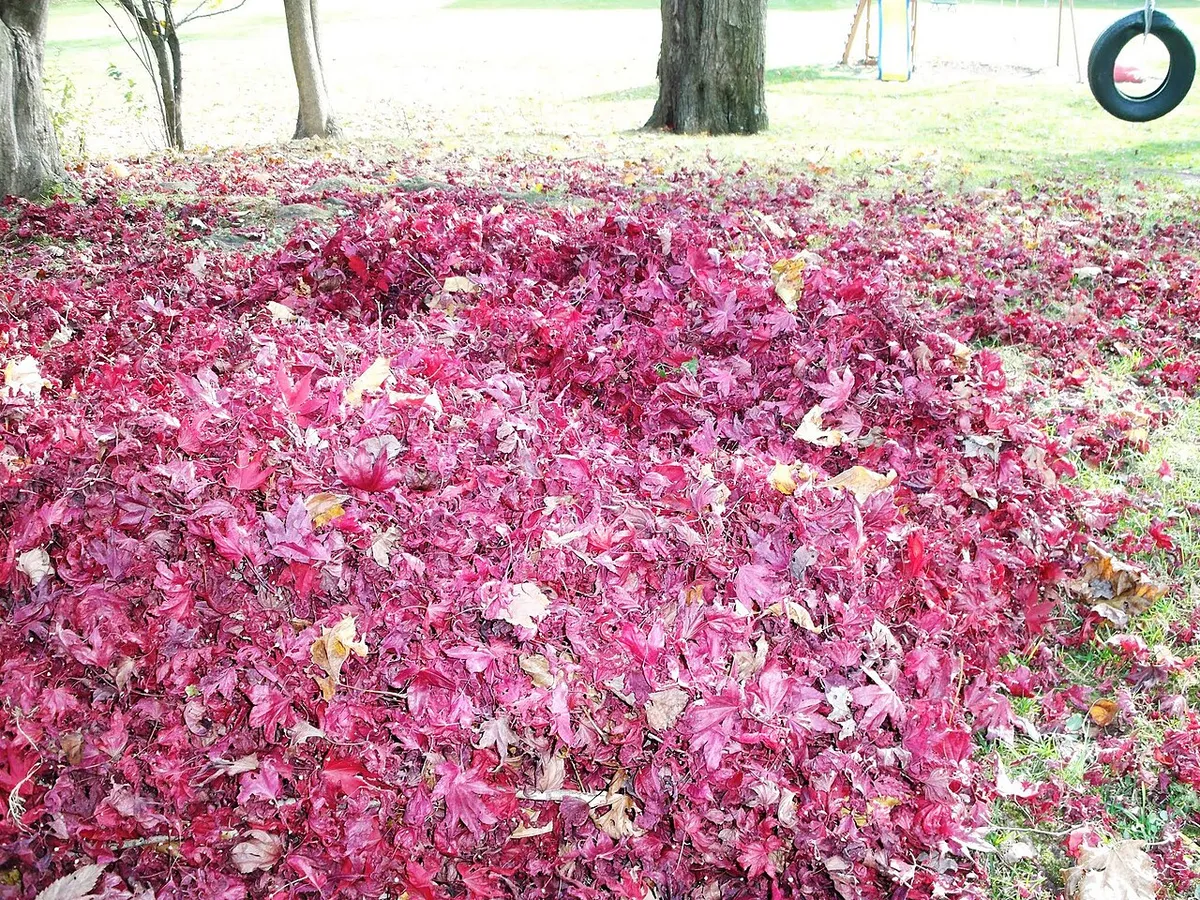
You already know this tree. It is the deep red one in the corner lot two streets over, the weeping green laceleaf spilling over a retaining wall, the coral-barked specimen that catches your eye every January when everything else is bare. Japanese maple shows up in more residential landscapes across the Puget Sound lowlands than almost any other ornamental tree. Walk a single block in any established neighborhood and count them. You will run out of fingers.
That familiarity breeds a dangerous casualness. People plant Japanese maple like it is a shrub you drop in a hole and forget. It is not. The species carries 19 documented diseases and 15 documented pests in the Pacific Northwest, and the wet winters and dry summers here create a specific set of vulnerabilities that national gardening guides miss entirely. Most of the failures you see, the scorched leaves in August, the branch that dies for no apparent reason, the tree that slowly declines over three years, trace back to decisions made at planting time.
The Tree
Japanese maple (Acer palmatum) belongs to the Sapindaceae, the same family as its native cousin vine maple. The species is native to Japan, Korea, and China, where it grows as an understory tree in woods and thickets from lowlands up to 3,000 meters. Japanese culture cultivated it for centuries before the first specimen reached Britain in 1821. It arrived in Pacific Northwest nurseries not long after and never left.
The tree tops out around 25 feet tall and 19 feet wide at maturity in this region, though many cultivars stay well under that. Growth is slow. Expect 10 to 15 feet in 20 years. The form is rounded to broad-rounded with low branching, often multi-trunked, creating the layered canopy structure that makes this species so distinctive from the sidewalk. Leaves are palmately divided into five to nine pointed, serrated lobes, 2 to 5 inches long. Leaf color varies wildly by cultivar, from deep crimson to bright green. Fall color runs scarlet, orange, and yellow. Small red-to-purple flowers appear in April alongside emerging foliage; they reward a close look but do not put on a show from a distance.
The cultivar situation can feel overwhelming. Over 300 named selections circulate globally. Focus on the ones that perform consistently here.
Bloodgood is the standard. Upright, spreading, 15 to 20 feet at maturity. Deep red foliage holds its color all season rather than greening out in summer. Fall color intensifies into darker crimson. It is widely available, affordable, and shows moderate tolerance to verticillium wilt, which matters in regional soils where the pathogen is common.
Sango Kaku (coralbark maple) reaches 20 to 25 feet. Its defining feature is winter bark: coral-red young branches that glow against gray skies from November through March. Spring foliage emerges green with red margins, turning yellow to orange-red in fall. Choose this when winter interest outweighs summer color. One caution: the PNW Plant Disease Management Handbook lists Sango Kaku as highly susceptible to bacterial dieback caused by Pseudomonas syringae. Site it in a protected location with good air circulation.
Shaina stays compact at 6 feet. Deep red-purple dissected foliage on a dense, mounded form. Hardy to Zone 6. This is the answer when you want the look but lack the space.
Sharp’s Pygmy caps at 4 feet. Bonsai scale. Useful for containers and very tight spaces, but beyond that specific niche, one of the larger cultivars performs better.
If you are choosing for the first time, ask three questions: how much space do you actually have (measured, not estimated), which season matters most (fall color, winter bark, or year-round foliage), and what is the soil history in the planting spot. That third question matters more than the other two. If the site previously grew tomatoes, potatoes, strawberries, or another maple that died without obvious cause, Verticillium is likely in the soil and your cultivar choice needs to account for it.
Where It Shines
The internet will tell you Japanese maple needs heavy shade protection. In this region, that advice needs significant correction. NC State’s plant profile notes full sun to partial shade as the range, but even that undersells what the maritime climate here allows. Cooler summers and consistent cloud cover mean most cultivars handle considerably more sun than national guides suggest. Full sun works fine as long as soil stays consistently moist and the site has some wind protection. The real vulnerability is not sun; it is the combination of sun, wind, and dry soil that triggers leaf scorch. Separate those factors and the tree performs beautifully in exposures that would burn it in the Southeast or Midwest.
Soil preferences align well with what the region provides naturally. Japanese maple wants well-drained, organically rich soil on the acidic side, pH 5.5 to 6.5. Most Puget Sound soils fall in that range without amendment. Drainage is the critical variable. The species does not tolerate waterlogged conditions. If your native soil is heavy clay that stays saturated through winter, amend aggressively with compost or choose a different tree.
Once established, Japanese maple needs little supplemental water during normal years. The region’s rainfall pattern, heavy October through May and dry June through September, sustains the tree through most summers after the first three years. During the genuinely dry summers that arrive every few years, weekly deep watering in July and August prevents stress.
The slow growth rate is a feature, not a limitation. The tree stays in proportion with residential landscapes for decades. Branches thicken slowly, preserving the fine, layered structure that makes this species worth planting in the first place.
The Trouble Spots
Nineteen diseases and 15 pests sounds alarming. In practice, a handful of issues account for nearly all the problems you will actually encounter on Japanese maple in this region.
Verticillium Wilt (Verticillium dahliae)
WSU HortSense and the Oregon State University Plant Clinic both flag Verticillium wilt as the dominant maple disease diagnosis in the region. The fungus lives in soil, enters through roots, and colonizes the xylem, producing microsclerotia that clog water-conducting tissue and toxins that cause wilt. Symptoms start as sudden wilting on one side of the canopy or a single branch dying while the rest looks fine. Leaves yellow, scorch at the margins, and hang on dead branches. Cut into affected wood and you may find greenish-to-black streaking in the sapwood. The disease can kill within a season or drag on for years.
There is no chemical cure. The fungus persists in soil for years through microsclerotia, and over 300 plant species are susceptible. If a tree is confirmed infected, remove it, and do not replant any maple, tomato, potato, or other susceptible host in that location. Prune infected limbs well below visible symptoms and disinfect tools between cuts. Bloodgood shows moderate tolerance. The Norway maple cultivars ‘Jade Glen’ and ‘Parkway’ are tolerant if you are willing to switch species entirely.
Bacterial Dieback (Pseudomonas syringae)
This one is underdiagnosed on Japanese maple in the region. The PNW handbook is specific: most Japanese maple cultivars, including Sango Kaku, are highly susceptible. The bacterium overwinters on plant surfaces and in infected tissue, entering through wounds, frost cracks, and leaf scars. It produces a protein that acts as an ice nucleus, actually increasing frost injury and then colonizing the damaged tissue.
Symptoms include water-soaked leaf spots that may show a yellow halo, vein blackening, and tip dieback of young shoots. Year-old twigs turn black during dormancy, then ash-gray with a black band near the advancing edge. Buds can fail entirely in spring, or new shoots leaf out and then collapse. Frost events followed by wet weather create ideal infection conditions, which describes most springs in this region.
What to do: Prune during dry weather only. Remove blackened twigs cutting well below the discolored tissue. Improve air circulation. Avoid late-season nitrogen fertilizer, which pushes tender growth that is more susceptible to frost injury and bacterial invasion. There is no registered chemical control for homeowner use, but protecting trees from frost with covers during late spring cold snaps reduces entry points.
Phytophthora Root Rot (Phytophthora spp.)
The PNW handbook specifically flags Acer palmatum as especially susceptible. Phytophthora thrives in flooded or poorly drained soil, exactly the conditions that develop in compacted clay during a wet maritime winter. Symptoms show aboveground as slow decline, poor growth, and branch dieback that mimics nutrient deficiency. Below ground, feeder roots are rotted, and the vascular cambium near the crown shows a brownish discoloration with a distinct border against healthy tissue.
What to do: Prevention is everything. Plant in well-drained soil or amend heavily. Do not let irrigation water pool around the trunk. Avoid compacting soil over the root zone. If you suspect root rot, dig carefully at the root flare and look for discolored, mushy tissue. There is no practical chemical cure for established landscape trees. The diagnosis matters because it tells you the site is wrong for this species.
Leaf Scorch
Not a pathogen. Leaf scorch is the tree telling you it cannot move water from roots to leaf margins fast enough to keep up with evaporation. Edges brown and crisp, starting in July and worsening through August. The causes in this region are predictable: too much sun without enough soil moisture, hot reflected heat from pavement or buildings, wind desiccation, salt from fertilizer or de-icing, or simply a young tree with an underdeveloped root system facing its first dry summer.
Mulch the root zone to 3 to 4 inches with wood chips at planting time. This single action prevents most scorch in the Puget Sound region. Water deeply once or twice per week during dry spells rather than frequent shallow watering. Do not plant against sunny west-facing walls or over pavement.
Cosmetic Issues You Can Mostly Ignore
Powdery mildew appears as white fungal growth on leaf undersides in late summer. It is common on maples throughout the region and rarely threatens tree health. Improve air circulation and accept that some years are worse than others.
Phyllosticta leaf spot produces small, tan-to-straw-colored spots with transparent centers on Japanese maple specifically. Anthracnose causes irregular brown blotches during wet springs. Tar spots form raised black lesions in late summer that look alarming but do essentially nothing to the tree. For all three: rake and destroy fallen leaves in autumn, avoid overhead irrigation, and skip the fungicide unless defoliation is severe in consecutive years.
Aphids colonize new growth in spring, producing honeydew that drips onto whatever sits below. A strong water spray dislodges light infestations. Dormant oil in February suppresses overwintering eggs. Avoid broad-spectrum insecticides; they kill the parasitic wasps and ladybugs that manage aphid populations naturally. Cottony maple scale shows as white cottony masses on twigs and responds to the same dormant oil application. Maple bladdergall mite causes red blisters on leaf undersides that are cosmetic only; no treatment is necessary.
One emerging concern worth tracking: a 2023 paper in Forest Pathology (Brooks et al.) confirmed sooty bark disease, caused by Cryptostroma corticale, on Japanese maple in the Seattle area starting in 2020. The fungus grows within the tree and accelerates after drought stress, eventually killing bark and producing dark, sooty spore masses. It has primarily affected sycamore maple elsewhere, but the PNW detections on Japanese maple, vine maple, and bigleaf maple suggest broader host range than previously understood. No treatment exists. Watch for bark blistering and dark patches on trunks of stressed trees.
Month by Month
| When | What | Why |
|---|---|---|
| Dec - Feb | Prune during dormancy; light structural work only | Branch architecture is visible. Remove dead, crossing, or inward-growing branches. Never remove more than 15% of canopy. |
| Feb | Apply dormant oil before bud swell | Targets overwintering aphid eggs and cottony maple scale. Window closes at bud break. Apply between 40 and 65 degrees F. |
| Mar - Apr | Watch for bacterial dieback on new shoots | Blackened buds, failed leafout, or shoot collapse after frost events. Prune affected tissue during dry weather. |
| Apr - May | Scout emerging foliage for leaf spot diseases | Phyllosticta, anthracnose, and tar spots appear during wet springs. Cosmetic in most years. Note severity for fall cleanup decisions. |
| May - Jun | Monitor aphid colonies on new growth | Honeydew drip is the first sign. Water spray for light infestations, insecticidal soap for heavy ones. Preserve beneficial insects. |
| Jun - Aug | Water deeply during dry periods | Once or twice per week for established trees during hot spells. Daily for trees in their first three summers. Check soil moisture at 3 to 4 inches. |
| Jul - Aug | Watch for verticillium wilt symptoms | One-sided wilt, premature leaf drop, branch dieback during heat. Scratch suspect branches to check for vascular streaking. Early detection informs replanting decisions. |
| Jul - Aug | Check for leaf scorch on exposed trees | Brown leaf margins signal moisture or siting stress. Increase mulch depth, adjust irrigation, or plan for afternoon shade. |
| Sep - Oct | Enjoy fall color; assess overall vigor | Uneven color or premature drop may signal disease. Bloodgood is the most consistent performer for fall color. |
| Oct - Nov | Rake and destroy fallen leaves | Reduces overwintering inoculum for fungal leaf diseases. Do not compost visibly diseased foliage. |
All recommendations are specific to Western Washington. Always read and follow pesticide label directions.
Sources
Disease and pest management:
- PNW Plant Disease Management Handbook: Maple
- WSU HortSense: Maple Verticillium Wilt
- Cornell Plant Pathology: Pseudomonas Leaf Spot and Dieback
- UC Davis IPM: Phytophthora Root and Crown Rot
- RHS: Acer Problems
Plant descriptions and cultivar data:
- Missouri Botanical Garden: Acer palmatum
- NC State Extension: Acer palmatum
- Royal Horticultural Society AGM Plants: Acer palmatum cultivars
Research:
- Brooks, R. K. et al. 2023. “Cryptostroma corticale appears widespread in western Washington State, USA.” Forest Pathology 53:e12835
- van Gelderen, D. M., de Jong, P. C. and Oterdoom, H. J. 1994. Maples of the World. Timber Press. ISBN 978-0881923278