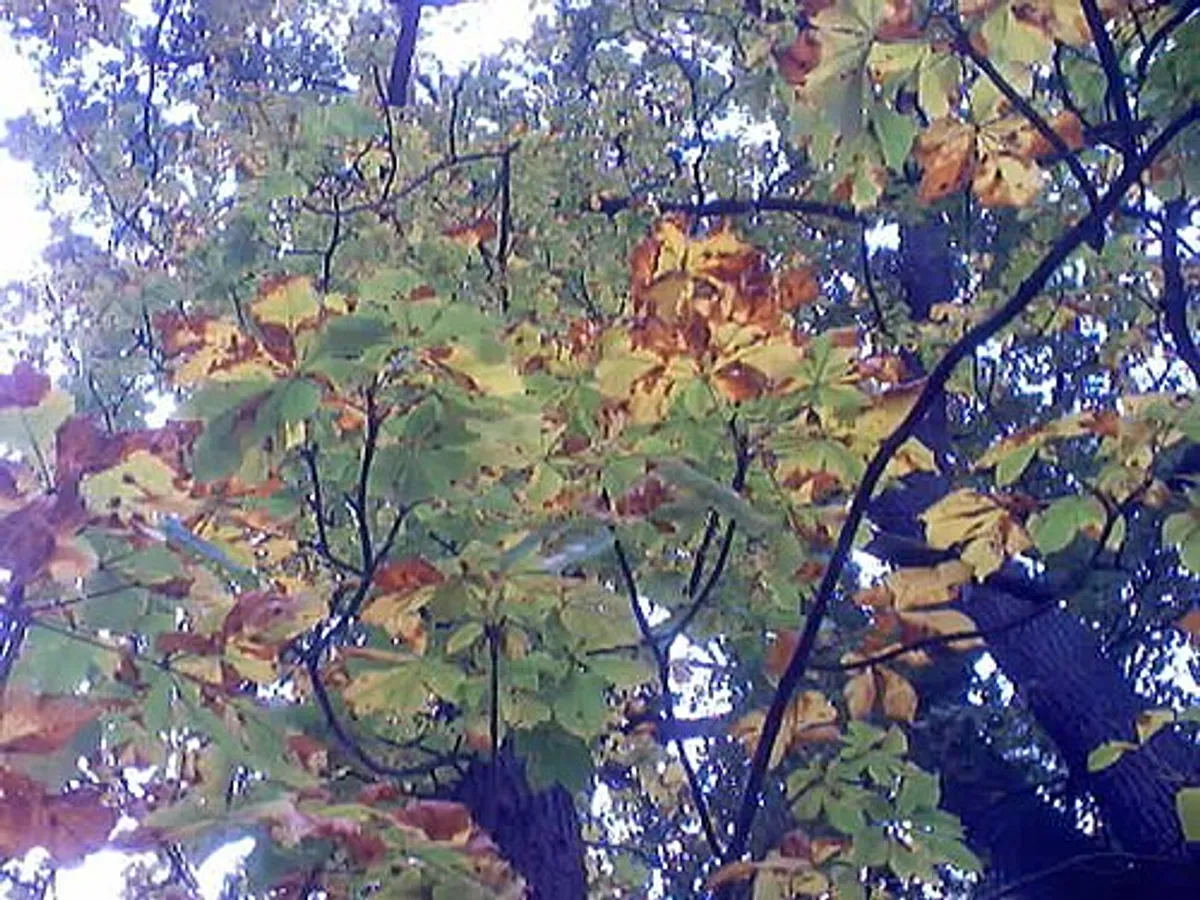
Those yellow blotches on your English holly. The blistered, swollen leaves on your boxwood. The brown patches scattered across your birch. When you first see leafminer damage, it looks serious. Something is eating the inside of your leaves, leaving trails and hollow spots. The plant looks diseased. It is not. On an established plant, leafminer damage is cosmetic, and you almost certainly do not need to treat it. The pest’s biology and your plant’s resilience mean that in the vast majority of cases, the right answer is to do nothing.
Why You Probably Should Not Treat
The simplest reason to avoid treatment is that by the time you see the damage, it is already over. Leafminers are larvae that live inside the leaf tissue, between the upper and lower surfaces. They feed on the green cells and leave behind a pale trail or blotch. The damage you see represents weeks of feeding that finished (or is nearly finished) before you noticed anything wrong. Spraying an insecticide at this point is futile. The larva is not on the leaf surface where a spray can reach it. It is protected inside the tissue it is eating. This is why leafminers teach an essential lesson: some pests cannot be stopped once visible, so you must accept the damage or prevent it through early intervention, which itself comes with costs.
For most homeowners, that logic leads to acceptance. Your holly with yellow blotches is still healthy. The leaf is scarred, but it is still photosynthesizing. The plant is still growing. Your boxwood hedge with blistered new growth looks rough in May, but by July, as the plant generates fresh leaves and puts on growth, the early damage fades into the overall appearance. It looks fine by midsummer. A birch tree with brown patches might drop those leaves prematurely, but it simply grows new ones. UC Davis IPM confirms that one year of leafminer damage, even heavy damage, does not weaken a mature plant.
Consider the cost of treatment against the actual harm done. A soil drench with systemic insecticide costs money, requires repeat applications in some cases, and carries environmental trade-offs. Sticky traps require consistent monitoring and replacement. Sanitation pruning consumes time and effort, especially on larger plants. The benefit is reduced cosmetic damage on leaves that already survived the pest’s feeding. On a plant that looks fine overall, that equation rarely favors action.
You also have allies you cannot see. Native parasitoid wasps hunt leafminer larvae, laying their eggs inside mined leaves. Their larvae will consume the leafminer. In many years, these natural enemies control populations to tolerable levels. The wet climate and diverse flora here support robust populations of beneficial insects. If you spray to control leafminers, you also kill these beneficial wasps. Doing nothing is not laziness; it is letting nature do its work.
Identifying the Mines
Leafminers are not one species; they are a functional group. Dozens of fly, moth, and sawfly species feed as larvae inside leaves. The holly leafminer (Phytomyza ilicis) is the most visible in this region, creating yellow blotches on English holly starting in late spring. The boxwood leafminer (Monarthropalpus flavus) is more dramatic: it makes leaves swell and blister, rendering new growth deformed-looking. These blistered leaves can make a neat hedge look messy and disordered. Birch leafminers (Fenusa pusilla and Profenusa thomsoni) are sawflies. They create brown patches and sometimes trigger premature leaf drop, though the tree responds by flushing new foliage. On conifers like arborvitae and juniper, mining species create brown shoot tips. Madrone, columbine, and various other ornamentals host their own miners. The diversity of leafminer species is remarkable, but their impact on established plants follows a consistent pattern: visible damage that alarms homeowners but rarely threatens plant health.
To confirm what you are seeing, hold a heavily mined leaf to bright light. Look between the upper and lower surfaces. You might see a tiny cream-colored larva or a small dark pupa. The pest is literally inside the leaf tissue. The blotch or trail is the empty space left after feeding. If the larva is still present, it is likely pupating or in its final stages of development.
The Lifecycle
Adults emerge in spring, typically April or May in this region, though timing varies by species and weather. Females lay eggs on susceptible leaves. Eggs hatch within days, and tiny larvae bore into the leaf to feed on inner tissue. They tunnel through May and June, sometimes into July, creating visible trails or blotches as they go. By mid to late summer, they are ready to pupate. Some pupate inside the leaf and complete their cycle there. Others drop from the leaf, pupate in soil or leaf litter, and overwinter as pupae. Most leafminers in this region have one generation per year. Cornell’s integrated pest management guide notes this same single-generation pattern, which creates a predictable management window.
The critical point: damage is the feeding history of a larva that is likely gone or nearly gone. Spraying the leaf surface will not kill the pest because the pest is not on the surface. It is inside the leaf, protected by the tissue it consumed. This is why leafminers are so difficult to control. By the time they are visible to you, they are beyond the reach of most treatments.
When Treatment Might Make Sense
The threshold for treatment is the point at which damage justifies the cost and risk of controlling it. For most homeowners and most landscape plants, that threshold is zero. The risk and expense of intervention outweigh the benefit of minor cosmetic improvement.
There are narrow exceptions worth considering. If you operate a nursery, leafminer damage is not cosmetic; it is a loss of saleable quality. Young plants in their first or second year of establishment, especially if stressed by drought or poor soil, might be weakened by heavy feeding. If a plant suffers heavy infestations year after year without relief, cumulative stress might matter. And some plants respond more seriously than others. Birch leafminer populations can occasionally cause significant defoliation, which does slow growth and can predispose the tree to other stresses.
For a formal boxwood hedge at your home’s entry where appearance genuinely matters, or a high-value ornamental where cosmetic damage is unacceptable, treatment might be worth considering. For a sheared holly screen, a formal parterre, or a specimen plant where visual perfection is part of its purpose, intervention could be justified. For everything else, your plant will be fine without treatment. A family shrub, a screen planting, a casual holly growing in the landscape, these can tolerate leafminer damage with no loss of health or vigor.
Your Options if You Decide to Treat
Do nothing. This is the right call at least 90 percent of the time. Natural enemies manage the pest population. Parasitoid wasps and other beneficial insects control leafminer populations to tolerable levels in many years. Our wet climate supports robust populations of these beneficial insects. Doing nothing is not laziness; it is working with nature. You will not see the wasps at work, but they are there, laying eggs inside mined leaves. Their larvae consume the leafminer larvae. This invisible biological control is free, effective over time, and requires no risk to other organisms.
Sanitation pruning. In early fall, once leaves are visibly mined, you can prune off the worst ones on small plants like holly. Remove and destroy the leaves (do not compost them; burn, bury, or place in the green bin if your service allows diseased material). This removes some pupae or pupating larvae before they overwinter and reduces next year’s population. It works in the sense that it reduces numbers, but it is labor-intensive. You must identify and remove every heavily mined leaf. On a large plant, it is not practical. On a small ornamental in a visible location, it is worth considering if appearance matters to you.
Sticky traps. Yellow sticky cards hung in the canopy in April and May catch adult flies as they emerge. This is more monitoring than control. The traps tell you when adults are active and will catch and kill some flies, reducing the number that lay eggs, but they are not a complete solution. Traps might catch a dozen flies; hundreds more might lay eggs nearby. This approach makes sense if you want to understand timing and populations and are willing to check and refresh traps regularly through spring.
Systemic insecticides. A soil-applied systemic insecticide, usually imidacloprid, applied in early spring before adult emergence, moves up through the plant’s roots and distributes throughout tissues. When larvae feed, they ingest the insecticide and die. This works, but complications follow. Imidacloprid is a neonicotinoid neurotoxic to insects broadly, including beneficial insects. When you apply it to control leafminers, you also kill pollinators and parasitoid wasps that visit your plant or feed on its tissues. Soil organisms can be harmed too. You also commit to repeated applications, as the insecticide breaks down over time. Reserve this approach for situations where cosmetic damage is truly unacceptable: a formal boxwood hedge at your home’s entry, perhaps, or a high-value specimen plant. For a family shrub or casual holly, the trade-off is not worth it.
Host Plants in This Region
Holly, especially English holly, is the most common host for leafminers in this region. If you see leafminer damage, it is most likely on holly. Boxwood is the second most common. Birch is frequently affected. Arborvitae and juniper are commonly affected by tip miners, but damage is usually minor. Madrone, columbine, and citrus are susceptible, as are many other ornamentals.
Seasonal Timing
By knowing when leafminers are active, you can better understand when (and whether) to intervene.
January to March: Pupae overwinter in soil or leaf litter. No visible damage.
April to May: Adults emerge as temperatures rise. Females lay eggs on new leaves. Early damage appears but may not be obvious yet.
May to June: Larvae actively feed inside leaves. Damage becomes visible: blotches on holly, blistering on boxwood, brown patches on birch.
July to August: Larvae finish feeding and move toward pupation. Damage stops appearing. Some species pupate inside leaves; others drop to soil.
September to October: Pupae are dormant or overwintering. Sanitation pruning on small plants can remove some pupae. New growth has largely escaped damage.
November to December: Dormancy continues. Pupae remain protected in soil or leaf litter.
The Broader Lesson
Leafminers teach an important truth: not every visible pest damage requires treatment. The insect’s biology, your plant’s resilience, and the presence of natural enemies combine to make your intervention often unnecessary and sometimes counterproductive.
The damage looks alarming at first notice. A holly leaf with yellow blotches is not pretty. But your plant has survived the attack. It will survive the scarring. The leafminer larva has completed its life cycle or is near completion. Spraying will not help. Waiting will not hurt. Your plant will keep growing. The damage will fade into the overall appearance of the foliage. Next year, if weather and predators cooperate, the leafminer population might be lighter. Understanding when not to fight a pest is knowledge earned.
Sources
Pest management:
- UC Davis Integrated Pest Management
- Cornell University Integrated Pest Management
- HortSense
- PNW Handbook: Integrated Pest Management
Research:
- Dreistadt, S.H. (2001). “Integrated Pest Management for Floriculture and Nurseries.” UC Agriculture and Natural Resources
General reference: