The Winter Tree Your Western Washington Landscape Needs
When November arrives and the deciduous trees shed their leaves, your landscape enters a four-month period of dormancy. Everything turns gray. The evergreens dominate. The structure of deciduous trees becomes skeletal and bare. This is when you discover whether you planted with winter interest in mind.
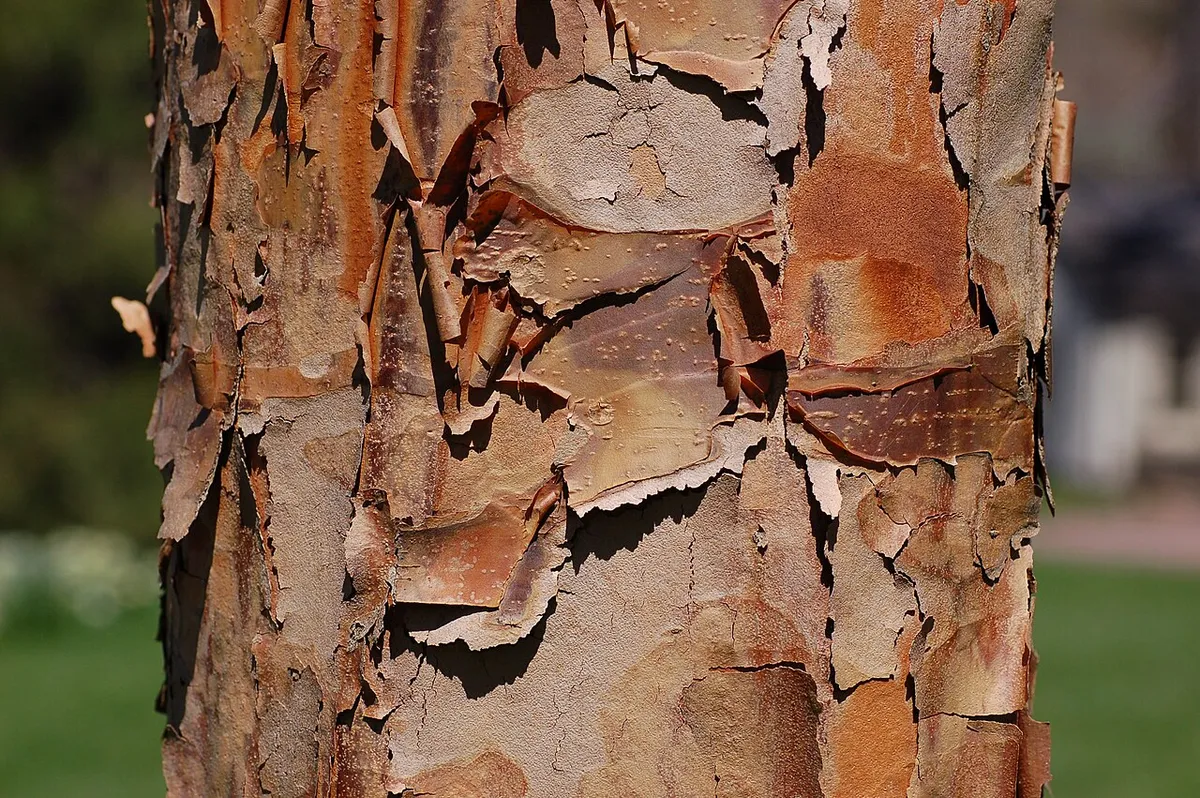
Paperbark Maple (Acer griseum) changes this equation. For the months when you most need visual relief, November through March, this tree delivers what few others can: living color that catches low-angle winter light and transforms it into warm, glowing cinnamon-red.
If you garden in Western Washington, and you have space for a small to medium tree, you should seriously consider paperbark maple as your winter centerpiece.
What Makes It Special
The signature feature is the bark. Unlike most maples, which develop fissured gray or brown bark as they mature, paperbark maple continuously exfoliates in thin, papery curls that peel away to reveal the cinnamon-brown layer beneath. The effect is mesmerizing in winter light, the bark seems to glow. You’ll find yourself looking at this tree from inside your house during the darkest months, and that alone justifies its inclusion.
The rest of the tree is equally unusual. Paperbark maple is one of only a few maples with trifoliate leaves (three leaflets instead of the palmate hand-like leaves you expect from maples). During the growing season, the foliage is a refined, understated green. Come autumn, before those leaves drop to reveal the bark show, the tree puts on a respectable fall display in orange-red to scarlet tones.
Structurally, it grows slowly into a roughly upright oval form, reaching 20 to 30 feet tall and 15 to 20 feet wide over a lifetime. This makes it a perfect specimen tree for residential landscapes, large enough to anchor a space, small enough to fit almost any lot size in the Puget Sound.
Why It Costs What It Does
You’ll notice paperbark maple carries a higher price tag than most maples at the nursery. This isn’t arbitrary. The species is native to central China, where it was first collected by plant explorer Ernest Wilson in 1901. Getting viable seed from paperbark maple is notoriously difficult; germination rates in controlled studies often fall below 5 percent. This scarcity, combined with the tree’s slow growth rate, means nurseries invest years in production before they can sell a single specimen. When you buy a 15-gallon paperbark maple, you’re paying for a decade of care.
The practical lesson: buy the largest specimen you can afford. A five-gallon tree will take 15 to 20 years to mature. A 24-inch box specimen will deliver winter interest within 7 to 10 years. If winter bark is your goal, bigger up front wins.
Performance in Western Washington
Paperbark maple is well-adapted to Puget Sound conditions. It falls within the hardiness range of USDA zones 4a through 8b, and our maritime climate sits comfortably in that band. The tree tolerates our clay-heavy soils, handles our maritime moisture patterns, and doesn’t struggle with our humidity the way some conifers do.
One disease warrant your attention: Verticillium wilt. This vascular disease affects the entire Acer genus in our region and is present in Western Washington soils. Infected trees show wilting, branch dieback, and eventual decline. The disease is soilborne and incurable once established in a tree. However, Verticillium wilt is not a guaranteed death sentence for paperbark maple. Trees in well-maintained landscapes with good drainage, proper irrigation, and minimal root disturbance often coexist with the pathogen without severe symptoms. The risk is real but manageable with good cultural practice.
Other pests and diseases documented on maples (including paperbark maple) include scale insects, spider mites, anthracnose, and several others. In the Pacific Northwest, most of these are minor issues on paperbark maple specifically. The tree’s slow growth and refined form make it less attractive to the aggressive pests that plague fast-growing species.
Where to Plant It
Position your paperbark maple where you see it from inside your house during winter. This is the decision that makes or breaks its value. If you tuck it in a back corner, you lose the whole point. Plant it where the winter afternoon light, that low, warm light from the southwest in December and January, hits the trunk and branches directly. A location visible from a frequently-used window during the heating season transforms it from a nice tree into a focal point that justifies its cost and patience.
Paperbark maple prefers part shade in summer, especially in warmer climates. In Western Washington, full sun is acceptable, and in fact often desirable during winter. Morning sun and afternoon dappled shade is ideal. The slow growth means it won’t suffer from being shaded early in its life by neighboring trees, though you’ll want to manage competition as it establishes.
Soil-wise, it tolerates our clays better than many ornamental trees. Ensure good drainage at planting; waterlogged roots in winter will promote fungal issues. Otherwise, amend the planting hole generously and don’t worry about creating perfect conditions. This tree is tougher than its refined appearance suggests.
Maintenance and Expectations
Young paperbark maples benefit from light pruning to establish form, but mature trees need little intervention. Avoid heavy pruning or topping, which will ruin the natural branching structure that displays the exfoliating bark so effectively.
Water establishment-phase trees (first 2 to 3 years) during dry periods, particularly in summer. Once established, paperbark maple is reasonably drought-tolerant in our climate, though it responds well to consistent moisture.
Don’t expect rapid growth. Paperbark maple gains 6 to 12 inches annually under ideal conditions. This slowness is part of its character. It rewards patience and planning.
The Verdict
Paperbark maple is the finest winter-interest tree available for Western Washington residential landscapes. Yes, it’s slow. Yes, it’s expensive. Yes, it requires thoughtful placement and basic care. But when that cinnamon bark glows in the winter light outside your window, and you’re looking at months of visual interest while everything else sleeps, you’ll understand why those four decades of plant exploration culminating in Ernest Wilson’s 1901 collection was worth it.
Plant one now. Your winter landscape will thank you for years to come.
Sources
Wilson, E. H. (1913). A Naturalist in Western China: With Vasculum, Camera and Gun. Doubleday, Page & Company.
Gilman, E. F., Watson, D. G. (1994). Acer griseum: Paperbark Maple. University of Florida IFAS Extension.
Dirr, M. A. (2009). Manual of Woody Landscape Plants: Their Identification, Ornamental Characteristics, Culture, Propagation and Uses (6th ed.). Stipes Publishing.
Sniezko, R. A., Koch, J. (2017). Breeding for resistance to nonnative pathogens in forest trees. Annual Review of Phytopathology, 55, 221-244.
USDA Plant Hardiness Zone Map. United States Department of Agriculture, Agricultural Research Service.