You walk into a regional nursery in February and there are three Asian pear cultivars in bare-root: Chojuro, Hosui, Shinseiki. The tags say sweet, crisp, productive, “more fire blight tolerant than European pears.” They do not tell you that one of those three is rated S for Pseudomonas in the PNW Plant Disease Handbook, that another is the most oil-sensitive Asian pear in the region, or that the bacterial disease that actually kills Asian pears here is not the disease the tag warns you about.
The question is not whether to plant an Asian pear. They are easier to grow here than European pears in nearly every way. They set fruit faster, they are more scab-resistant, they need less spray, and they are heavy bearers. The question is which Asian pear, because the difference between the right cultivar and the wrong one is the difference between fruit and a tree that spends its life dying back.
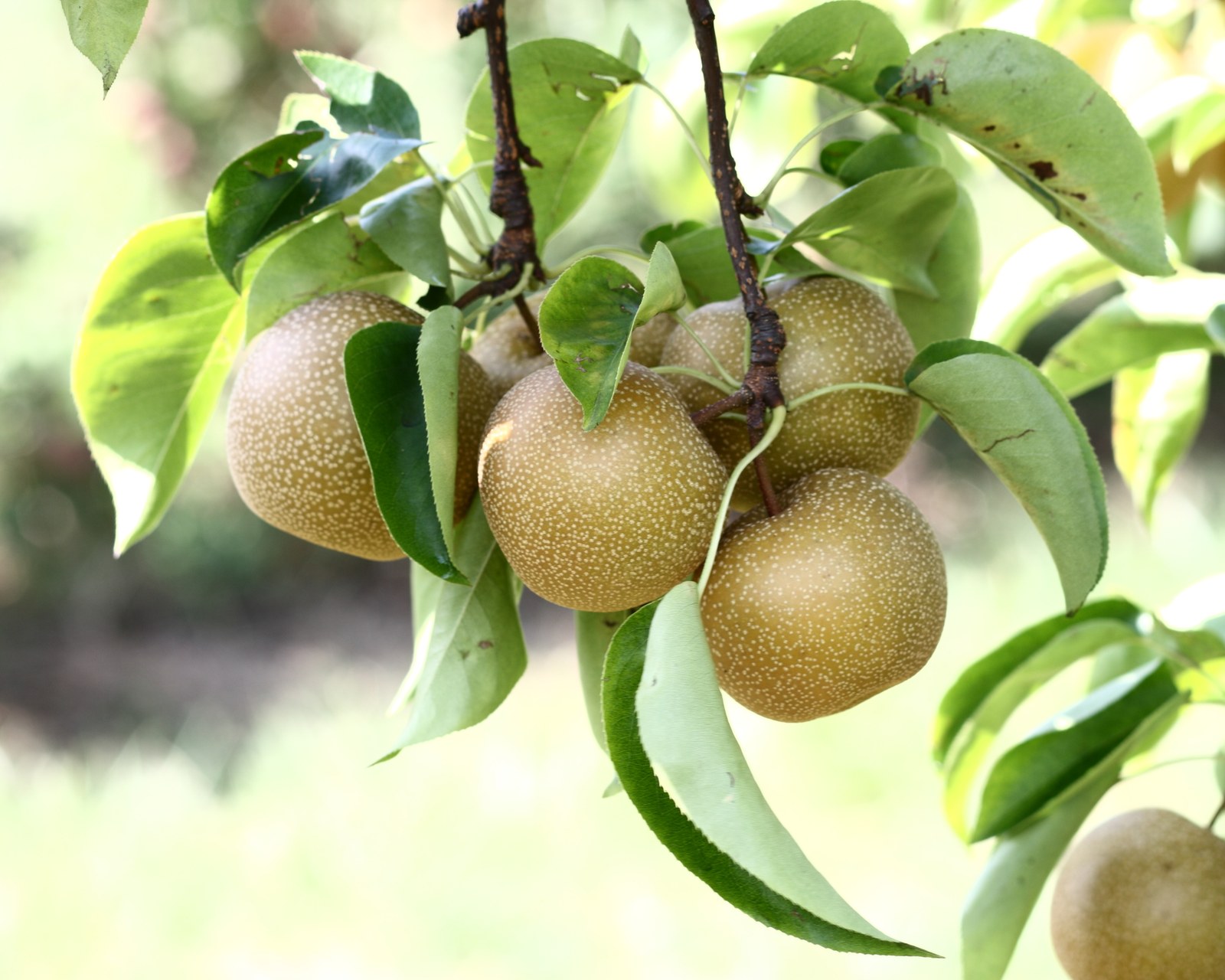
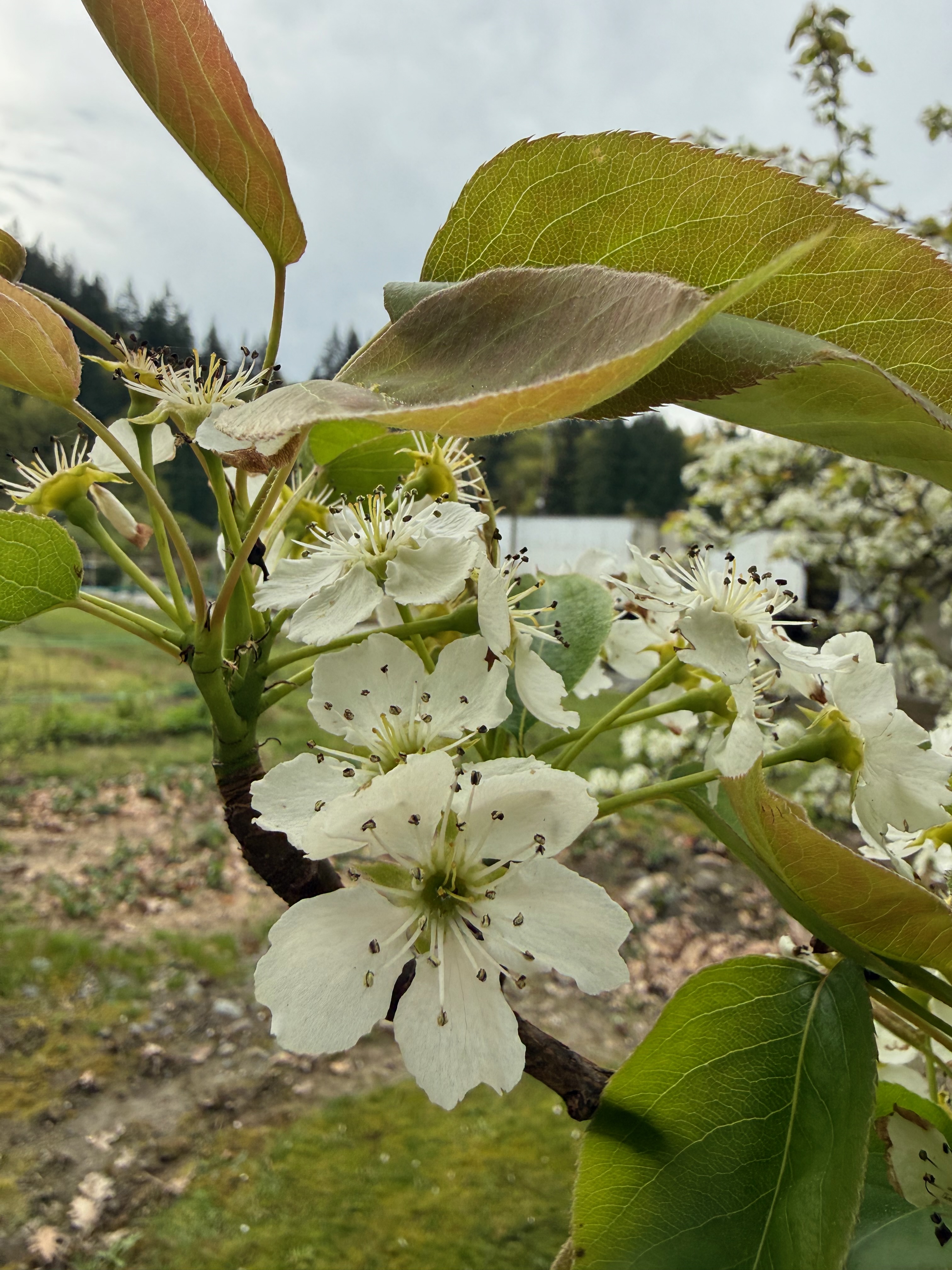 Pyrus pyrifolia ‘Chojuro’ in full bloom, Issaquah, April 20, 2026. Field observation, 1,509 GDD₃₂.
What Actually Limits You
National variety guides recommend Asian pears for fire blight tolerance. That recommendation is correct on average and useless for the Puget Sound lowlands. Fire blight needs a 24-hour stretch at 65°F or warmer combined with a wetting event during open bloom. Six years of Puget Sound weather data (2020 through 2025) show that combination occurring during the Asian pear bloom window only four times across 311 bloom days. About 1.3 percent. Most years have zero risk days.
The disease that actually drives Asian pear failure here is Pseudomonas syringae blossom blast and stem dieback. Pseudomonas asks the opposite question of fire blight. It looks for cold during open bloom, a frost event that injures flower tissue, followed by cool wet weather that lets the bacteria multiply. Six years of weather data show an average of four to five frost days during Asian pear bloom every year, and another six cold-wet days. Average maximum temperature during bloom: 56°F. The Puget Sound lowlands deliver Pseudomonas conditions every year and fire-blight conditions episodically. Reading those two patterns from the same weather record is the regional inversion that national variety guides miss.
The PNW Plant Disease Handbook is direct about this. Pseudomonas is “much more severe on Asian pear cultivars than on European pears in western Oregon,” and the bacteria produce an ice-nucleation protein that increases the frost wounds they then exploit. On European pears the disease usually stops at the spur. On Asian pears it runs down the branch and can kill young trees to the ground.
There is a fourth disease worth knowing about, pear trellis rust. WSU HortSense lists it as commonly reported on pear leaves here, and Asian (Oriental) cultivars are listed as susceptible. Junipers in your neighborhood are the alternate host. If you see bright orange spots on the upper leaf surface in mid-summer with cup-like structures on the underside, that is what you are looking at. Standard scab management (leaf cleanup, copper) helps but does not eliminate it.
The Recommended List
The PNW Plant Disease Management Handbook publishes a 15-cultivar Asian pear susceptibility table. Each cultivar is rated for fire blight (1 through 10 USDA scale, 10 being immune), Pseudomonas (R, I, S), pear scab (R, I, S), and a few other traits. The numbers in parentheses below are USDA fire blight rating / Pseudomonas / scab. Higher fire blight numbers and R ratings on Pseudomonas and scab are better.
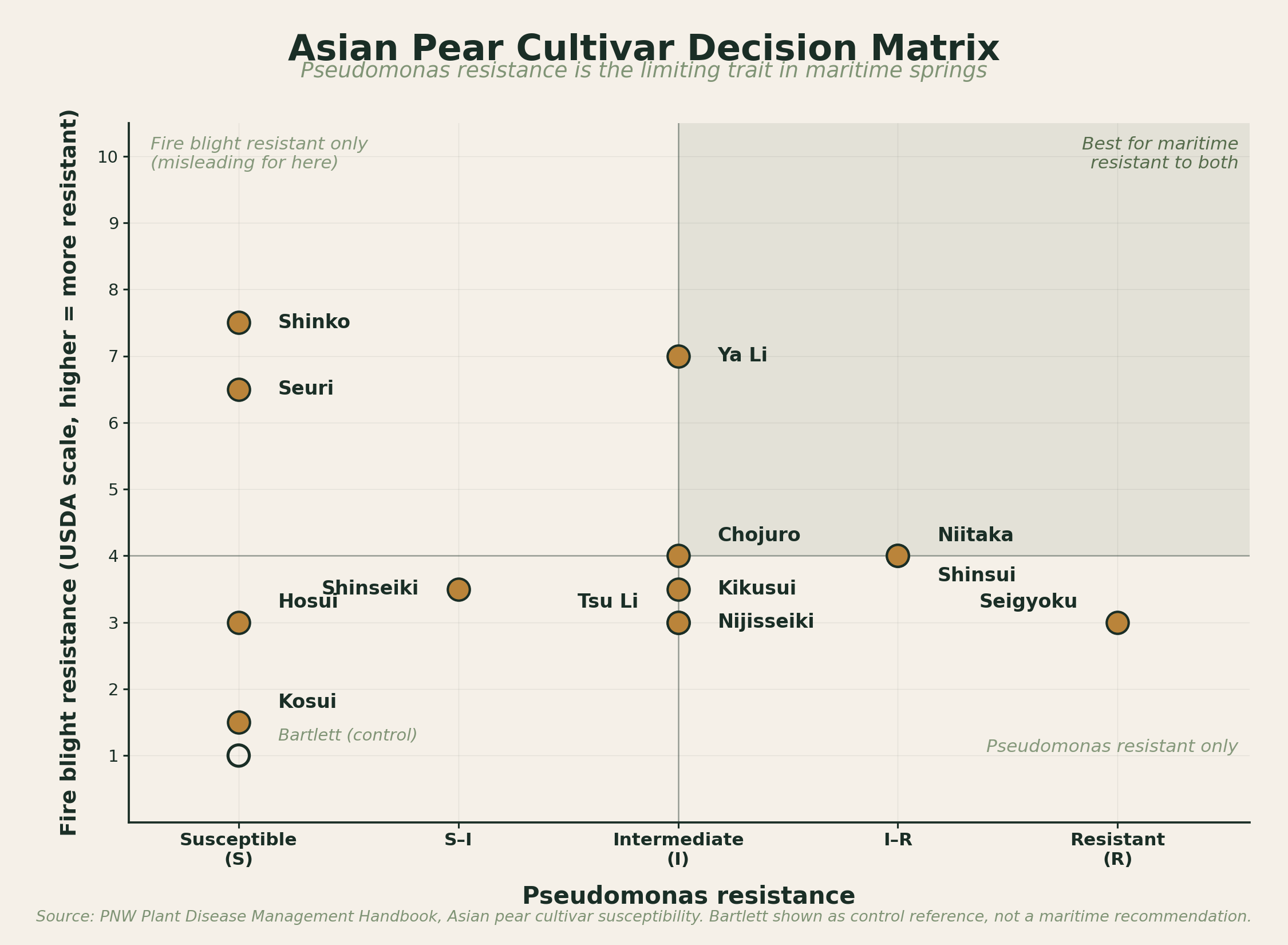 Asian pear cultivar decision matrix. Pseudomonas resistance (x-axis) is the limiting trait in maritime springs; fire blight resistance (y-axis) gets the most coverage in national variety guides. The upper-right quadrant is the small set of cultivars that resist both.
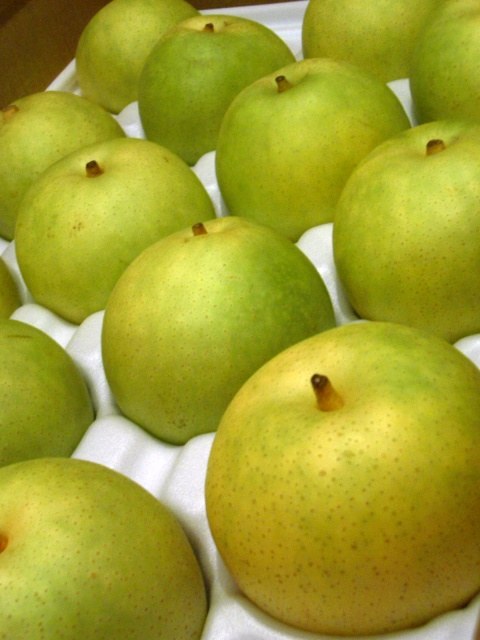
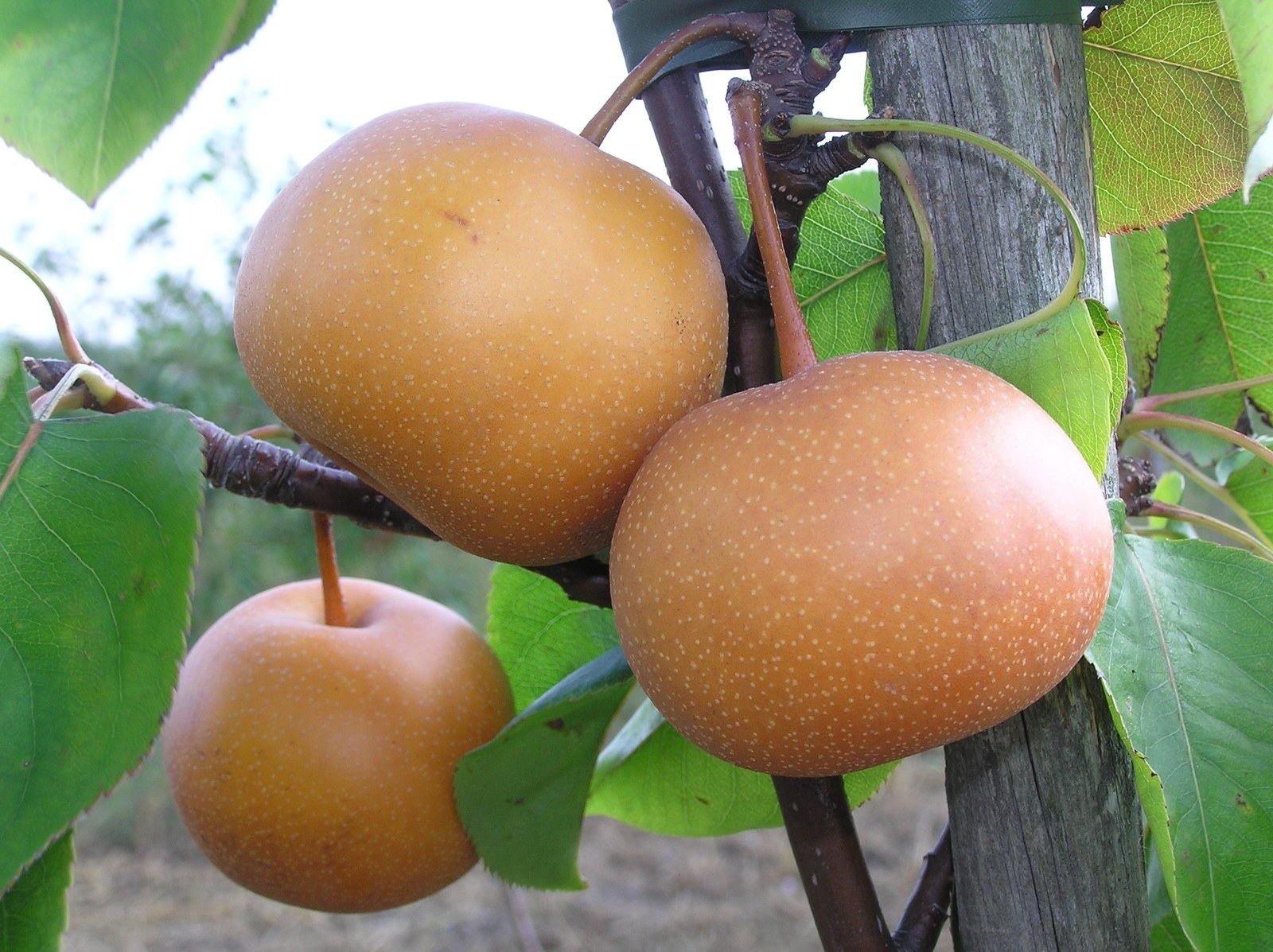
Asian pears come in two visual classes: smooth-skinned (yellow-green or pale, like Nijisseiki and Shinseiki) and russeted (brown, often with a textured corky finish, like Chojuro and Hosui). The visual class is genetic, not a sign of disease, and you choose between them on flavor and texture preference, not on growing performance.
Tier 1: Best for Maritime Springs
These cultivars combine Pseudomonas resistance with field-tested maritime performance. They are not always the easiest to find at retail, but they are the most likely to produce reliably without intensive management.
Niitaka (4.0 / I-R / R). Late ripening, large yellow-russet fruit. Moderate fire blight resistance, intermediate-to-resistant against Pseudomonas, and resistant to scab. An early-blooming Group 1 cultivar, which means Niitaka is exposed to spring frost during open bloom; the Pseudomonas I-R rating is the trait that lets it tolerate that exposure better than most cultivars. Fruit stores well. The standout pick for low-maintenance production here.
Ya Li (7.0 / I / ?). A Chinese white pear, pear-shaped, not apple-shaped. Strong fire blight resistance, intermediate Pseudomonas. The PNW Handbook notes that Chinese white pears Ya Li and Tsu Li are “somewhat resistant even when damaged by frost,” which is the relevant test for an early-bloom cultivar in this climate. Late ripener, mild flavor. Pair with Tsu Li or another Group 1 cultivar.
Tsu Li (I / I / ?). Sister cultivar to Ya Li. Same morphology, similar Pseudomonas behavior, same Group 1 bloom timing. Less commonly stocked locally. If you can find one, plant one of the Chinese whites and pair it with another Group 1 cultivar.
Seigyoku (3.0 / R / ?). The only cultivar in the PNW Handbook table rated R for Pseudomonas. Bloom group is not formally classified, so plan pollination through general bloom-timing references rather than a verified group assignment. Worth considering if you want maximum Pseudomonas resistance and can accept the pollinizer uncertainty.
Tier 2: WWFRF Maritime-Tested
The Western Washington Fruit Research Foundation, working from the WSU NWREC trial garden in Mount Vernon, recommends seven Asian pears in approximate ripening order: Hamese, Shinseiki, Kosui, Mishirasu, Chojuro, Yoinashi, Atago. Most have proven themselves in 25-cultivar maritime trials going back to 1985. Several lack formal disease ratings and verified bloom-group assignments.
Chojuro (4.0 / I / R). The brown-skinned russeted “Plentiful” pear, mid-season ripening, Group 2. A workhorse cultivar that has done well across the maritime trials. Intermediate Pseudomonas, resistant to scab. Moderate fire blight rating. My own tree at Issaquah set a normal crop in 2026 with no spray program; bud break on March 21 at 980 GDD₃₂, full bloom April 20 at roughly 1,509 GDD₃₂. If you are buying one Asian pear, this is a defensible choice.
Korean Giant (also sold as A Ri Rang or Olympic). Group 1, large late-ripening russeted fruit, stores well. Not in the PNW Handbook cultivar table, so disease ratings are inferred rather than formal. Pair with another Group 1 cultivar (Niitaka, Ya Li, Tsu Li) for pollination.
Yoinashi. Mid-season Japanese pear, no formal disease ratings or bloom-group classification. Distinctive russeted skin and rich flavor. Oil-sensitive per the PNW Handbook Asian Dieback entry; do not use horticultural oil during the growing season.
Mishirasu. Large fruit, mid-to-late ripening. WWFRF-recommended, no formal disease ratings. Less commonly stocked.
Atago. Large late-season storage pear, can hold in the refrigerator into winter. WWFRF-recommended, no formal disease ratings.
Hamese. Earliest of the WWFRF list. Use for diversity if you have room for multiple cultivars; pair with mid- or late-season picks for harvest spread.
Tier 3: Popular at Retail, with Caveats
These are the cultivars you will most often see at the nursery. They are not bad choices, but each has a specific tradeoff that the tag will not tell you about.
Shinseiki (3.5 / S-I / S). Sold as the easy, self-fertile, beginner Asian pear. Early ripening, smooth yellow-green skin, mild sweet flavor. Sources disagree on bloom timing; in either case, it is moderately susceptible to both Pseudomonas and scab. Self-fertility claim: do not rely on it here. Productive when healthy.
Hosui (3.0 / S / R). Exceptional butterscotch flavor, mid-season, brown-tan russeted skin. Group 2. The flavor case is real. The cost is that Hosui is rated susceptible to Pseudomonas, and the PNW Handbook flags Hosui (along with Yoinashi and Shinko) as oil-sensitive after bloom. You cannot use horticultural oil during the growing season on these cultivars. If you accept that constraint, plant for flavor.
Nijisseiki (“20th Century”) (3.0 / I / S). Historically the dominant Asian pear in the trade. Pale yellow, juicy, mild. Group 2. Intermediate Pseudomonas, susceptible to scab. The PNW Handbook describes it as “less susceptible” to Pseudomonas than the Japanese cultivars listed below, which is a real advantage. The reason it is here and not Tier 2 is that scab and modest fire-blight rating combine to keep it just below the regional sweet spot.
Shinko (7.5 / S / S). The highest fire blight rating among Asian pears in the table. Group 2. If we lived in a region where fire blight was the dominant threat, Shinko would be the top pick. Here, it is rated susceptible to both Pseudomonas and scab, oil-sensitive, and late-ripening (often into October rain). The strong fire blight rating buys you less than you would think in this climate.
Kosui (S / S / R). The cultivar most likely to make you forget about disease ratings entirely. Often described as the best-flavored Asian pear in cultivation. Group 2. Susceptible to fire blight and Pseudomonas, resistant to scab. If you only have room for one tree and you grow for flavor, it is a defensible pick. Site carefully (no frost pockets), prune in dry weather, and accept that you may lose the occasional shoot to bacterial dieback.
Pollination and the Two Groups
Most Asian pears need a second compatible cultivar for cross-pollination. Some cultivars are sold as self-fertile, including Shinseiki and (in some references) Nijisseiki. Plan for cross-pollination here regardless. Maritime springs are too unreliable for self-pollination to do the work alone, cool wet weather suppresses bee activity, and pear nectar is low-sugar and short-blooming. NC State Extension reports that self-pollination produces only about 15 percent of a normal crop on these cultivars in any climate.
Asian pears split into two distinct bloom groups. Cultivars within a group cross-pollinate. Cultivars across the two groups do not bloom at the same time and will not pollinate each other.
Group 1 (early-blooming): Seuri, Ya Li, Tsu Li, Olympic, Korean Giant, Niitaka
Group 2 (late-blooming): Chojuro, Shinseiki, Shinsui, Yongi, Kikusui, Nijisseiki, Kosui, Shinko
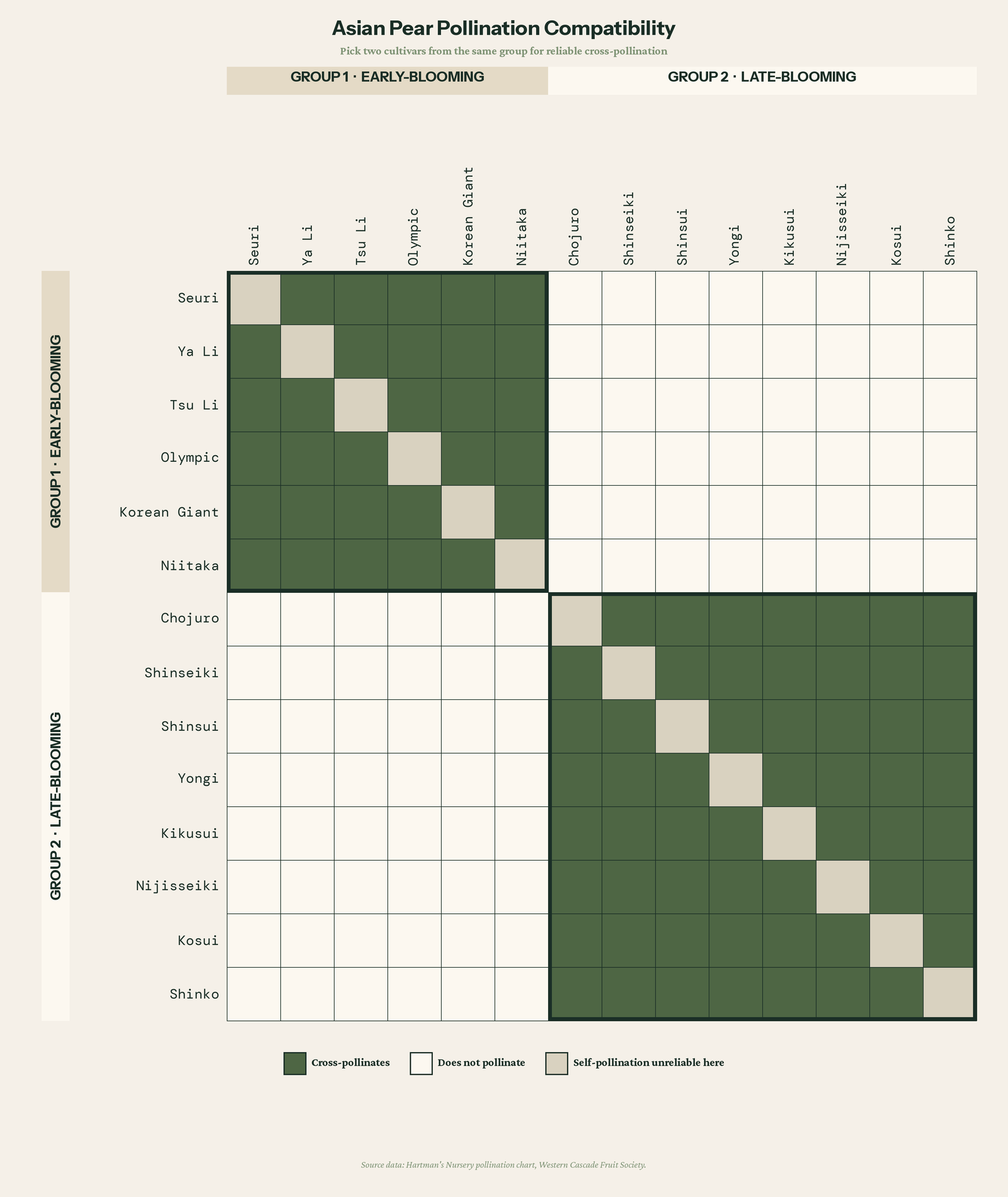 Asian pear pollination compatibility matrix, recreated from Hartman’s Nursery chart (Western Cascade Fruit Society). Two distinct bloom groups, no cross-group pollination.
Pick two cultivars from the same group and pollination is reliable. Niitaka with Korean Giant works. Chojuro with Hosui works. Niitaka with Chojuro does not, because they bloom in different windows. This grouping follows the Hartman’s Nursery pollination chart and conflicts with some other regional and national charts on where specific cultivars sit, particularly Niitaka, Korean Giant, and Shinseiki.
Bartlett, the European pear, blooms with the late Group 2 Asian pears. It can serve as a pollinizer for late Asian cultivars (Chojuro, Hosui, Nijisseiki) and is the universal pollinizer for European pears, but it does not pollinate Group 1. Group 1 cultivars must be paired with another Group 1 cultivar.
A second pollination note: pear flowers produce nectar with low sugar content, and pear bloom is short. Honey bees prefer dandelions and almost any other early bloom over pears. Mason bees fly at lower temperatures and are more reliable for pear pollination here, particularly in cold wet springs. If you do not already have mason bees established, set up tubes before bud break.
Rootstock and Tree Form
Most Asian pears at retail are grafted on Pyrus betulifolia or one of the OHxF rootstocks (87, 97, 333). These are semi-standard to semi-dwarf, producing trees in the 12 to 20 foot range when maintained. Asian pears are precocious; expect first fruit in years 2 to 3.
Train multi-trunk rather than central leader. NC State Extension makes the case directly: a multi-trunk form reduces the risk that a single fire-blight strike kills the whole tree. The same logic applies to Pseudomonas. Bacterial dieback that takes one of three or four trunks is recoverable; the same strike on a single-trunk tree may girdle the rootstock.
Site placement matters more for Asian pear than for apple. Avoid frost pockets. Cold air pools in low spots and along the upslope side of fences and walls; that pooled cold during bloom is the Pseudomonas trigger. A tree on a slope with air drainage will see meaningfully fewer bacterial-blast events than the same tree fifty feet downslope.
The Maintenance Pattern That Actually Works Here
Three practices matter here that do not get emphasized enough in national guides.
Prune during dry weather, or wait for summer. The PNW Handbook is specific: dormant-season pruning during cold wet weather opens entry routes for Pseudomonas. If your typical winter pruning falls on a wet weekend, delay. Summer pruning works for Asian pears (it slows excess vigor as a bonus) and avoids the bacterial entry point entirely.
Thin aggressively. Asian pears set hundreds of fruit per tree. June drop will remove maybe ten percent. After June drop, manually thin another 40 to 50 percent of what remains, leaving fruit on six-inch spacing. Skip this step and the tree exhausts itself, the fruit are small and seedy, and biennial bearing sets in the following year. Wally Howell of WSU Master Gardeners reports about 40 pounds from a single trained Chojuro after thinning.
Bag fruit for codling moth. Cover each fruit with a paper lunch bag at dime size (roughly four to six weeks after petal fall) and tie with a twist around the stem. This is the same technique covered in the codling moth guide and it works equally well on Asian pear. One pass, no spray schedule, no broad-spectrum insecticides disrupting beneficials. Asian pear is also a confirmed spotted wing drosophila host (unlike European pear, whose flesh is too firm), so prompt harvest matters on the late cultivars ripening into August and September.
A final cultivar-specific warning. Hosui, Yoinashi, and Shinko are sensitive to horticultural oil after bloom. The PNW Handbook is explicit. Do not use oils directly or as surfactants during the growing season on these cultivars. If you need oil for pear psylla, time it to fully dormant.
Seasonal Action Summary
| When | What | Why |
|---|---|---|
| Jan - Feb | Plant bare-root on a dry day; train multi-trunk; site away from frost pockets | Multi-trunk reduces bacterial-dieback total-loss risk; dry-weather planting limits Pseudomonas wounding |
| Mar | Track bud break (around 980 GDD₃₂ at Kent); avoid pruning during cold-wet stretches | Bud break opens the vulnerability window; wet pruning invites Pseudomonas |
| Late Mar - Apr | Bloom; do not irrigate overhead; cover young trees during forecast hard frost | Frost during bloom is the primary Pseudomonas infection event |
| May | Manual fruit thinning, 40-50% removal, six-inch spacing | Without thinning, fruit are small and the tree exhausts itself |
| Jun | Bag fruit at dime size with paper lunch bags and twist ties | Codling moth control without a spray schedule |
| Jul - Aug | Monitor for pear psylla honeydew and pear trellis rust on leaves; remove suckers | Sucker growth is psylla-preferred; trellis rust is increasing here |
| Aug - Oct | Harvest by cultivar maturity; test ripeness by lifting fruit above the stem | Asian pears ripen on the tree; cultivars vary widely in harvest window |
| Nov | Apply copper bactericide before fall rains; rake and destroy fallen leaves | Reduces overwintering Pseudomonas inoculum and pear scab pseudothecia |
| Dec | Prune ONLY during dry stretches; sterilize tools between cuts | Wet-weather winter pruning is the most common Pseudomonas entry route |
Sources
- Hartman Nursery – Bob Hartman – Western Cascade Fruit Society (source of the Asian pear pollination chart used in this guide)
- Pear, Asian (Pyrus spp.)-Dieback – Pacific Northwest Plant Disease Management Handbook
- Pear, Asian Cultivar Susceptibility – Pacific Northwest Plant Disease Management Handbook
- Pear (Pyrus spp.)-Pseudomonas Blossom Blast and Dieback – Pacific Northwest Plant Disease Management Handbook
- Recommended Fruit Trees for the Puget Sound – Western Washington Fruit Research Foundation / WSU NWREC Mount Vernon
- Pollination - Pear – WSU Tree Fruit
- Growing and Using Asian Pears (EB1845) – Wallace P. Howell, WSU Master Gardener
- Pyrus pyrifolia (Apple Pear, Asian Pear, Chinese Pear, Chinese Sand Pear) – NC State Extension Plant Toolbox
- Asian Pear Pollination Chart – Burnt Ridge Nursery
- Bokszczanin et al. 2012. Inheritance of fire blight resistance in Asian Pyrus species. Open Journal of Genetics 2:109. DOI: 10.4236/ojgen.2012.22016
Pesticide products mentioned in this guide are for informational purposes. Always read and follow the label. Washington State law governs pesticide use; verify current registration status before purchase.