You chose the crabapple for the flowers. It was stunning in April: clouds of white or pink against the bare branches, honeybees working every cluster. By August the leaves are half gone, the ones still hanging are spotted olive-green and brown, and the ground underneath is littered with scabby fruit that stains the sidewalk. The tree that was the best thing in the yard for two weeks is now the worst thing in the yard for five months.
This is not a crabapple problem. It is a cultivar problem. A scab-susceptible crabapple in the Puget Sound lowlands faces the same fungal pressure as a susceptible fruiting apple: repeated scab infection events through every wet spring. A disease-resistant cultivar, chosen from the start, stays clean from April bloom through October fruit drop. The difference between an embarrassment and an asset is the variety you planted.
Reading a Disease Rating
Three rating systems cover crabapple disease resistance, and they do not always agree.
The Morton Arboretum evaluates cultivars across four diseases: apple scab, fire blight, cedar-apple rust, and powdery mildew. Ratings run from Excellent through Good, Fair, and Poor. A cultivar rated Excellent across all four needs no fungicide program and stays cosmetically clean through the season.
J. Frank Schmidt & Son (Boring, Oregon) publishes a crabapple information chart using the same four-disease, four-tier scale. Schmidt is a major wholesale grower for the Pacific Northwest nursery trade, and their ratings reflect field performance under PNW growing conditions. Where Schmidt and Morton disagree, the Schmidt data carries more regional weight for Puget Sound plantings.
The PNW Plant Disease Management Handbook rates crabapples L (low), M (medium), or H (high) for scab, fire blight, and powdery mildew, but does not include rust.
Here is the complication: the three systems disagree on several cultivars. PNW Handbooks rates many crabapples H for scab that Morton rates Excellent and WSU HortSense lists as field-resistant. The likely explanation is methodology. PNW Handbooks ratings appear to derive from controlled inoculation studies where the fungus is applied directly to leaves. Morton and Schmidt ratings reflect field performance across years of landscape evaluation. Both approaches are valid; they measure different things.
The ratings in this guide use Schmidt (JFS) data as the primary source for cultivars they evaluate, with Morton filling gaps. Where the two conflict, I note it. For sites with heavy scab pressure (near old apple orchards, heavy clay soil, poor air circulation, no fall leaf cleanup), use the conservative PNW Handbooks ratings. For typical residential and commercial landscapes with reasonable air movement, the Schmidt and Morton field ratings are reliable.
The Recommended List
Organized by mature size, because that is the first question for any landscape planting.
Under 10 Feet
For small gardens, foundation plantings, and tight spaces where a full-sized tree cannot fit.
Tina (5-6 × 6-8 ft). White flowers opening from red buds, red fruit. Excellent for scab, cedar-apple rust, and mildew; Good for fire blight (JFS). The smallest crabapple with near-top disease ratings. Fits where almost nothing else will.
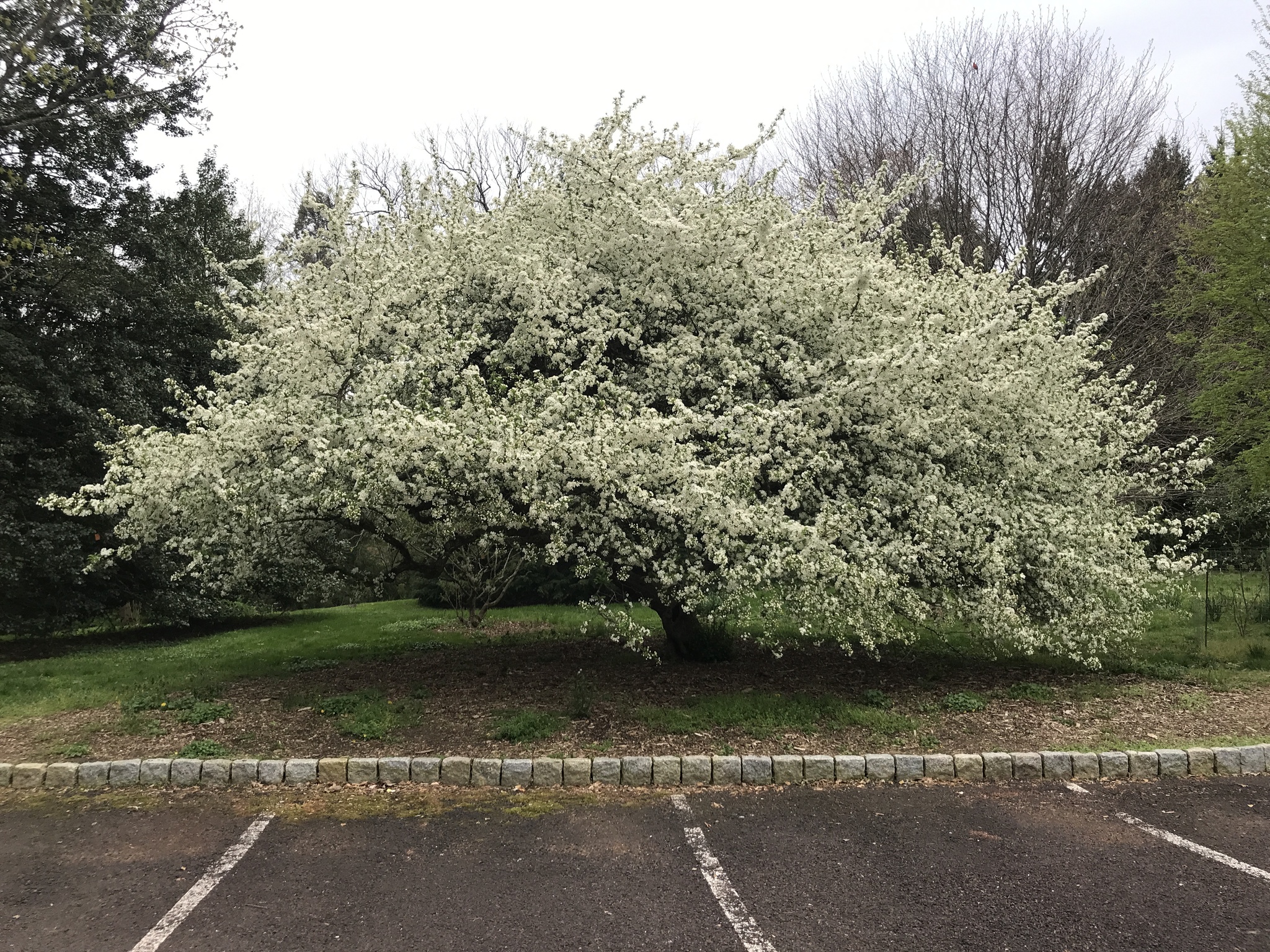 Sargent crabapple at Morris Arboretum: wide-spreading habit, white flowers, zero scab in 33 years of evaluation. Photo by conboy, iNaturalist (CC BY).
Sargent Crab (8-10 × 10-12 ft). White flowers, persistent red fruit into winter. Excellent across all four diseases. The best-documented resistance of any crabapple: a 33-year evaluation at the Ohio Agricultural Research and Development Center in Wooster recorded zero scab. Wide-spreading habit makes a good low screen or specimen in a small yard.
Firebird (Malus sargentii ‘Select A’, 8 × 10 ft). A J. Frank Schmidt selection of Sargent Crab with more reliably persistent annual fruit display than the species. White flowers from red buds, bright red persistent fruit, Excellent across all four diseases. Natural-form dwarf (not top-grafted) suits naturalistic plantings where ‘Lollipop’s strictly formal globe shape would look out of place.
Lancelot (8-10 × 8-10 ft). White flowers, persistent gold fruit. Excellent across all four. Upright, compact form that works in narrow side yards.
10 to 15 Feet
For suburban lots, street buffers, and spaces that need structure without canopy dominance.
Lollipop (10-12 × 10-12 ft). White flowers, red fruit. Good for scab and fire blight; Excellent for cedar-apple rust and mildew (JFS). Dense globe shape that reads as intentional and tidy in formal landscapes.
Sparkling Sprite (12 × 12 ft). White flowers from pink buds, golden-orange persistent fruit. Excellent across all four diseases (JFS). A J. Frank Schmidt introduction that fills the gap between ‘Lollipop’ (10 ft) and ‘Coralburst’ (15 ft) for top-grafted compact dwarfs. Outstanding clean bright green summer foliage. Newer in the trade (PP27,954) and not yet as widely stocked as ‘Lollipop’ but worth requesting.
Ruby Tears (8-10 × 12-15 ft). Pink flowers, red fruit. Excellent across all four. A weeping form with outstanding resistance, which is unusual; most weeping crabapples carry poor disease ratings. This is the exception.
Louisa (10-15 × 12 ft). The older established weeping crabapple, discovered by Polly Hill at her arboretum on Martha’s Vineyard in 1962 and named for her daughter. True-pink fragrant flowers from red buds, lopsided yellow fruit with rose blush. Excellent for scab; Good for fire blight, rust, and mildew (JFS). The weeping habit is genetic rather than the staked top-graft seen in many compact “weeping” cultivars, so mature trees develop a graceful flowing fountain shape that ages well. The standard recommendation when a designer specifies “weeping crabapple” in PNW landscape plans.
Coralburst (10-15 × 15 ft). Double rose flowers from coral buds, yellow-green fruit. Compact and dense. One caveat: JFS rates it Fair for scab. Excellent for fire blight, cedar-apple rust, and mildew (JFS). A reasonable choice where scab pressure is moderate, but not the first pick for a high-pressure site.
15 to 25 Feet
Specimen trees, property borders, the dominant ornamental in a front yard.
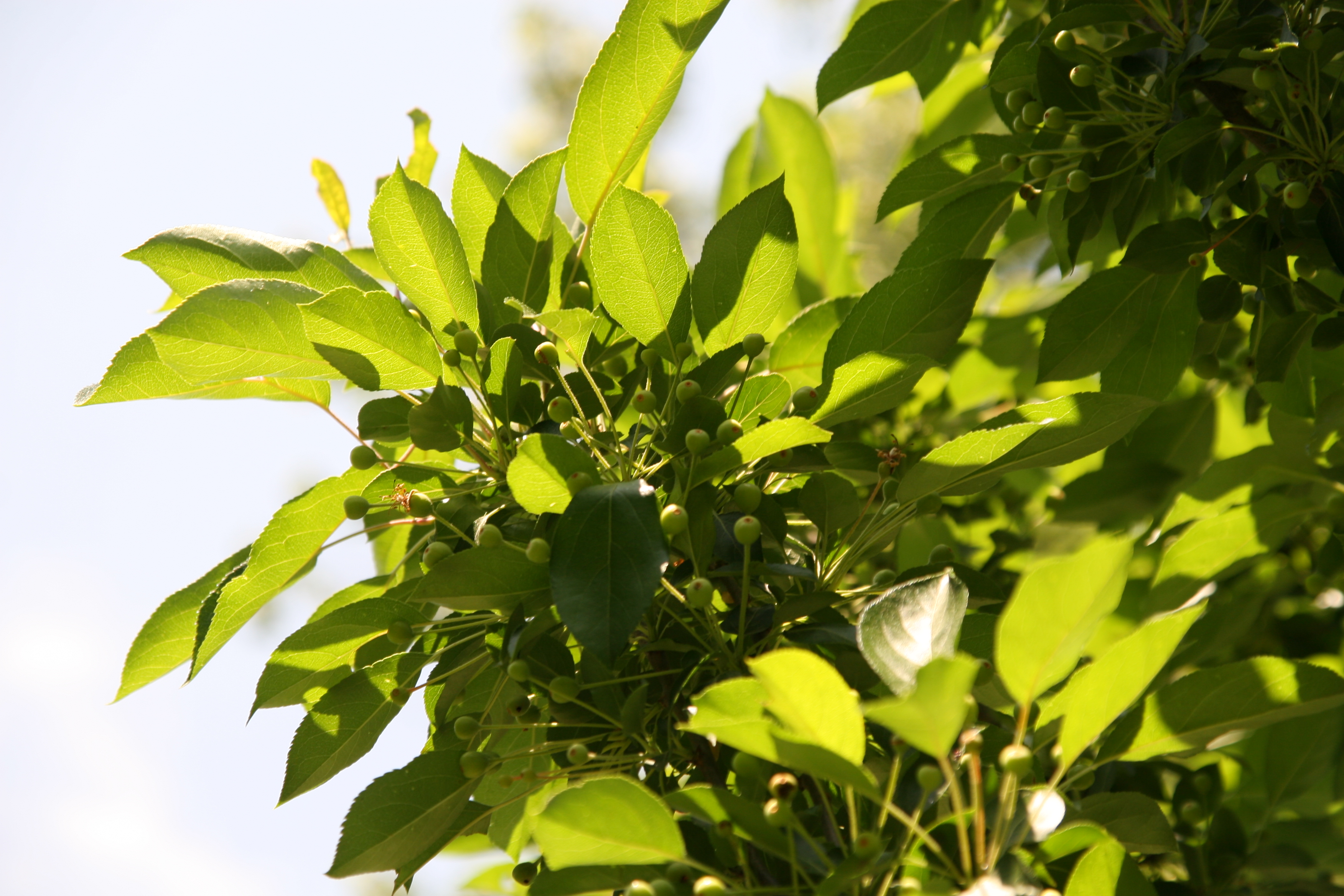 Adirondack: narrow vase shape fits between house and sidewalk without pruning. Excellent disease resistance across all four categories. Photo by David J. Stang, Wikimedia Commons (CC BY-SA 4.0).
Adirondack (12-18 × 6-10 ft). White flowers, orange-red fruit. Excellent across all four. Narrow, vase-shaped habit that fits between the house and the sidewalk without pruning. One of the best crabapples for the Puget Sound region.
Royal Raindrops (15-20 × 12-16 ft). Magenta-pink flowers and deeply lobed purple cutleaf foliage that holds color through summer. Orange-red fall color. Tiny maroon-red persistent fruit. Excellent for scab and cedar-apple rust; Good for fire blight and mildew (JFS). One of the most widely planted purple-foliage crabapples in PNW residential and commercial landscapes since its 2003 release. The cutleaf foliage gives it a distinctive fine-textured visual character that no other purple-foliage crabapple matches. An open-pollinated seedling of Golden Raindrops — the two share the cutleaf trait but differ in foliage color.
Sugar Tyme (18 × 15 ft). White flowers from pale pink buds, glossy red persistent fruit. Good for scab and fire blight; Excellent for cedar-apple rust and mildew (JFS). Upright oval form taller than wide. One of the most widely planted crabapples in North American commerce since its 1990 release, and a consistent fixture at PNW retail nurseries. The “ZAM” series (Lake County Nursery, Jim Zampini) was bred specifically for disease resistance. Persistent bright red fruit holds aggressively through winter and feeds late-season birds when alternate forage runs out.
Zumi Calocarpa (20-25 × 24 ft). White flowers from prominent red buds, bright glossy red persistent fruit. Excellent for scab, fire blight, and cedar-apple rust; Good for mildew (JFS). Often sold simply as “Redbud Crabapple” — verify the full botanical name (Malus × zumi ‘Calocarpa’) because straight Malus zumi has meaningfully different characteristics. Century-plus track record in Western cultivation. Among the most disease-resistant of any older traditional crabapple in commerce, holding up against modern named cultivars. Larger spread (24 ft) than most current introductions — better suited to acreage and parkland than tight residential yards.
Purple Prince (20 × 20 ft). Rose-red flowers and deep purple foliage maturing to bronze-green by midsummer. Maroon-red persistent fruit. Excellent for scab and cedar-apple rust; Good for fire blight and mildew (JFS). J. Frank Schmidt calls it “probably the best purple foliaged crab for growers.” Unlike the older ‘Liset’ purple cultivar, Purple Prince does not suffer from stem splitting and grows faster. The traditional rounded-form alternative to Royal Raindrops when you want a typical crabapple silhouette rather than the cutleaf foliage texture.
Prairifire (20 × 20 ft). Dark red flowers, purplish-red fruit. Excellent for scab, cedar-apple rust, and mildew; Good for fire blight (JFS; USU Extension also rates fire blight Good). The best color in the disease-resistant group. New foliage emerges reddish-purple. Four-season interest from bloom through fruit through fall color. Bred by Dr. Daniel Dayton at the University of Illinois in 1982 using ‘Adams’ as one parent — that breeding lineage shows in the disease resistance.
Professor Sprenger (20 × 20 ft). White flowers, persistent orange-red fruit that holds well into winter. Excellent across all four. A reliable professional’s choice for commercial landscapes. Bird-friendly through the cold months.
Donald Wyman (20 × 20-24 ft). White flowers, persistent bright red fruit, among the most persistent of any crabapple. JFS rates scab Good, fire blight Fair, cedar-apple rust Excellent, mildew Good. A proven performer over decades, with two moderate vulnerabilities: some leaf spotting in heavy scab years, and moderate fire blight susceptibility (MSU also notes “reported to be fire blight susceptible”). Not enough to disqualify the tree, but worth noting if you are planting near old apple orchards or in sites with fire blight history.
Golden Raindrops (20 × 15 ft). White flowers, tiny yellow fruit. Excellent for scab, cedar-apple rust, and mildew, but Poor for fire blight (JFS). Deeply divided leaves give it an airy, delicate texture unlike any other crabapple. A distinctive specimen tree, best suited to sites without fire blight history.
Tschonoski (Malus tschonoskii, 25-28 × 14 ft). The fall-color crabapple. See Fall Color below.
The Spear™ family (Coral Spear, Ivory Spear, Raspberry Spear; 18-20 × 7-8 ft). J. Frank Schmidt’s recent narrow columnar introductions for sites where typical 15-20 ft spread crabapples cannot fit. Coral Spear holds pink flower color through bloom and produces yellow-gold fruit. Ivory Spear is the narrowest at 7 ft spread with white flowers from pink buds and bright cherry red persistent fruit. Raspberry Spear has deep purple foliage with magenta-pink flowers and orange fall color. All three rated Excellent across all four diseases (JFS). Use where vertical accent and disease resistance both matter and a typical Adirondack at 10 ft is still too wide.
Over 25 Feet
Parks, rural properties, large lots where a tree can spread.
Dolgo (40 × 30 ft). White flowers, reddish-purple fruit nearly an inch across. Excellent scab resistance. This is a big tree, and it makes excellent jelly. If you have the room and want a dual-purpose crabapple (ornamental value plus kitchen use), Dolgo is the one. The fruit is too tart for fresh eating but cooks into a clear, ruby-red preserve.
The Native Option
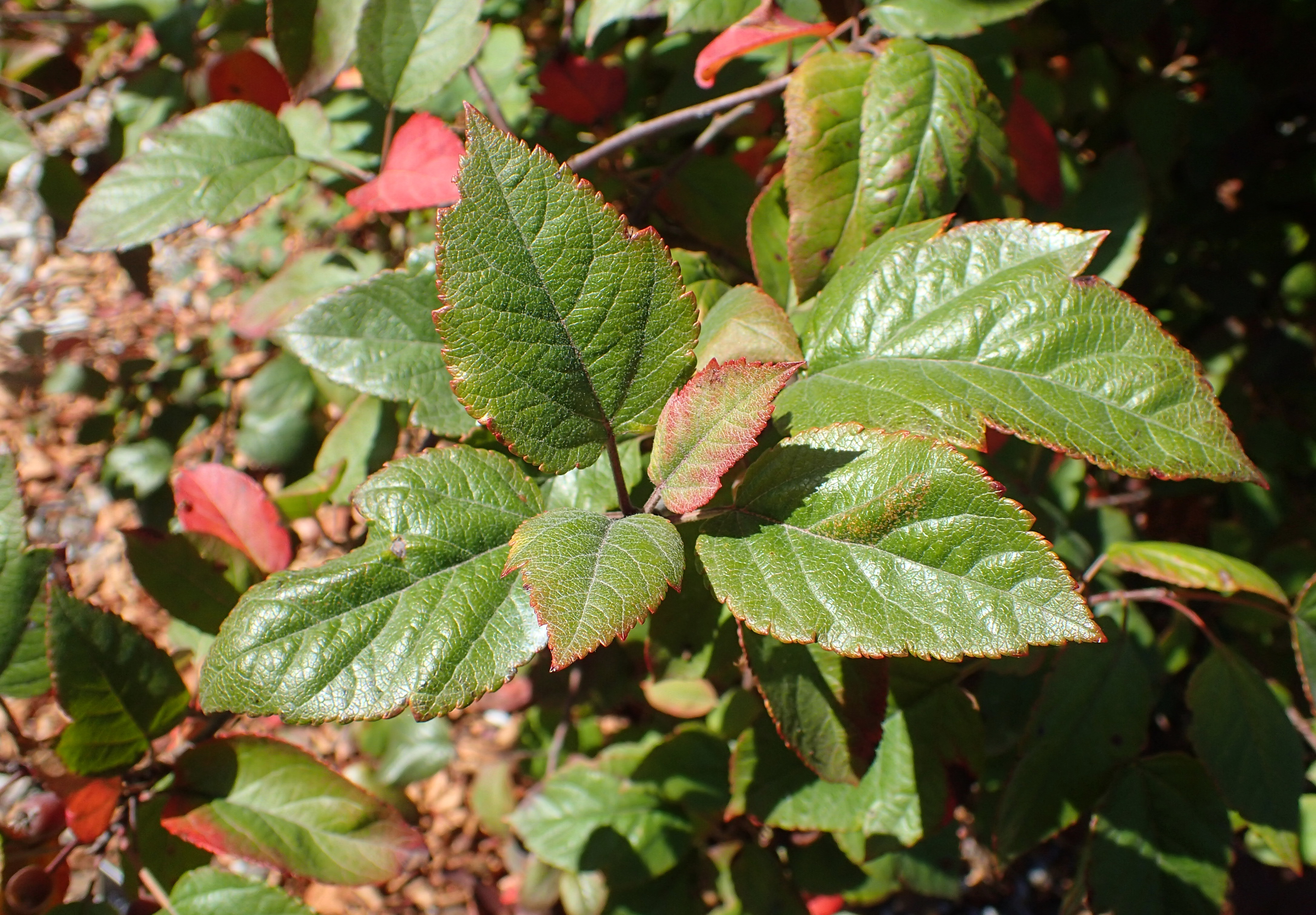 Pacific crabapple (Malus fusca): the only native Malus, tolerant of saturated soil that kills every other crabapple. Photo by Krzysztof Ziarnek, Wikimedia Commons (CC BY-SA 4.0).
Pacific Crabapple (Malus fusca, 15-30 ft). The only Malus species native to this region, ranging from southern Alaska to northern California. Tolerates saturated soil that would kill every other crabapple on this list. Thicket-forming, multi-stemmed, not a typical ornamental specimen, but an excellent choice for restoration plantings, naturalistic gardens, and wet sites where nothing else in the genus will grow. White to pink flowers in spring; small yellow-red fruit with traditional edible and medicinal uses among Pacific Northwest indigenous peoples.
Fall Color
Most ornamental crabapples produce only modest yellow-bronze fall color and are bought for spring flowers and persistent fruit, not autumn display. A few cultivars break that pattern and deliver real fall color worth specifying for.
Tschonoski Crabapple (Malus tschonoskii, 25-28 × 14 ft). This is the fall color crabapple. A true Japanese species (not a named cultivar), narrowly upright with silvery-green summer foliage that turns brilliant shades of yellow, orange, scarlet, and purple in autumn. J. Frank Schmidt: “fall color outshines that of all other crabapples.” The display is reliable even in cool maritime PNW autumns where most deciduous trees produce only modest color. Disease resistance is mid-tier (Good for scab, Fair for fire blight, Excellent for rust and mildew per JFS) — the fire blight susceptibility is the regional caveat, so avoid spring pruning and don’t plant near old apple orchards. Bloom is moderate rather than profuse; this is a fall tree, not a spring tree.
Prairifire earns a second mention here for its bronze-red autumn color complementing the saturated red spring flowers.
Indian Magic (15-20 × 15-18 ft) produces genuinely brilliant golden-orange fall color combined with exceptionally persistent fruit that holds into the following spring. JFS rates scab Fair, fire blight Good, rust Good, mildew Excellent — the moderate scab pressure is a tradeoff for the fall display.
Donald Wyman turns amber-gold in fall in addition to its persistent bright red fruit — uncommon among white-flowered crabapples to get both reliable fall color and persistent winter fruit from the same tree.
Pollination Duty
If you also grow fruiting apples, your ornamental crabapple is already earning its keep as a pollinizer. Crabapples bloom heavily over a long period, they are genetically compatible with all apple pollination groups, and one tree can service every fruiting apple within range.
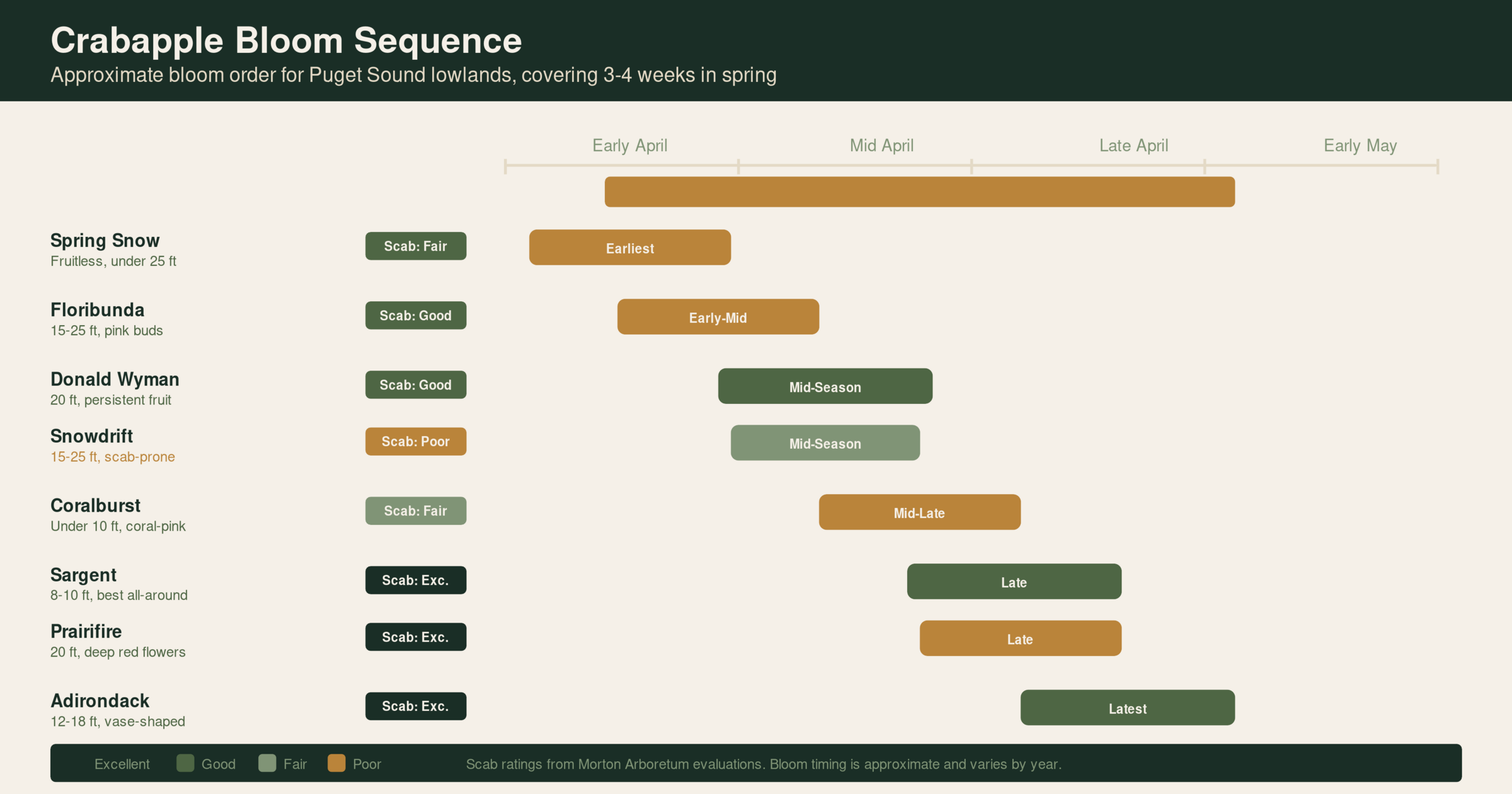 Bloom sequence and scab ratings for recommended crabapples. Planting two from different parts of this timeline covers the full apple pollination window.
Not all crabapples bloom at the same time. Phenological data shows a clear bloom sequence across cultivars. The earliest (Spring Snow) opens roughly three to four weeks ahead of the latest (Adirondack) in a typical Puget Sound spring. In between, the sequence runs approximately: Spring Snow → Floribunda → Donald Wyman and Snowdrift (nearly simultaneous) → Coralburst → Sargent → Adirondack.
Planting two crabapples from different parts of this sequence covers the entire apple bloom window. If you can only plant one, Sargent and Donald Wyman sit in the middle and overlap with both early and late fruiting apple varieties.
For the recommended fruiting apple varieties these crabapples pollinate, see Apple Varieties That Actually Work Here.
Choosing for Your Site
Size first. Match the tree to the space. A 20-foot crabapple in a 10-foot bed creates a pruning problem that never resolves. The size categories above are mature sizes, not nursery sizes.
Fruit persistence. Persistent fruit (Donald Wyman, Professor Sprenger, Sugar Tyme) extends ornamental value into winter and feeds birds. Non-persistent or tiny fruit (Spring Snow is nearly fruitless) avoids sidewalk cleanup. Neither is better; it depends on where the tree sits relative to pavement.
Sun. All crabapples need full sun for best flowering and disease resistance. Partial shade increases scab pressure and reduces bloom density. If the site gets less than six hours of direct sun, choose a different genus.
Soil. Most crabapples tolerate clay better than fruiting apples on dwarfing rootstock, because crabapples grow on their own roots or on vigorous seedling rootstock. Pacific Crabapple (M. fusca) tolerates saturated soil. Everything else wants reasonable drainage.
What to Skip
Older cultivars selected before disease resistance became a breeding priority tend to carry poor ratings. If a nursery offers Brandywine, Profusion, Red Jade, Radiant, Red Splendor, Royalty, or Silver Moon, check the ratings before buying. Morton rates all of them Poor for at least one major disease, and several carry Poor across multiple categories.
Indian Magic deserves a nuanced treatment. Older Morton ratings were unfavorable, but the JFS chart rates scab Fair, fire blight Good, cedar-apple rust Good, and powdery mildew Excellent — moderate rather than poor. The cultivar offers exceptionally persistent fruit (holds into the following spring), brilliant golden-orange fall color, and deep rose-pink flowers. For sites where the multi-season ornamental package outweighs the moderate scab pressure (expect some defoliation in cool wet springs), Indian Magic remains defensible. For sites where reliable disease resistance is the priority, the modern Tier 1 cultivars are stronger picks.
If a fruitless ornamental is the goal, Spring Snow (single white, rounded form, 20-25 × 15-22 ft) is the established choice but carries Poor scab resistance per MSU — expect noticeable spring defoliation. Marilee® (‘Jarmin’, narrow upright 24 × 10 ft) offers double white flowers and virtually fruitless habit with Good-to-Excellent disease ratings across all four (JFS) — the modern fruitless alternative when narrow vertical form is acceptable. Prairie Rose (Malus ioensis ‘Prairie Rose’, 20 × 18 ft) offers fruitless rosebud-like double pink flowers but with Poor cedar-apple rust susceptibility (largely irrelevant in maritime PNW where Eastern red cedar is uncommon).
One paradox worth noting: Snowdrift. JFS rates it Good for scab and Fair for fire blight, but older multi-institution evaluations (Penn State, Morton Arboretum, Ohio State) from the 1980s rated scab susceptibility as moderate to severe, and MSU notes it as “reported to be fire blight susceptible.” It remains widely planted as a pollinizer because it blooms mid-to-late season and covers the pollination gap for later-blooming fruiting apples. If you need Snowdrift specifically for pollination duty and can accept some cosmetic decline in wet years, it works. For ornamental purposes, Sargent or Donald Wyman bloom in a similar window with stronger overall disease profiles.
Sources
- Crabapple (Malus) Information Chart – J. Frank Schmidt & Son Co. (Primary source for disease resistance ratings in this guide)
- Crabapple Cultivars – Morton Arboretum
- Crabapples: A Selection Guide (E-2177) – Peterson, C. and R. Heatley, Michigan State University Extension, 1989
- Crabapples in the Landscape – Hansen, S., J. Gunnell, and S. Vaughn, Utah State University Extension, 2019
- Crabapple Cultivar Susceptibility – Pacific Northwest Pest Management Handbooks, Oregon State University / Washington State University
- Hortsense – WSU Cultivar Resistance Database, Washington State University
- Pollinating Fruit Crops (G6001) – University of Missouri Extension
- Online Pollination Checker – Orange Pippin Trees
- Landscape Plants Database – Oregon State University
Disease resistance ratings in this guide are primarily from J. Frank Schmidt (Boring, Oregon), a major PNW wholesale grower, unless otherwise noted. Individual tree performance varies with site conditions, microclimate, and management practices.