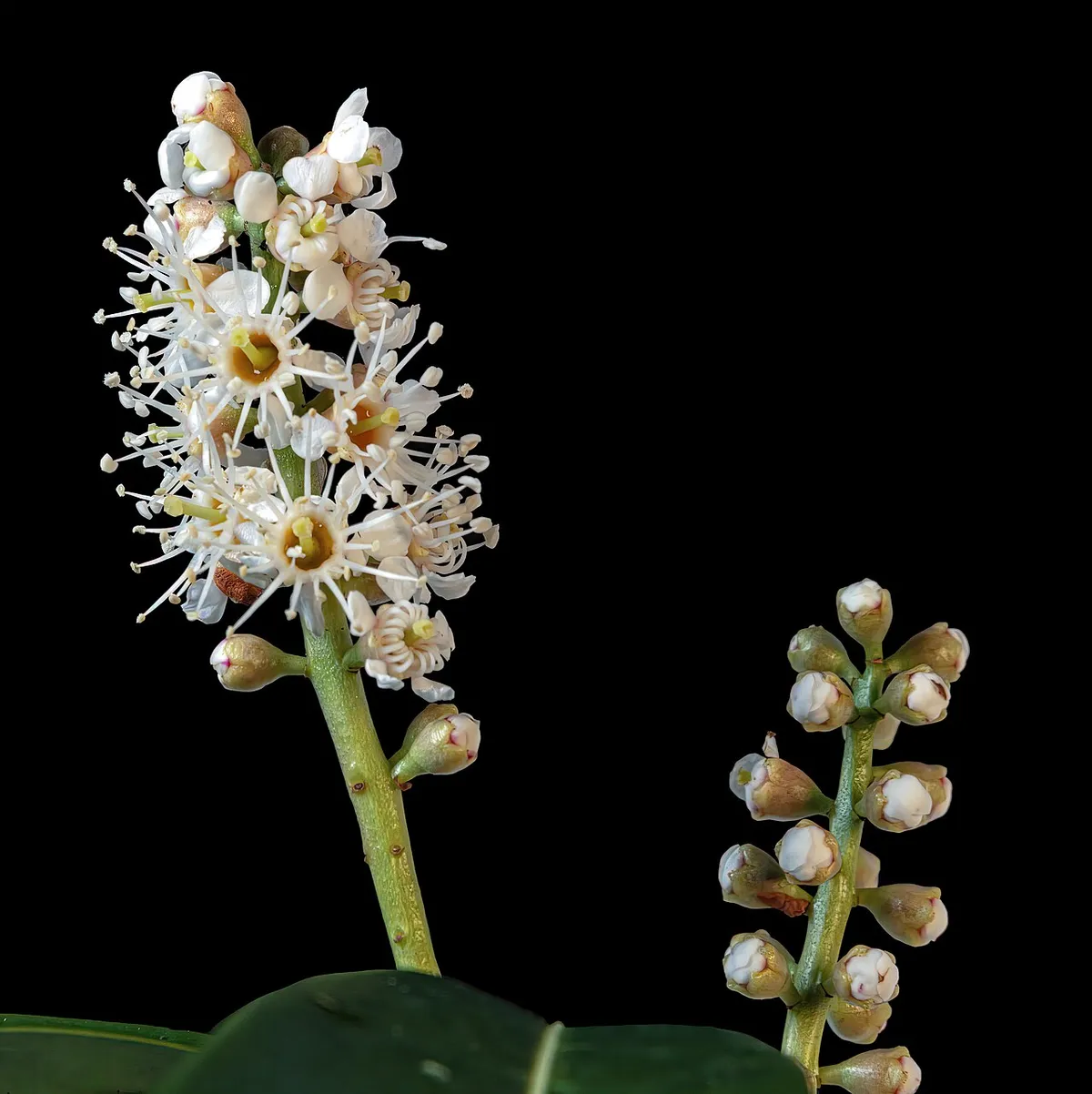
Drive through any residential neighborhood in the Puget Sound region and you will see it screening parking lots, dividing property lines, filling the gaps between fences and sidewalks. Cherry laurel (Prunus laurocerasus) has become the default answer to the question “I need a dense, evergreen hedge and I need it fast.” This is not an accident of circumstance. The plant tolerates conditions that eliminate almost everything else. It grows fast enough to deliver visual results before most landscape contracts end. It stays green through winter, handles shade and sun with equal indifference, and establishes in soil that has been compacted, amended carelessly, or simply forgotten.
The real question is not whether to plant it. The question is whether you understand what you are planting, what you will be managing five years from now, and what happens if everyone else on your street makes the same choice.
The Plant
Cherry laurel is an evergreen shrub in the Rosaceae family, native to southeastern Europe and southwestern Asia. Cold hardiness ranges to Zone 6a, which means winter survival is never a concern in the Puget Sound region. In cultivation, specimens typically reach 10 to 20 feet tall with a spread of 20 to 25 feet, though plants left unpruned can exceed 30 feet in all directions. The foliage is dense and coarse: oblong, lustrous dark green leaves that run 5 to 6 inches long, with fine serration or smooth margins depending on which cultivar you have. In spring, usually April through May, tiny cup-shaped creamy white flowers bloom in upright clusters, fragrant enough to perfume a patio from several feet away. Red fruit follows through summer, ripening to purple and then black.
Four cultivars dominate the ornamental trade in this region.
‘Otto Luyken’ is the refined option. It stays upright but compact, topping out around 5 feet with a more formal appearance and narrower leaves than the species. Landscape architects specify this one when they are designing a deliberate hedge in a controlled space rather than a sprawling screen.
‘Zabeliana’ reaches similar height to Otto Luyken, maybe 5 feet, but spreads wider and grows more vigorously in the horizontal direction. It maintains structure well with minimal pruning. If you want a fuller effect across a longer run without aggressive height, this is the better choice.
‘Mt. Vernon’ is the dwarf option, maxing out at 3 feet tall. Use it for low hedges or genuinely space-limited sites. The aggressive horizontal spread does not change; it just starts from a shorter baseline.
‘Marbled Dragon’ brings variegated foliage to the lineup: mottled green and cream leaves on a plant that grows more slowly than the species. It is less commonly planted and, because of that slower vigor, proportionally less invasive.
The unnamed species plant, sold at lower price points without a cultivar label, presents the most problems. It grows fastest, produces the most abundant fruit, and becomes the most troublesome when we talk about invasiveness. If you are selecting a field-grown specimen without clear labeling, look at the growth pattern: dwarf forms stay tight, Otto Luyken shows upright pyramidal branching, Zabeliana spreads horizontally, and the species plant looks vigorous and coarse-textured with rapid, undirected growth.
What It Does Well
Why cherry laurel shows up on three out of five residential landscape jobs is straightforward: the plant tolerates almost everything. The heavy clay soils that dominate this region? Establish it without amendment. Compacted urban sites, parking strips that have been graded and backfilled multiple times, areas under power lines, spots along busy roads breathing air pollution. All of these become viable planting locations because cherry laurel shrugs and establishes. It handles full shade, where foliage thins somewhat, and intense afternoon sun. It absorbs the abrupt wet-winter-to-dry-summer moisture transition that defines this climate without complaint. Once established through the first growing season, most specimens need no supplemental irrigation through a normal summer.
The speed is equally important to contractors and impatient homeowners. A 2-gallon nursery pot becomes a 10-foot visual screen in four to five years. That velocity explains why cherry laurel anchors commercial projects and why landscape crews reach for it reflexively.
The spring bloom deserves mention because most people who plant it never actually experience it. The fragrance is genuine, carrying far enough to perfume an entryway or seating area. Spend an hour in April next to a blooming specimen and you understand what drew European gardeners to this plant in centuries past. Instead, most owners are too busy managing problems that develop later to notice.
Bloom timing in the Kent area falls mid- to late April, providing another phenological marker for the region. Like Callery pear, cherry laurel’s flowers announce that spring has arrived biologically, regardless of what the calendar suggests.
What Goes Wrong
WSU and the PNW Plant Disease Management Handbook document 67 diseases and 41 pests on cherry laurel. That extraordinary catalog reflects two realities: first, the plant is so widely planted that virtually every pathogen finds a host; second, most documented threats cause negligible damage under our maritime conditions. Focus here is on what actually costs you money or time to manage.
Shothole: Appearance Over Substance
Shothole is a fungal disease caused by Coryneum species, and you will recognize it immediately once you know to look for it. Starting in late spring and accelerating through summer, you see small circular to irregular leaf spots with purple or reddish borders, progressing to brown necrotic centers. The PNW Insect Management Handbook describes the progression clearly: as tissue dies and dries, it drops out, leaving small holes that genuinely resemble pellet damage. Hence the name.
On cherry laurel, shothole is essentially cosmetic. Infected leaves drop. New growth replaces them. The plant rarely declines from shothole alone unless infection is so severe that it substantially reduces photosynthetic area, which is uncommon on a plant this vigorous. The appearance peaks in June and July. By August, new foliage typically covers most of the damage.
The disease thrives in cool, wet conditions and spreads through water splash. Overwintering occurs on fallen leaves and infected twigs. Shothole matters more on young trees where foliar area is limited than on established shrubs with abundant new growth capacity.
What to do: Start with sanitation. Remove and destroy infected leaves and fallen litter around the plant, particularly in fall before the wet season starts. If shothole was significant the previous season, prune aggressively to open up the canopy and improve air circulation. Rake and destroy any infected material on the ground in October. This single step reduces inoculum substantially for the next season. For active infection during growing months, apply copper fungicide when conditions favor disease spread. WSU HortSense recommends copper octanoate or basic copper sulfate products. Timing matters: apply when conditions are wet and temperatures are cool, typically late April through June in our region. Prune only during dormancy, December through January, to avoid creating wounds during the wet season.
Powdery Mildew: Less Severe Than Expected
Powdery mildew appears in the region but, despite the plant’s prevalence, it is not commonly severe. White to light gray coating develops on leaves, typically on upper surfaces, with new growth near the base and dense interior foliage most vulnerable. Unlike shothole, this fungal disease actually prefers dry conditions once established. It thrives in still air and low light.
Dense, unpruned cherry laurels become vulnerable where interior branches receive minimal sunlight and air movement. Elimination is essentially impossible. Management focuses on reducing severity.
What to do: The primary tool is cultural management. Thin out dense interior growth during dormancy, December through January, to increase light penetration and air movement. Remove dead or crossing branches. This action alone often prevents powdery mildew from becoming problematic. If active infection appears on new growth, spray with sulfur-based fungicides or horticultural oil. Many homeowners report that water spray (simply washing foliage with strong pressure from the hose) reduces powdery mildew significantly by removing spores and temporarily increasing humidity. Do not apply sulfur within three weeks of horticultural oil. Apply fungicides in evening hours to prevent leaf damage.
Black Vine Weevil: Root Damage Without Warning
The black vine weevil produces distinctive C-shaped white larvae that feed on roots in spring and fall. Adult weevils chew notches along leaf margins throughout the growing season: a series of scalloped bites that appear almost geometric in pattern. You will notice the damage in May and June when adults are most active. On an established plant, this feeding is cosmetic. Heavy root damage from larvae can kill young specimens and stress older plants during drought without showing obvious above-ground symptoms until decline is advanced. NC State Extension research confirms that nematode applications significantly reduce larval populations when timed correctly.
What to do: The most effective control targets larvae in soil. Apply beneficial nematodes (Heterorhabditis or Steinernema species) in late April through May when soil temperatures reach 60 to 70 degrees. These microscopic organisms seek out and parasitize weevil larvae. Repeat the application in late September through October. Broad-spectrum insecticide spray against adults delivers minimal long-term benefit on an established plant and kills beneficial predators. It is not justified given the vigor of the host.
Cherry Bark Tortrix: Leaf Damage and Twig Dieback
The cherry bark tortrix is a small moth whose larvae tunnel inside leaves and bore into twigs and branches. You will see small exit holes where larvae have left the bark, and rolled or tented leaves throughout the growing season where larvae feed protected inside the rolled tissue. Heavy infestations can girdle small branches, causing dieback.
What to do: Hand-remove rolled leaves during the growing season to reduce populations. Prune out branches with visible exit holes and dieback. Do not use broad-spectrum insecticides, as they kill natural predators that help manage the population.
Root Rot in Poor Drainage: The Sneaky Killers
Phytophthora root rot and Armillaria are not common problems on cherry laurel in well-drained sites, but they appear regularly in landscapes where drainage is poor or where plants are installed into existing mulch or wood chips that remain saturated through the wet season.
Phytophthora root rot (Phytophthora cinnamomi and related species) causes root decay in waterlogged soils. Symptoms appear above ground as gradual wilting and decline, starting with lower foliage loss and progressing upward. Armillaria root rot, caused by Armillaria species, is similar: slow decline over one to three years, appearing first as sparse foliage and weakened growth.
These diseases are unpredictable in occurrence but highly preventable through site preparation. WSU HortSense emphasizes that proper installation technique prevents more than 90 percent of root rot problems on ornamental plants.
What to do: At planting, ensure adequate drainage. Cherry laurel tolerates poorly drained sites better than most plants, but tolerance is not immunity. If the planting area is a low spot that collects water, amend it aggressively or select a different location. Never plant into existing mulch from a previous site. Remove all old mulch and compost before backfilling. Maintain the mulch layer at 2 to 3 inches, never piled against the stem. Do not overwater after establishment. Once planted in reasonably well-drained soil, the plant needs no supplemental irrigation through the growing season. If decline symptoms appear, excavate the root collar to inspect for crown rot. If crown decay is visible, the plant cannot be saved. Remove it and allow the site to dry before replanting anything.
The Invasiveness Question
Over half of U.S. states classify cherry laurel as invasive, particularly across the southeastern and mid-Atlantic regions where it has spread aggressively into natural areas, roadsides, and forest edges. The mechanism is straightforward: different cultivars planted in proximity cross-pollinate, producing fertile fruit that birds disperse widely. Resulting seedlings revert to the thorny, aggressive growth habit of the wild species and colonize disturbed areas with alarming speed.
In this region, the invasiveness problem has not reached the severity seen in warmer climates. The cooler maritime climate, shorter growing season, and less ideal summer conditions slow the process. But the threat is not absent. Naturalized cherry laurel populations exist in maritime areas, particularly where multiple cultivars grow within cross-pollination distance.
Here is the critical distinction: the species plant is far more aggressive and fertile than named cultivars. Plant ‘Otto Luyken’ or ‘Zabeliana’ as a solo specimen and you are unlikely to produce invasive seedlings. Plant the unnamed species plant, or have neighbors who have planted species plants close enough to cross-pollinate with your cultivar, and fertile fruit will be produced. Birds will disperse it. Seedlings will appear in vacant lots, disturbed areas, and forest edges. Some will establish.
The undisputed fact: cherry laurel is the most heavily planted hedge in this region. The practical reality: controlling invasiveness at a regional scale depends on choices made collectively, not on individual responsibility. If everyone who plants cherry laurel selected ‘Otto Luyken’ exclusively and removed fruit before birds dispersed it, invasiveness would become negligible. That scenario is not unfolding.
This fact is worth knowing when someone asks whether to plant another one. This is worth knowing if you are choosing between cherry laurel and an alternative. And this is worth monitoring if you have already planted it: watch for thorny seedlings in neglected areas nearby in your first five to ten years after planting.
Seasonal Action Summary
| When | What | Why |
|---|---|---|
| Dec - Jan | Dormant pruning, canopy thinning | Improve air circulation, reduce disease pressure, establish form. Do not prune during wet season. |
| Jan - Feb | Dormant oil application (if applicable) | Targets overwintering aphid eggs and mite populations. Apply before bud swell. |
| Apr - May | Monitor for shothole symptoms | Small circular spots with purple borders; look especially during cool, wet springs. |
| Apr - May | Scout for black vine weevil adults | Scalloped leaf margins, notches along edges. Time for nematode application. |
| Late Apr - May | Apply beneficial nematodes to soil (if larvae are present) | Targets black vine weevil larvae in soil; apply when soil temperature is 60-70°F. |
| May - Aug | Monitor for cherry bark tortrix damage | Rolled leaves, tented foliage, bark holes. Hand-remove infected tissue. |
| May - Aug | Watch for powdery mildew on new growth | White coating on leaves, particularly in dense interior foliage. |
| Jun - Jul | Shothole peaks; remove fallen infected leaves | Remove and destroy infected material to reduce overwinter inoculum. |
| Oct | Fall cleanup: rake and destroy infected leaf litter | Critical for reducing shothole spores in spring. Remove fruit if cross-pollination is a concern. |
| Ongoing | Monitor for invasive seedlings nearby | Especially if multiple cherry laurel cultivars or species plants grow within pollination range. |
This article is a reference document in the hortguide.com knowledge base. The cherry laurel plant profile links to it, and Field Brief advisories reference it when cherry laurel conditions activate. All disease and pest management recommendations are based on regional extension research and horticultural practice. Always read and follow pesticide label directions.
Sources
Disease and pest management:
Plant descriptions and cultivar data: