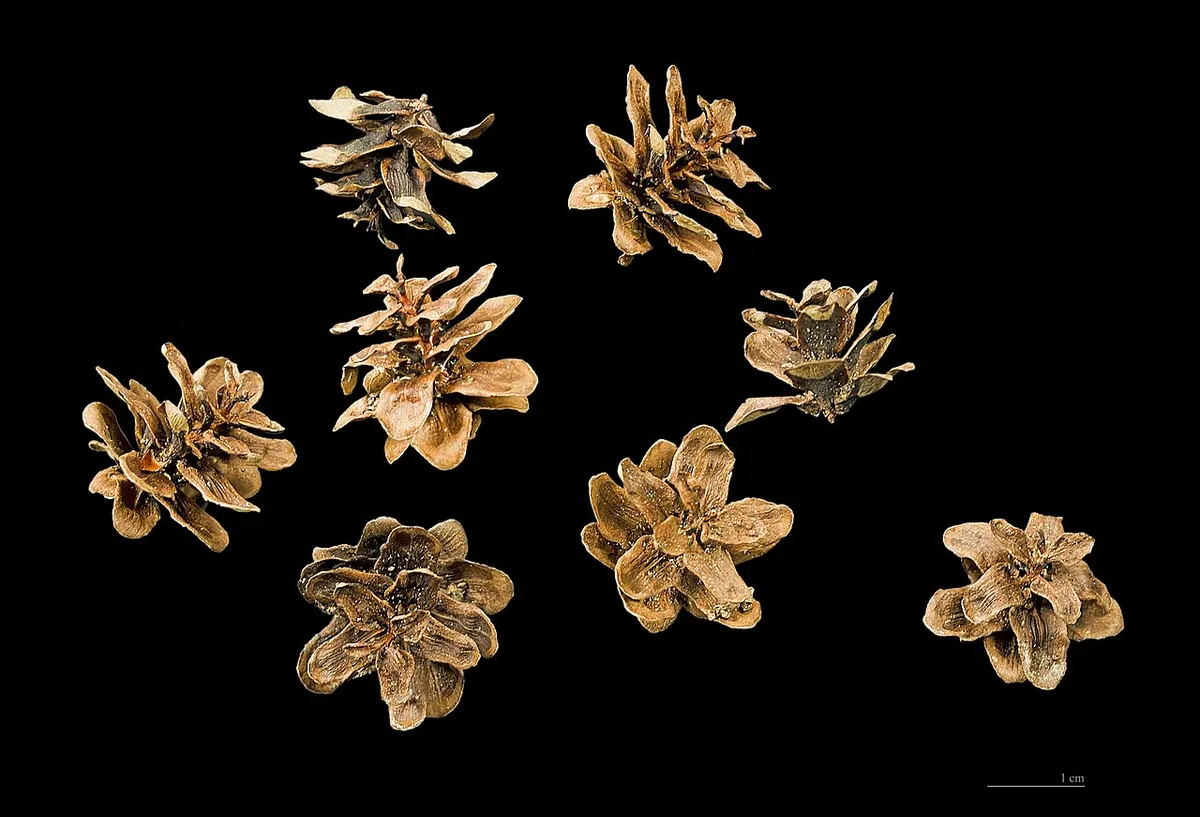
The Tree That Whispers in Old Growth
If you’ve walked through an old-growth forest in the Puget Sound region, you’ve been under the crown of Western Hemlock. You might not have known its name, but you felt its presence: the deep shade, the soft forest floor, the sense of a forest that has been here for centuries. Western Hemlock is Washington’s state tree, and for good reason. It is the climax species of Pacific Northwest forests, the tree that eventually replaces Douglas-fir as a forest matures. It is also, for most gardeners and landscape professionals in this region, a tree you need to understand if you want to work with shade, old-growth character, and the ecological succession that has defined this region for millennia.
What makes Western Hemlock instantly recognizable, if you know what to look for, is its drooping leader tip. When you see a conifer with a nodding crown, like a tree perpetually caught mid-bow, you are looking at a hemlock. This isn’t weakness; it’s grace. It’s adaptation to snow load and wind in a maritime forest. That same drooping character, combined with the feathery, fine-textured foliage, gives Western Hemlock an entirely different presence from the rigid, stiff-branched conifers many people know. It is neither the stout powerhouse of Douglas-fir nor the needle-drop drama of larch. It is subtle, sophisticated, and deeply native to the temperate rainforest ecology that still surrounds us.
The Tree: Botanical and Horticultural Profile
Scientific name: Tsuga heterophylla
Family: Pinaceae (pine family)
Botanical signature: The name heterophylla means “different leaves,” and it’s an apt description. On the same twig, you’ll find needles of noticeably different sizes. This mix of needle sizes, combined with the flattened needles and the pendulous leader, is the field mark that separates Western Hemlock from other conifers in the region. If you look closely at a twig, you’ll see the small needles on top and the longer needles on the sides and bottom, all arranged in a flat spray.
Native range: Western Hemlock is native from Southeast Alaska south through British Columbia and the Puget Sound lowlands, down through Oregon and into Northern California. It also occurs in the Rocky Mountains, reaching as far east as Montana. This wide range speaks to its adaptability, though the Pacific Northwest is where you’ll find it at its most dominant.
Size at maturity: In landscape conditions, expect 120 to 150 feet tall with a spread of roughly 49 feet. In the wild, especially in old-growth forests where competition and moisture are ideal, Western Hemlock regularly reaches 200 feet or more. Some of the tallest hemlocks in the world grow in the temperate rainforests of the Pacific Northwest, competing for light in a canopy where every additional foot matters.
Growth rate: Moderate. Western Hemlock is not a sprinter, but it is persistent. In youth, it grows steadily but not dramatically. As it matures, especially in favorable conditions with adequate moisture and shade from taller companions, it maintains its pace across decades.
Hardiness and zones: Western Hemlock is rated for USDA zones 4b through 8b. Here in the Puget Sound lowlands, you are solidly in its sweet spot: the maritime climate, the abundant moisture, and the moderate temperatures all favor this tree.
Lifespan: Very long. Western Hemlock in the wild regularly lives 400 to 500 years or more. Even in landscape settings, if given the right conditions, these trees will be present for multiple human generations. This is not a tree you plant for quick impact; it’s a tree you plant for legacy.
What Western Hemlock Does Well: Shade, Succession, and Ecology
Shade Tolerance: The Superpower
If there is one thing Western Hemlock is famous for among foresters and ecologists, it is shade tolerance. Among conifers, this is rare. Most conifers need open sky to thrive; they are pioneers, gap exploiters, and sun worshippers. Western Hemlock is different. It is so shade tolerant that it can grow, survive, and eventually dominate in the understory of a mature forest, waiting decades or even centuries for the opportunity to reach the canopy. This shade tolerance is a key reason it becomes the climax species in old-growth Pacific Northwest forests. As Douglas-firs decline, or are harvested, or reach the end of their competitive lives, hemlocks expand into the canopy.
For landscape professionals in this region, this matters enormously. If you have a site with existing shade, whether from tall conifers, hardwoods, or structures, Western Hemlock is one of the few trees that will not only survive but thrive. You can establish it under a canopy of larger trees and know that it will grow steadily, reach for light, and not languish in the shadow. This quality opens up design possibilities in mature residential landscapes, under powerlines where full-sun species are inappropriate, and in restoration work where you want to rebuild a forest structure that moves from pioneer species to climax species.
Nurse Log Ecology and Forest Succession
One of the most essential ecological roles Western Hemlock plays is on nurse logs: the decomposing trunks of fallen trees that litter the forest floor in old-growth. When a large tree falls in a temperate rainforest, it creates a new microhabitat. The log slowly decays over decades, providing a raised surface, improved drainage, and a rich decomposing substrate for germination. Western Hemlock seeds often germinate preferentially on these nurse logs, and the seedling roots eventually reach down into the decomposing wood and beyond, tapping into the nutrients released as the log breaks down. Over 50 to 100 years, you end up with rows of young hemlock trees, their root systems still shaped by their origin on the log above the soil.
This is more than a botanical curiosity. It is a key mechanism of forest renewal in the Pacific Northwest, and it speaks to why Western Hemlock is positioned to dominate forests over the very long term. Understanding this dynamic, you can design landscapes and restoration projects that mimic this succession. You can plant hemlocks as understory trees with the knowledge that they are doing what they have done for millennia: waiting for their moment and preparing to become the mature canopy.
Wildlife Value and Ecological Function
Western Hemlock supports substantial wildlife value throughout its life. The seeds are eaten by chickadees, nuthatches, and other songbirds. The bark provides browse for black-tailed deer and elk. The dense branches offer shelter and nesting habitat for spotted owls and other cavity-nesting species. The canopy structure, with its feathery foliage and multiple layers of branching, provides thermal cover in winter and shade in summer. Over time, older hemlocks develop cavities that become homes for woodpeckers and other wildlife. The falling needles contribute to forest floor biomass and nutrient cycling.
In a landscape context, Western Hemlock is far more valuable for wildlife than the exotic ornamental conifers and deciduous trees that often replace native forests. If ecological function is part of your project goals, hemlock is an investment in a living system that will support generations of birds, insects, and mammals.
What Goes Wrong: Pests, Diseases, and Environmental Stress
Western Hemlock is not immune to problems. While it is generally hardy and resilient, especially in its native range, several issues can compromise its health. Understanding these allows you to recognize problems early and respond appropriately.
Drought Stress: The Number One Issue
The single biggest threat to Western Hemlock in landscape settings is drought. This tree evolved in a climate with abundant, year-round moisture. In the Pacific Northwest, summers are often dry, and we have periods of weeks without significant rainfall. Western Hemlock has relatively shallow roots and high water demand. It does not have the drought tolerance of Douglas-fir or true firs. In newly planted landscapes, especially on upland or south-facing sites, young hemlocks will show stress during summer heat and dryness.
The symptoms of drought stress appear first in the foliage: needles turn yellish-green or bronze, branch tips may die back, and overall vigor declines. Severe drought can kill young trees outright. Once established in a site with adequate moisture (15 to 20+ years), mature hemlocks are less vulnerable, but they never become truly drought tolerant. This means careful siting is essential. Plant Western Hemlock in areas where you can ensure consistent moisture: bottomlands, north-facing slopes, sites with retained soil moisture, or paired with irrigation during establishment. Avoid upland, sandy, or well-drained sites without supplemental water.
Root Diseases: Laminated Root Rot and Armillaria
Western Hemlock is susceptible to laminated root rot, caused by the pathogen Phellinus weirii. This disease attacks the roots and lower bole of hemlocks and other conifers, causing decay that weakens the tree’s foundation. Affected trees may decline gradually or, in severe cases, topple suddenly. Laminated root rot is most common in older forests and in landscapes where the same species is replanted repeatedly in the same location. Prevention focuses on mixed species planting, adequate spacing, and removal of infected trees to prevent spread.
Armillaria root rot (honey fungus) is another concern. This pathogen attacks roots, causing browning and decline. Again, good cultural practices (adequate drainage, avoidance of root wounding, removal of infected stumps and roots from previous trees) reduce risk. There is no cure for either disease once established; management is about prevention and early removal of declining trees to protect neighbors.
Dwarf Mistletoe and Hemlock Dwarf Mistletoe
Western Hemlock is host to hemlock dwarf mistletoe (Arceuthobium tsugae), a parasitic plant that grows on hemlock branches. This mistletoe weakens branches, reduces vigor, and can eventually kill a tree if populations are severe. Hemlock dwarf mistletoe is most common in older, crowded stands, and especially in interior Pacific Northwest forests. In landscape settings, it is less common but still a concern in ornamental hemlocks, particularly if trees are stressed. Management involves pruning out infected branches and improving vigor through adequate water and spacing.
Spruce Spider Mites and Scale Insects
Hemlock can be attacked by spruce spider mites, especially during hot, dry summers. These mites cause yellowing and bronzing of foliage and can defoliate trees if populations explode. The risk is highest in planted landscapes where natural predators are reduced and trees are stressed by drought. Adequate moisture, humidity, and natural enemy populations usually keep spider mites in check. If mites become problematic, horticultural oil or water spray to increase humidity often resolves the issue.
Scale insects (various species) also infest hemlock foliage and branches, weakening the tree. Again, stressed trees are most vulnerable. The key to managing both spider mites and scale is keeping the tree vigorous, ensuring adequate moisture, and maintaining natural predator populations by avoiding broad-spectrum insecticides.
Gray Mold and Canker Diseases
Several fungal diseases cause cankers or foliage damage on hemlock, including various rust species and gray mold. These are usually minor and don’t require treatment, but in wet years or in very humid sites, they can be more noticeable. Good cultural practices (adequate air circulation, avoiding overhead watering, pruning dead branches) prevent most canker issues.
The Hemlock Woolly Adelgid: Why Washington Needs to Pay Attention Now
This section deserves special emphasis because it addresses a threat that is not yet in Washington but could, if it arrives, transform our forests as dramatically as Sudden Oak Death has affected tanoaks in California.
What Is It?
The hemlock woolly adelgid (HWA, Adelges tsugae) is a small aphid-like insect from East Asia. It was first detected in the eastern United States in the 1950s, likely arriving on imported hemlock nursery stock. Since then, it has spread throughout the range of Eastern Hemlock and Carolina Hemlock in the eastern United States, from Maine to Georgia. The damage it causes is catastrophic: entire hemlock forests have been killed within 4 to 10 years of infestation. Eastern Hemlock, which plays a similar ecological role in eastern forests to the role Western Hemlock plays here, is functionally extinct in many areas due to HWA.
The insect overwinters on hemlock twigs, appearing as white, cottony egg masses. In spring, it feeds on the base of hemlock needles, injecting saliva that disrupts the tree’s ability to transport water and nutrients. The tree declines rapidly; needles turn gray or brown, branches die back, and within a few years, the entire tree is dead. A single tree can support thousands of adelgids, and they spread easily on wind, on animals, on clothing, and on nursery stock.
The Good News and the Bad News
The good news: The hemlock woolly adelgid is not currently established in Washington State or Oregon. It has been detected in northern California and in the Cascade Mountains of Oregon, but it has not (as of early 2026) reached the Puget Sound lowlands or the Willamette Valley. This gives us a window of opportunity.
The bad news: It will likely arrive eventually. HWA is moving steadily north and west. The climate here is actually excellent for HWA survival. Our maritime climate, with its mild winters and adequate winter moisture, is ideal for this pest. When (not if) HWA reaches Washington, Western Hemlock will face the same devastation that Eastern Hemlock has suffered.
Why This Matters to You
If you work with landscapes, manage forests, or simply live in this region, you need to be aware of HWA for several reasons:
1. Forest composition: Western Hemlock is not just an ornamental choice; it is the foundation of our native forest ecology. If HWA kills hemlocks at landscape, we lose a key structural and successional species. Forests will change profoundly.
2. Landscapes: If you plant Western Hemlock now, understanding that HWA is a long-term threat allows you to make informed choices. You might choose hemlock for a site where it will grow for 50 years before HWA arrives, or you might diversify species to reduce dependence on hemlock. You might also support research and management efforts aimed at protecting hemlock.
3. Quarantine and prevention: Even though HWA is not here yet, transporting hemlock nursery stock from infested areas to Washington is a serious risk. Supporting quarantine efforts, using local nursery stock, and being aware of HWA when acquiring hemlocks helps slow the pest’s spread.
4. Monitoring: Learning to recognize HWA (the white cottony masses on twigs in winter and spring) allows you to report sightings to the Washington Department of Natural Resources or your county extension office. Early detection in Washington could mean the difference between managing an initial infestation and facing a landscape-wide catastrophe.
Preparing for HWA: Research and Resistance
Scientists and forest managers are not waiting passively for HWA to arrive. Research is ongoing to:
- Identify and breed hemlock cultivars with resistance to HWA
- Develop biocontrol strategies using the adelgid’s natural enemies
- Create seed orchards of resistant hemlock stock
- Model HWA spread and develop early detection and response protocols
Washington State University, the University of Washington, and various federal agencies are actively engaged in hemlock conservation research. Supporting this work, staying informed, and planning landscapes with HWA as a long-term threat in mind is the best approach for now.
Seasonal Action Summary
Spring (March-May):
- Watch for new growth: bright green emerging needles indicate vigor
- In late spring, scout for hemlock dwarf mistletoe infections (look for witches’ brooms, abnormal branch clusters)
- Check winter-planted trees for drought stress after spring growth flushes
- If you see unusual white cottony masses on twigs, photograph and report to county extension
Summer (June-August):
- Maintain consistent moisture, especially for young trees; this is the critical drought stress period
- Monitor for spruce spider mite damage, especially in hot, dry years
- Ensure adequate watering during dry spells (1 to 2 inches per week if rainfall is insufficient)
- Scout for scale insects on branch undersides
Fall (September-November):
- Watch for needle drop; some is normal, but excessive drop indicates stress
- Ensure trees enter winter well-hydrated
- Continue monitoring for HWA white cottony masses (they become more visible as other vegetation dies back)
- Plan spring planting of new hemlocks
Winter (December-February):
- Examine trees for HWA egg masses on twigs (white, cotton-like clusters)
- Assess structural branch loss and plan spring pruning if needed
- Photograph any unusual pest damage and preserve samples for identification
- Review the previous year’s moisture and plan irrigation adjustments for upcoming growing season
The Feathery Grace: Using Western Hemlock in Landscapes
Western Hemlock is not a tree for every landscape. It requires shade tolerance, adequate moisture, and protection from harsh exposure. But where it fits, it creates something that no other tree can: the sense of an old-growth forest and a deep and enduring shade.
Consider Western Hemlock for:
- Understory planting beneath taller conifers or hardwoods
- Native forest restoration projects in the Puget Sound region
- Large residential landscapes with mature shade canopy
- Streamside areas with consistent soil moisture
- Mixed native plantings where diversity and long-term succession matter
Avoid planting Western Hemlock on:
- Upland, south-facing, or exposed sites without supplemental water
- Sites subject to severe winter wind
- Poorly drained soils (interestingly, while it needs moisture, it does not tolerate waterlogging)
- Areas where you need immediate height or visual screening
The drooping leader, the feathery foliage, and the slow, steady growth of Western Hemlock reward patience. If you can provide the shade and moisture this tree needs, it will thrive, persist, and eventually create the kind of forest structure and ecology that took millennia to develop in the old-growth forests surrounding the Puget Sound.
As HWA moves closer, knowing this tree, planting it thoughtfully, and supporting efforts to understand and manage the threats it faces are investments in the future of Washington’s forests.
Sources
Disease and pest management:
- PNW Plant Disease Management Handbook: Hemlock Armillaria Root Rot
- PNW Plant Disease Management Handbook: Hemlock Dwarf Mistletoe
- PNW Insect Management Handbook: Hemlock Woolly Adelgid
- NC State Extension: Spruce Spider Mite
- UC IPM: Spider Mites
Hemlock woolly adelgid:
- USDA Forest Service: Biology and Control of HWA
- Cornell: New York State Hemlock Initiative
- Mausel, D. L. et al. 2008. “Predators associated with the hemlock woolly adelgid in the Pacific Northwest.” Environmental Entomology 37(2):494-504
Plant descriptions and ecology: