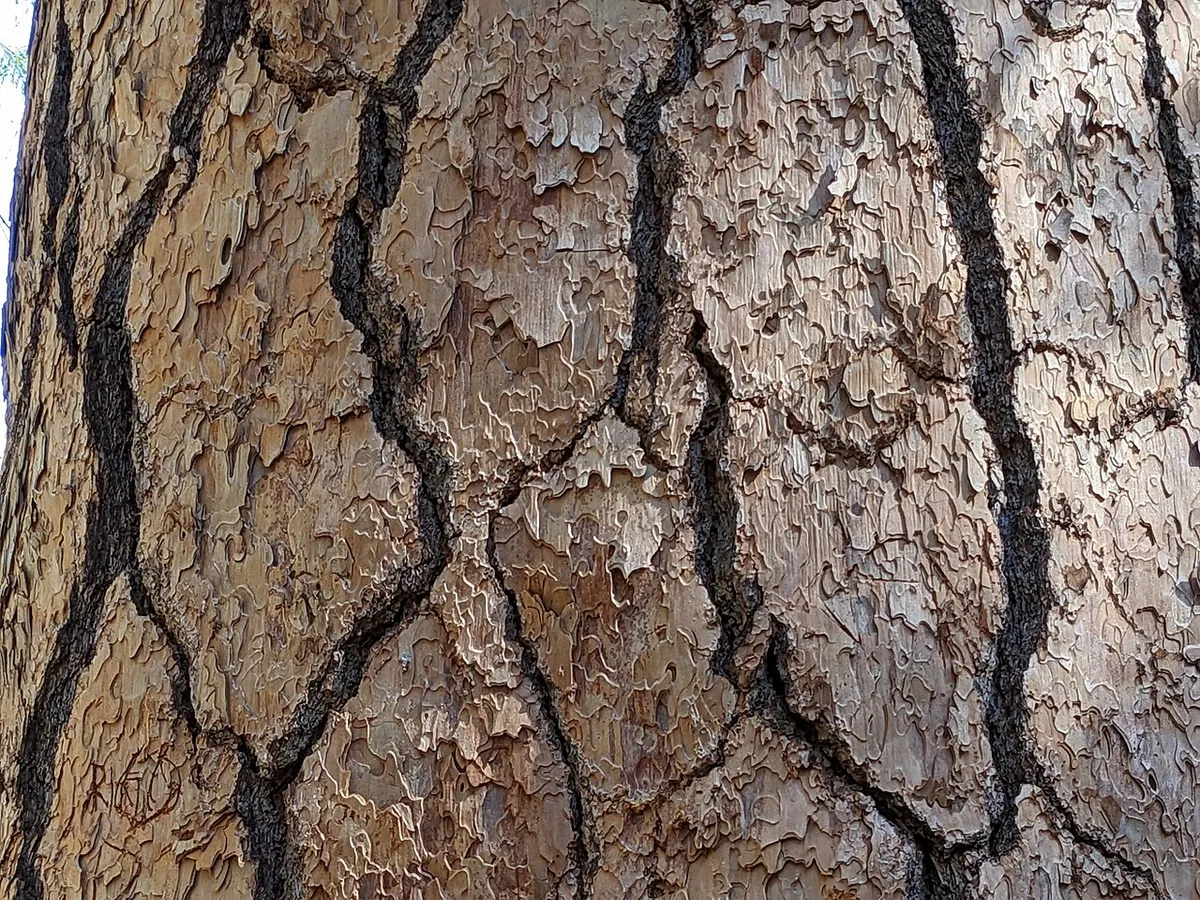
You see it in contemporary landscapes from Bellingham to the Salem area: a tall, narrow conifer reaching 60 to 100 feet at maturity, distinguished by that distinctive warm-toned bark visible from the street. Ponderosa pine is having a moment in regional plantings. Nurseries are propagating it more widely, partly driven by climate adaptation interest and partly by the aesthetic pull of cinnamon-colored bark that develops character with age.
The problem is simple. Most people who plant ponderosa pine underestimate what it actually needs to thrive here on the wet side of the Cascades. This is an east-side native that diverges sharply from its home range, and the consequences show up in disease progression rather than drought stress. You do not get limited by heat and dryness; you get limited by moisture and fungal pathogens your native conifers handle routinely. This guide covers what ponderosa pine does well in your climate, what actually kills it here, and how to site it correctly so you end up with the tree you wanted rather than a declining specimen that frustrates you for two decades.
The Tree
Ponderosa pine (Pinus ponderosa) is a conifer in the Pinaceae family, native to the interior west from British Columbia south to Mexico, and east to North Dakota and Texas. The species dominates vast forest stands in the rain shadow east of the Cascades, thriving in drier, well-drained soils and zones receiving 20 to 30 inches of annual precipitation. It is the state tree of Montana and the second-tallest pine species in North America behind only the sugar pine.
Mature trees reach 60 to 100 feet tall and 20 to 25 feet wide, with a pyramidal to conical crown that broadens slightly with age. Young ponderosa pines have dark brown to black bark, rough and scaly. As the tree matures, the bark transitions to warm yellowish-brown or cinnamon color, divided into large, flat, scaly plates separated by black or purple crevices. This distinctive bark becomes unmistakable once you know it: mature trees stand out in any forest or landscape by color alone.
The needles are long, 5 to 10 inches, bundled in threes (occasionally twos), crowded densely on the branchlets with sharp apexes. They are dark yellowish-green and give off a distinctive resinous, turpentine scent when crushed. The cones are oval to egg-shaped, 3 to 6 inches long, light reddish-brown to gray-brown, with straight prickles. Cones mature in two to three years and shed seeds readily.
Cold hardiness ranks at USDA Zone 3a, which means frost never limits you in the wet side. The Dixie cultivar, bred for warmer southern ranges and hardy only to Zone 6, should be avoided in the Puget Sound region. All other ponderosa pines in cultivation are either species material or unnamed seedlings. When selecting nursery stock, verify the origin of seed. Coastal or Pacific region seed lots are preferable to Rocky Mountain sources because they carry slightly more adaptation to maritime climates, though differences are not dramatic.
The Case for Planting One
Ponderosa pine is a sun-demanding species. Plant it in full sun, eight hours minimum, and it will grow reliably. Unlike some conifers that tolerate partial shade, ponderosa pine declines noticeably in shade. If you are considering a site that does not get full sun, stop here and choose a different conifer suited to your actual light conditions.
In its native range, ponderosa pine shows genuine drought tolerance once established, a trait that appeals to gardeners interested in climate adaptation and reduced irrigation. The question is what “established” means on the wet side. In drier climates, that window opens within two to three years. In this region, expect the pathway to extend significantly longer, and the route to reach it is hazardous.
Growth rate is medium, not fast. You do not get rapid space-filling from a young ponderosa pine. In the Kent area (Zone 8b), a young tree in favorable conditions will add roughly 12 to 18 inches per year. Plan on 20 to 30 years to reach 40 feet, and 40 to 50 years to approach full size. This is a tree you plant for someone else’s benefit more than your own.
The aesthetic appeal is legitimate. That flaking, warm bark develops genuine character. The columnar silhouette fits contemporary landscape design. Texture is fine and open, allowing sight lines through the canopy. For regional gardeners interested in native species, ponderosa pine carries cultural weight: it is the iconic tree of the eastern Cascades and high desert forests, and growing it on the wet side represents a deliberate choice to engage with climate adaptation rather than fight against it.
What the Wet Side Throws at It
Regional specificity matters here. National conifer guides will list ponderosa pine problems that barely register in maritime climates, and they will miss entirely the diseases that actually kill trees in these conditions.
The Moisture-Driven Disease Complex
Ponderosa pine susceptibility documentation lists 26 diseases in PNW literature. Not all threaten established trees in landscapes. Several do, and they cluster around one core problem: excessive moisture at the bark and in the soil. The most significant diseases in maritime landscapes are needle casts, root rots, and the bark beetles that arrive after stress. The PNW Plant Disease Management Handbook identifies these three disease complexes as the primary constraints on ponderosa success in wet-side gardens.
Your native western hemlock and Douglas fir evolved under the Puget Sound’s 50+ inches of annual precipitation, concentrated across fall through spring. Ponderosa pine evolved in areas receiving 20 to 30 inches, concentrated in spring snowmelt. When you move it to a landscape that stays wet for months, you create conditions where fungal diseases flourish and soil pathogens find susceptible roots. This is not a minor complication; it is the defining constraint on the wet side.
Lophodermium and Lophodermella Needle Cast
These fungal pathogens rank as the most prevalent needle cast diseases on ponderosa pine in the PNW. Both overwinter on infected needles and release spores during wet conditions in spring. You will notice discoloration starting in late winter and early spring: yellow to reddish-brown spots gradually spreading across individual needles until entire needles die. Cornell’s forestry research documents these symptom patterns consistently in field trials. Heavily infected trees show premature defoliation and ragged, thinned canopies by mid-summer.
Young trees and recently transplanted specimens are most vulnerable. Needle cast severity correlates directly with prolonged leaf wetness. The worst years bring wet springs with frequent rain or high humidity. If your ponderosa pine is planted in a spot that collects cold air or stays perpetually damp in spring, needle cast will arrive and persist. You have to accept that reality rather than fight it with fungicides year after year.
Site selection is your primary prevention. Choose the highest, most exposed position available. Afternoon sun exposure helps dry the canopy after rain or dew. Prune lower branches to increase air circulation through the crown. Do not plant in low spots or drainage swales. Never use overhead irrigation in summer, and time any watering (when needed) for early morning to minimize leaf wetness during warm daylight hours. For severe infections, copper fungicide applied before spring bud break can reduce disease severity, but approach this as a temporary management tool, not a permanent solution. Apply it in February, before spore release.
Armillaria Root Rot
Armillaria ostoyae, commonly called honey mushroom, is a wood-decay pathogen spreading through soil and dead root material. It is present in many the Puget Sound region soils and causes persistent chronic decline in ponderosa pines, particularly in heavy clay with poor drainage or in sites where the tree is kept consistently wet.
Infected trees show gradual crown thinning, sparse needle growth, and eventual branch dieback over several years. You may notice white or yellowish mycelial growth under the bark of affected roots or the root collar, though this often goes undetected until decline is advanced. Armillaria does not kill fast; it kills persistently. Once a tree is infected, no fungicide stops the process. Management is entirely cultural. Prevent infection rather than fight it after the fact.
Ponderosa pine in this region absolutely requires well-drained soil. If you have heavy clay, amend the planting site aggressively with compost and gravel to improve drainage. Create a mound or raised planting area if necessary. Do not water established trees unless drought conditions are genuinely severe (more than eight weeks without rain). Prune lower branches to improve air circulation at the base of the crown. Remove any nearby dead wood or stumps that could harbor the pathogen.
Bark Beetles: Mountain Pine Beetle, Sequoia Pitch Moth, and Others
Healthy ponderosa pines resist bark beetles effectively. Weakened trees invite them. Moisture stress, Armillaria infection, needle cast, or any condition that thins the canopy makes a tree attractive to bark beetle colonization. Once beetles establish, they tunnel through the phloem, girdling the tree progressively from inside. The tree dies crown section by section. By the time you see obvious damage (blue-stained wood, pitch tubes, dead foliage scattered across the crown), the tree is already lost. Research from the USDA Forest Service demonstrates that preventive cultural practices reduce bark beetle colonization by more than 80 percent on susceptible species.
Prevention is absolute. Maintain site drainage, prune for health and structure, minimize supplemental watering once the tree is established. Monitor for early warning signs: sparse needle growth, crown thinning, scattered branches of dead foliage. Scout the trunk and lower branches in summer for pitch tubes (small conical accumulations of resin) or sawdust around the base. If you see pitch tubes, beetles have arrived and the tree is likely unrecoverable. Consult a certified arborist for assessment. Chemical control of bark beetles is not reliable in arboricultural settings; your only real option is prevention through cultural practices.
Root Rots: Phytophthora and Heterobasidion
Both Phytophthora and Heterobasidion establish in poorly drained soils. Phytophthora thrives in saturated conditions and causes necrosis of fine roots and the root collar. Heterobasidion is a decay fungus colonizing stumps and dead wood in the soil, eventually moving into living roots. Both result in gradual decline that mimics Armillaria: thinning crown, sparse growth, progressive branch dieback over years. Research in the PNW literature shows that root disease symptoms typically don’t manifest until three to five years after infection begins.
Site selection and drainage management prevent infection. Ponderosa pine cannot tolerate compacted, poorly drained soil. If you have a heavy clay site with standing water in winter or spring, ponderosa pine is not a good choice. Select a different conifer adapted to those conditions. If you are committed to ponderosa pine, you must create drainage infrastructure: raised beds, amended soil mixes, or French drains to pull water away from the root zone. This is not optional.
Cankers and Twig Blight
Various canker pathogens and Sirococcus shoot blight can affect ponderosa pine, particularly on young trees or trees stressed by poor siting. Cankers appear as sunken, discolored areas on the trunk or branches, often with resin weeping. Twig blight causes dieback of new shoots and premature needle drop. These are typically symptoms of an underlying site or stress problem rather than primary pathogens you need to fear on a well-sited tree.
Prune out dead and dying branches. Do not apply wound dressing. Disinfect pruning tools between cuts if moving between trees. Address the underlying site stress (drainage, light, pest pressure) that allowed the canker to establish.
Siting Strategy: The Path to Success
Ponderosa pine on the wet side works only if you make deliberate siting choices. These choices determine success or failure more reliably than any other factor.
Choose the highest, sunniest spot in your landscape. Full sun is non-negotiable. Eight hours minimum, with afternoon exposure preferred to help dry the canopy after rain. Test the site in summer; if it feels warm and exposed, it will work.
Amend the planting site aggressively for drainage. The typical clay on the wet side requires substantial improvement. Remove clay to a depth of 18 to 24 inches and a width of 4 to 5 feet around the tree’s planting location. Replace it with a mix of 40 percent compost, 30 percent coarse sand or gravel, and 30 percent native soil. This sounds extreme, but on clay-dominated sites, it is the difference between a tree that thrives and one that declines over a decade. Raise the tree slightly above grade if possible, creating a gentle mound so water sheds away from the root collar.
Space it for air movement. Do not plant ponderosa pine in the center of a dense planting. Give it room. If you have multiple specimens, ensure at least 20 to 30 feet between trees. This spacing allows afternoon sun penetration and wind circulation through the crown.
Plant in spring (April to May) or early fall (September to early October). Spring planting gives the tree a full growing season to establish roots before winter. Fall planting in early September can work but is riskier in this region’s extended wet season. Avoid planting in late fall or winter.
Stake minimally. Use a single flexible stake for the first two years only. Excessive staking weakens the tree and prevents development of a strong root system. Proper staking provides lateral support but allows the trunk to move slightly in wind. Remove stakes at the two-year mark.
Mulch conservatively. A 2-inch layer of coarse wood chips placed 6 inches away from the trunk helps regulate soil temperature and moisture. Avoid piling mulch against the trunk, which invites bark rot and rodent damage.
Post-Planting Care and Monitoring
Years One and Two: Establishment Phase
Ponderosa pine needs supplemental water during the first two growing seasons. Water deeply once weekly during the growing season (May through September), provided there is no significant rain that week. “Deeply” means soaking the root zone to 12 to 18 inches; light, frequent watering is counterproductive. In dry years, you may need to water twice weekly. In normal years with adequate spring and early summer rain, you may skip watering weeks.
Monitor the foliage closely in spring. Needle discoloration or early needle drop in May and June suggests either needle cast disease or root stress. Needle cast shows spotting and browning. Root stress from Armillaria or root rot shows yellowing needles and sparse new growth. If you see needle cast symptoms, apply copper fungicide in February before the problem accelerates. If you suspect root rot, improve drainage immediately by checking soil moisture and reducing supplemental watering.
Prune sparingly during establishment. Remove only dead or obviously diseased wood. Do not thin the crown. Do not remove lower branches. The tree needs full foliage to build root mass and develop vigor.
Years Three and Beyond: Transition to Independence
Reduce supplemental irrigation substantially after year three. On the wet side, ponderosa pine needs supplemental water only during documented drought (more than eight weeks without rain). In normal years with 30 to 50 inches of precipitation, established ponderosa pines should not need irrigation at all. Overwatering established trees invites the very root diseases you are trying to prevent.
Begin structural pruning in years two to four. The goal is developing a strong, single leader and branch structure that resists storm damage. Remove any branches competing with the leader. Remove lower branches gradually, particularly those less than 8 inches in diameter, to open the crown and improve air circulation. Do this pruning during dormancy (December through January), not during the growing season. Never remove more than 25 percent of live foliage in a single year.
Monitor for bark beetles and needle cast annually. Scout the trunk and lower branches in summer for pitch tubes or sawdust. Look for needle discoloration and defoliation in late spring. Early detection is essential because these problems accelerate quickly. If you catch them in year one or two, you have options. By year three or four, options disappear.
Avoid creating wounds. Do not use wound dressing. Do not install hardware or permanent stakes. Do not plant directly adjacent to the trunk. Bark wounds and hardware create entry points for pathogens and bark beetles.
Regional Context: Eastern and Western Cascades
Ponderosa pine performs dramatically differently depending on which side of the Cascades you are gardening. East of the Cascades (Ellensburg, Cle Elum, Bend, Spokane), ponderosa pine thrives in drier conditions with minimal management. The tree found its home there. West of the Cascades, in the Puget Sound lowlands, ponderosa pine works only with deliberate site selection and cultural practice. This is not a failure of the tree. It is recognition that you are moving it well outside its natural range and accepting responsibility for that choice.
If you are planting ponderosa pine because you love the aesthetic and the region’s connection to the interior west, plant it knowing you are making a long-term commitment to site management and monitoring. If you are planting it as drought insurance or climate adaptation, understand that it does not demonstrate significant drought tolerance until year five or later, and that the path to resilience is paved with careful drainage management, not just water reduction.
Year-Round Checklist
| When | What | Why |
|---|---|---|
| Apr - May | Spring planting: prepare site with amended, well-drained soil | Establish strong root system during growing season. Site preparation is the single most important factor. |
| May - Sep | Water deeply once weekly during establishment (Years 1-2) | Build root mass. Skip weeks with significant rain. |
| May - Sep | Monitor foliage for needle cast symptoms | Early detection allows copper fungicide application before disease advances. |
| May - Aug | Scout for bark beetles: check for pitch tubes on trunk and large branches | Early detection of beetle activity is critical. Once beetles establish, recovery is unlikely. |
| Dec - Jan | Dormancy pruning: remove competing leaders, lower branches, dead wood | Build structure and improve air circulation. Never prune during growing season. |
| Feb | Copper fungicide application if needle cast symptoms detected | Target Lophodermium and Lophodermella spore release before spring growth. |
| Sep - Oct | Fall inspection: check bark health, foliage color, needle condition | Identify problems before winter and plan intervention for spring. |
| Year 3+ | Reduce supplemental watering to drought periods only (8+ weeks without rain) | Overwatering established trees invites root diseases. |
| Ongoing | Monitor site drainage and improve if pooling occurs | Drainage is prevention for the majority of ponderosa pine problems on the wet side. |
This article is a reference document in the hortguide.com knowledge base. The Ponderosa Pine plant profile links to it, and Field Brief advisories reference it when ponderosa pine disease or pest conditions activate in maritime regions. All disease and pest management recommendations are based on regional extension research and horticultural practice. Always read and follow pesticide label directions.
Sources
Disease and pest management:
- WSU HortSense
- PNW Plant Disease Management Handbook
- PNW Insect Management Handbook
- USDA Forest Service
Plant descriptions and cultivar data:
- Oregon State University Landscape Plants Database
- Missouri Botanical Garden Plant Finder
- UC Davis Conifer Collection
Research:
- Cornell University Department of Natural Resources
- Pacific Forestry Centre (Canadian Forest Service)