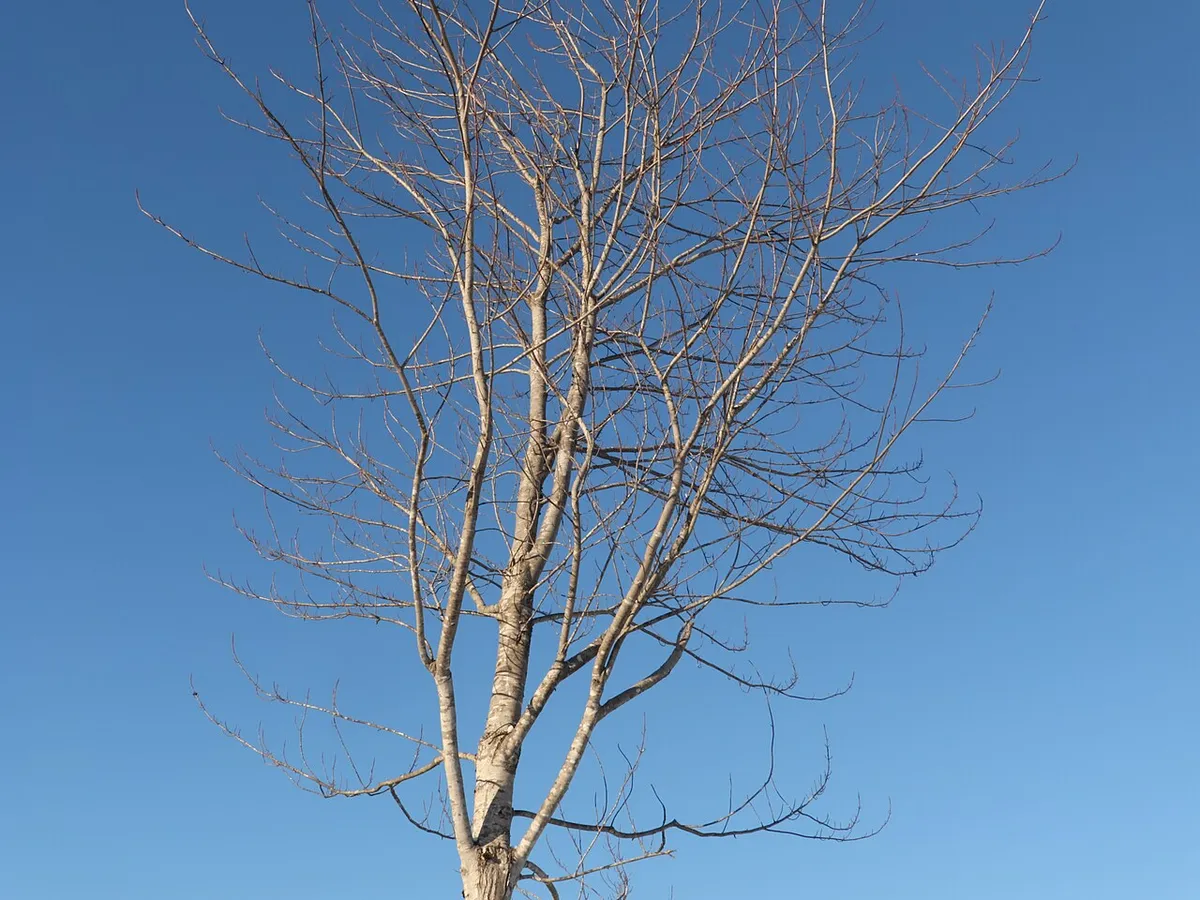
The tree crews are going to tell you to cut it down. They will show you the scraggly form, the short lifespan, the way it colonizes every disturbed site as if the land belongs to it. They will call it a weed tree, point to the alder flea beetles and tent caterpillars, and recommend you replace it with something “more permanent.” They will be wrong about what matters.
Red alder (Alnus rubra) is the pioneer species that rebuilds your landscape after disturbance. It is the tree that moves nitrogen from the atmosphere into soil that has been depleted. It is the species that creates conditions for every other native plant that comes after it. The clearing crews remove it because it grows fast and dies young and looks messy while it is doing the work. But the work is the only reason those better-looking trees will ever grow in that soil at all.
Understanding red alder means understanding what it does ecologically, not just what it looks like. It means seeing past the short lifespan and the moderate pest problems to recognize that the tree is designed, by evolution, to fix what your land broke. If you have one on your property, you face a choice: work with its ecology or fight it. That choice matters more than you probably think it does.
The Tree
Red alder belongs to the family Betulaceae, which it shares with birches and true alders. The genus Alnus contains thirty species worldwide; red alder is the largest and commercially most important of the North American alders.
The form is ascending to spreading, typically reaching 40 to 60 feet in height across Western Washington, with a potential maximum of 90 feet in old-growth settings. The crown is open when young, becoming more compact and rounded with age. The trunk is often slightly curved or eccentric. If you are expecting a formally upright tree, red alder will disappoint you. If you are expecting a tree to look like a tree is supposed to look, you are thinking of something else.
The bark is smooth and remarkably white, particularly on younger trees and branches. As the tree ages, the bark darkens slightly to light gray, but it never becomes the rough, furrowed bark you see on most mature deciduous trees. This smooth, pale bark is colonized by lichens throughout the Pacific Northwest, giving mature alder trees a speckled, pale appearance that some people find attractive and others find ghostly. The young twigs are angled slightly and have a waxy bloom that gives them a gray-green cast.
The leaves are alternate, simple, ovate to obovate, two to ten centimeters long, with a blunt or rounded apex and a doubly-serrate margin. The upper surface is dull green and often slightly waxy. The undersurface is distinctly paler. In autumn, the leaves turn yellow-green to yellow, then brown, and drop by November in Western Washington. The fall color is notably muted; do not plant red alder for autumn display.
The flowers are unisexual, appearing on the same tree, in catkins. The male catkins are elongated and hanging, appearing in late winter and persisting through early spring. The female catkins are shorter, more compact, dark red, and appear alongside or just after the male flowers. If you look at a bare red alder in February and March, you will see both the dangling male catkins and the small dark female cones. The flowers are wind-pollinated. There is no showy bloom period.
The fruit is a small, hard cone, one to two centimeters long, maturing from green or reddish in summer to brown by fall. Each cone contains numerous small, winged seeds. When the cones open in autumn and winter, the seeds disperse by wind, traveling surprising distances. This is how red alder colonizes every disturbed site within a mile of any existing tree.
The root system is shallow but vigorous. Red alder is a nitrogen-fixing tree; its roots form symbiotic relationships with a nitrogen-fixing bacterium of the genus Frankia. These bacteria colonize root nodules, structures on the roots that resemble miniature brains. Within these nodules, the bacteria convert atmospheric nitrogen into a form the tree can use. This symbiosis is the reason red alder matters ecologically, and the reason you should think carefully before removing one.
Red alder is native to coastal regions from southeastern Alaska to northwestern California, occurring from sea level to 600 meters elevation. It thrives in the oceanic and marine west coast temperate climate that defines the Pacific Northwest. The species is found in Zones 4b through 8b, though it is most vigorous and reliable in Zones 5b and 6b, which is to say, throughout Western Washington.
One cultivar occasionally appears in the nursery trade: ‘Pinnatifida’, which has deeply lobed and dissected leaflets, giving it a fern-like appearance. It is rare, it is harder to source than standard red alder, and it offers no practical advantage to the landowner. Stick with the species if you are sourcing trees from a nursery.
What It Does Well
Red alder’s primary ecological role is nitrogen fixation. This is not a secondary benefit or a nice side effect. This is what the tree exists to do.
In the post-glacial landscape of the Pacific Northwest, raw mineral soil and recently disturbed land contain little available nitrogen. Plants need nitrogen to grow; they cannot access atmospheric nitrogen directly. The soil microbiota can access it through complex pathways, but those pathways take decades to establish and are extremely slow. Red alder solves this problem. The Frankia bacteria in its root nodules take atmospheric nitrogen, convert it to ammonium, and make it available to the tree. When the alder’s leaves drop and decompose, and when the tree eventually dies and its wood breaks down, that nitrogen enters the soil. Trees that grow after the alder do not have to wait for slow microbial cycling. The alder has done the work.
This is why red alder is the pioneer tree. It arrives first on landslides, in clearcut harvests, along eroding streambanks, and on any other disturbed land. It grows fast because nitrogen is no longer the limiting factor. As it grows, it shades the ground, stabilizes the soil with its roots, produces leaf litter that enriches the soil, and changes the site from pioneer conditions to conditions suitable for shade-tolerant species. Within thirty to fifty years, the alder dies and falls. Douglas-fir or western redcedar or Sitka spruce has established in the understory by then. The alder is gone, but the nitrogen it fixed is still there, in the soil, supporting the trees that replaced it.
If you have a disturbed site, a streambank prone to erosion, or land that was recently cleared or graded, red alder will stabilize it faster than almost any other tree. The stabilization comes from root growth that happens within the first two to three years, not from waiting for a forest canopy to develop. Alder roots grip loose soil immediately.
Red alder has an interesting relationship with water. It is a pioneer species that colonizes floodplain forests, stream margins, and wetland edges. It is a water-loving tree that reaches its greatest size in wet sites. However, it is not a true wetland tree in the sense of requiring saturated soil year-round. It tolerates moist to wet soil, pH from 4.3 to 7.3, and a range of soil conditions from sandy to heavy clay, provided drainage is not completely restricted. Surprisingly, once established, red alder shows moderate drought tolerance. This is a tree adapted to the Pacific Northwest climate: wet in winter, sometimes dry in summer, variable in every year.
For wildlife, red alder provides significant value. The catkins and seeds are eaten by goldfinches and other seed-eating birds, particularly in winter and early spring. The leaves support various lepidopteran species, though none appear to be alder specialists in the way that some insects are oak specialists or birch specialists. Deer browse saplings and young growth. The loose, smooth bark provides poor habitat for cavity-nesting birds; alder does not develop the deep fissures that woodpeckers use. However, the open canopy structure and the early leaf emergence (late March to early April in Western Washington) provide early forage for returning migratory birds before other trees have leafed out.
The pale bark on mature alders, particularly when colonized by lichens, creates a visually striking contrast in a dark conifer forest. For photographers and artists, a mature red alder in old-growth forest context is worth understanding. Some landscape designers have begun to deliberately retain alders in managed settings for this visual quality, pushing back against the clearing-crews-remove-them assumption.
Red alder has considerable commercial value, particularly in the Pacific Northwest. It is the only hardwood exported commercially from Western Washington and Oregon. The wood is light-colored, fine-grained, and machines well. It is used for furniture, cabinetry, plywood veneer, and particleboard. Importantly for the region’s culture, alder wood is preferred for smoking salmon. The flavor imparted by alder smoke is distinctive, mild, and widely preferred across Pacific Northwest tribes and communities. If you see smoked salmon marked as “alder-smoked,” the smoke came from burning alder wood, likely sourced from mills and timber harvesters in the region.
What Goes Wrong
The short lifespan is not a failure; it is the design specification. Red alder is built to live 40 to 60 years, maximum 100 years in exceptional circumstances. A 60-year-old red alder that dies and falls is not a damaged tree; it is a tree completing its biological role. Understand this and the “short lifespan” problem stops being a problem.
However, several pests and diseases do warrant understanding if you have red alders on your property.
Alder Flea Beetle
The alder flea beetle (Altica ambiens, formerly Phyllotreta albionica) is a leaf-eating beetle whose larvae feed on young foliage in spring. The adult beetles overwinter in leaf litter and emerge when alder buds break, typically late March through April in Western Washington. The beetles feed on newly emerged leaves, creating small, irregular holes and stippling patterns on the foliage.
The damage appears dramatic but is typically not serious. A heavily infested alder will lose a portion of its developing foliage, but the tree usually recovers and grows through the damage by June. The beetles have predators; if you leave the ecosystem intact, the populations are usually self-regulating.
What you see: small, irregular holes in emerging leaves, scattered across the canopy, in April and May. The leaves appear to have been pepper-shot with a fine BB gun.
What you can do: almost nothing, and you usually should not. The flea beetle damage is cosmetic. If your alder is heavily infested and you find the appearance intolerable, you can prune out the most affected branches to remove feeding habitat, but this is aggressive intervention for a cosmetic problem. Broad-spectrum insecticides kill natural enemies as effectively as they kill flea beetles, making the problem worse in future years. Accept some leaf damage. The tree does.
Tent Caterpillar
The forest tent caterpillar (Malacosoma disstria) is a gregarious, silken-tent-building caterpillar that defoliates deciduous and mixed-deciduous forests throughout Western Washington. It feeds on alder, aspen, birch, oak, willow, and other deciduous species. Population dynamics are cyclical; every ten to fifteen years, populations explode and severe defoliation occurs. Between those years, the populations are low and damage minimal.
When populations are high, the caterpillars are unmistakable. They build silken tents in branch crotches and foliage. The caterpillars feed within and around the tents, defoliating branches and sometimes entire trees. A heavily defoliated alder in a tent caterpillar year is a stark sight. The canopy opens completely. All the leaves are gone.
However, red alder is resilient to complete defoliation. The tree will flush new leaves within a few weeks, using stored carbohydrates. The second flush is smaller and takes more energy from the tree, but the alder survives. In the same landscape, oaks, birches, and aspens also defoliate and also regrow.
What you see: silken tents in the branch crotches and among the foliage in May and June. Caterpillars, sometimes hundreds of them visible at once, feeding on nearby leaves. Complete or near-complete defoliation of some branches or entire canopies in bad years. The tents persist through the summer even after the caterpillars have pupated and left.
What you can do: nothing that is worth the effort on a landscape tree. The caterpillar populations are self-regulating. Parasitoid flies and wasps keep them in check between outbreaks. In the peak years, you can prune out tents and smash caterpillars if you have the patience, but the tree will recover whether you intervene or not. Broad-spectrum insecticides are counterproductive; they kill parasitoids and predators that keep populations low in non-outbreak years.
If the tent caterpillar is a problem in your specific neighborhood in a specific year, the infestation will pass. The population crashes as suddenly as it exploded. In the meantime, your alder will survive.
Phytophthora Collar Rot
Phytophthora cinnamomi (also called root rot, red rot, or collar rot) is an oomycete, a fungus-like pathogen that thrives in saturated or poorly-drained soil. In Western Washington, Phytophthora collar rot primarily affects alders growing in sites with permanently or seasonally saturated soil, particularly in areas where drainage has been impeded by soil disturbance or development.
The disease causes a dark lesion or canker at the root collar, the transition zone between roots and trunk. The infected tissue becomes soft and discolored, often dark brown or blackened. The canker girdles the tree, cutting off water and nutrient transport. The tree declines, loses vigor, and eventually dies. The disease is progressive and there is no cure.
What you see: a dark, soft canker at the base of the tree, at or just above the soil line. Darker discoloration of the bark, sometimes with oozing sap. Progressive decline of the tree, with crown thinning, leaf discoloration, and eventual death. The problem is more common in poorly-drained sites, particularly in areas where grade has been raised over the tree’s roots or where soil has been compacted.
What you can do: prevention is the only strategy. Do not plant red alder in sites with permanently saturated soil unless you are actively attempting wetland restoration. If you have an existing alder showing signs of collar rot, and the rot is localized to one side of the collar, you can carefully remove soil from around the base of the tree and allow the affected area to air-dry. This sometimes arrests the disease. If the canker has girdled more than half the circumference of the trunk, the tree is doomed. Remove it and plant something else in a better-drained location.
Armillaria
Armillaria ostoyae and related Armillaria species are decay fungi that colonize wounded or stressed wood. On red alder, Armillaria is primarily a problem in trees that are already in decline from other causes, or in wood that has been damaged by pruning, storm damage, or disease. The fungus causes white, stringy decay that progresses slowly through the wood. On living trees, Armillaria is more of a secondary problem than a primary pathogen.
What you see: white, stringy, mycelial growth on the trunk or large branches, often at the base of a dead branch or at a pruning wound. Soft, decayed wood when you probe a suspicious area. Sometimes a ring of golden-brown mushrooms at the base of the tree (these are fruiting bodies).
What you can do: remove dead wood and branches promptly. Keep the tree healthy and vigorous through appropriate water management and site care. Avoid making large pruning wounds. If Armillaria is actively decaying the main trunk and the decay is extensive, consult an arborist about whether the tree is worth keeping. Decayed wood is weakened wood; if the decay is severe, the tree becomes a hazard.
Nectria Canker
Nectria is a fungus that causes branch cankers on alders and many other hardwoods. The cankers appear as local areas of bark death and tissue necrosis, usually on branches and occasionally on small stems. The affected branch gradually dies back as the canker expands. Nectria is more of a problem on stressed trees and is nearly incidental on healthy, vigorous alders.
What you see: a localized canker on a branch, appearing as a sunken, dead area of bark. The branch beyond the canker may die back progressively, or may persist with reduced vigor. The canker does not expand rapidly.
What you can do: prune out affected branches during dormancy. If the canker is on the main stem or a major scaffold branch, consult an arborist. On secondary branches, pruning is the standard management. Make your cut at the branch collar, not flush to the trunk, and do not paint the wound. The tree’s own compartmentalization is more effective than wound dressing.
Drippy Dieback
Drippy dieback is a syndrome characterized by branch dieback and progressive canopy thinning on alders and some other hardwoods in the Pacific Northwest. The affected branches show progressive dieback, starting at the branch tips and moving toward the main stem. The crown thins gradually, and the tree becomes increasingly open. Multiple pathogens have been implicated, including various Nectria species, Armillaria, and other fungi, but no single causal agent has been definitively identified.
The disease appears to be more common in stressed trees and in trees growing in suboptimal conditions. It is not as prevalent in the Puget Sound region as it is in drier climates, but it occurs.
What you see: progressive branch dieback in the outer canopy, moving inward. Gradual crown thinning over a period of years. Branches that are completely dead while the rest of the tree appears healthy.
What you can do: prune out dead branches. Keep the tree healthy through appropriate watering and site care. Improve air circulation in the canopy by removing crossing and inward-growing branches. If the dieback is severe and progressive, affecting the main stem as well as branches, the tree may be too compromised to keep. An arborist can assess.
Additional Pests and Diseases
Red alder hosts numerous other pests and diseases in the broader literature: leafminers, various leaf spots, alder sawflies, scale insects, and others. Most of these are incidental in Western Washington. They do not cause significant damage in typical landscape conditions. The species that matter are listed above.
The Pioneer Question
This is the decision point. If you have red alder on your property, you face a choice: work with its ecology or remove it.
If you remove it, you are choosing to eliminate the nitrogen-fixing benefit and the ecological work the tree does. You are choosing to replace rapid stabilization of a disturbed site with slower establishment of other species. You are choosing aesthetics and permanence over ecological function.
If you keep it, you are accepting the short lifespan and the moderate pest and disease pressures that come with the species. You are choosing to let the ecological work continue. You are choosing to accept a tree that looks less formally perfect but does more biological work than any other species on the site.
Most properties in Western Washington that have red alder have it either because it arrived naturally after disturbance, or because it was planted for bank stabilization, erosion control, or streamside restoration. If you are not actively trying to stabilize a disturbed site, you might reasonably ask why you have the tree at all.
But here is the practical reality: if you cut it down, the wind will blow seeds from neighboring trees back onto your site, and red alder will return. The species is relentless about returning to disturbed sites. You can remove existing alders, but you cannot exclude the species from returning through seed dispersal. If you have multiple red alders on your property and you only want to keep one or two, selective removal is sensible. If you are trying to eliminate the species entirely, you are fighting an uphill battle.
The most practical approach is often compromise: keep one or two mature alders for ecological value and visual interest, remove others that are in high-hazard zones or directly interfering with structures. Prune to manage form and improve air circulation. Accept that the trees will decline and die in their appointed time, and plan ahead for removal or replacement when that happens.
If you are actively engaged in restoration work, streamside stability, or creating conditions for other native species to establish, red alder is invaluable. The short lifespan is an asset, not a liability. The tree does its job and gets out of the way.
Seasonal Action Summary
| When | What | Why |
|---|---|---|
| Jan - Feb | Dormant pruning to remove dead or diseased branches | Improve canopy structure and air circulation. Remove branches showing signs of canker or dieback. Prune at the branch collar; never paint wounds. |
| Feb - Mar | Monitor for tent caterpillar egg masses | Bands of brown, papery egg masses on twigs. Prune and destroy if populations are threatening, but expect populations to be self-regulating. |
| Late Mar - Early Apr | Observe bud break and leaf emergence | First buds swelling in late March, leaves fully unfurled by early April. The phenological signal of the growing season. |
| Apr - May | Peak alder flea beetle activity | Small holes in emerging foliage. Damage is cosmetic and temporary. Leaves regrow within weeks. No management usually needed. |
| May - Jun | Monitor for tent caterpillar tents and defoliation | Silken tents in branch crotches and foliage. Complete or near-complete defoliation possible in outbreak years. Trees recover with new leaves within weeks. |
| Late May - Jun | Flower and catkin drop | Male catkins drop after pollen dispersal. Female catkins develop into cones. Normal phenology, no action needed. |
| Jun - Aug | Monitor for crown thinning and branch dieback | Watch for progressive loss of foliage, dead branches, and declining vigor. These may indicate drippy dieback or other decline syndromes. |
| Sep - Nov | Cone maturation and seed dispersal | Cones turn brown and open, releasing winged seeds. Wind dispersal occurs through fall and winter. Expect seedling colonization of disturbed sites within a wide radius. |
| Oct - Nov | Remove trees if they are becoming hazardous | Red alders in high-hazard zones (over structures, over people areas, on steep slopes) should be removed before they reach decline stages. Plan ahead rather than responding to failure. |
| Year 1 | Water 1-2 inches per week through summer | Establishment watering for newly planted alders. Deep, infrequent watering is more effective than daily sprinkling. Red alder tolerates moist sites but also establishes in drier areas with supplemental water. |
| Years 2-3 | Reduce supplemental watering as roots establish | Once the tree is vigorous, you can rely on natural precipitation in most years. In extended droughts, deep water every 2-3 weeks to maintain vigor. |
| Years 10-40 | Plan ahead for replacement | Red alder is a pioneer species on a pioneer timeline. As the tree approaches age 40-50, begin thinking about succession. What will grow in the conditions this tree has created? |
| Ongoing | Monitor for pests and diseases | Flea beetles and tent caterpillars are cyclic and usually self-limiting. Collar rot, cankers, and drippy dieback warrant monitoring for progression and management. |
This article is a reference document in the hortguide.com knowledge base. Red alder plant profile links connect to this reference, and Field Brief advisories reference it when alder ecology and pest conditions activate. Disease and pest information comes from WSU HortSense, the PNW Plant Disease and Insect Management Handbooks, and the University of Washington Forest Pathology program. The ecological information on nitrogen fixation and pioneer succession is drawn from forest ecology literature and PNW Forest Service studies on post-disturbance succession. All recommendations apply specifically to Western Washington and the Puget Sound region, Zones 5b through 8b. Always read and follow pesticide label directions if intervention becomes necessary.
Sources: WSU HortSense fact sheets for Woody Ornamentals; PNW Plant Disease Management Handbook; PNW Insect Management Handbook; University of Washington Forest Pathology; Betulaceae Family overview, USDA Plants Database; Forest Succession and Pioneer Species in the Pacific Northwest, compiled from USDA Forest Service research; OSU Landscape Plants Database; Native Plant Society of Washington; Pacific Northwest Habitat Restoration Research.