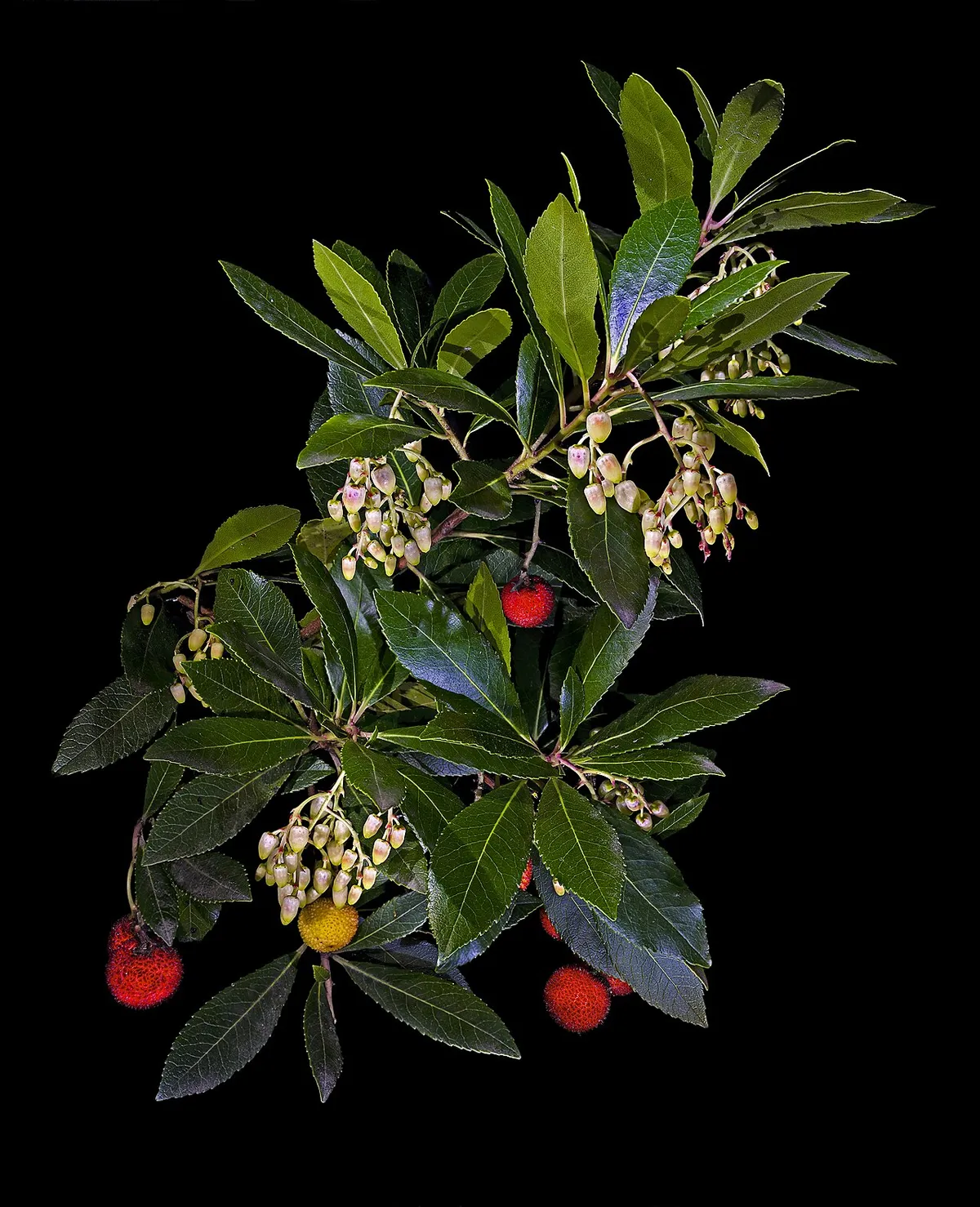
You have probably never seen one. That is the starting point for most conversations about strawberry tree (Arbutus unedo) in this region. It is not uncommon here, exactly. But it is overlooked. Nurseries stock it, landscape designers specify it occasionally, and it performs exceptionally well in our climate. Yet most gardeners have no idea what it is, what to expect from it, or why it matters.
The real gap is not in availability. It is in knowing why this tree matters more than you think. If you have ever struggled with our native Pacific madrone, fought with its drainage demands, watched it decline for no visible reason, nursed a sickly specimen along for years, then you have encountered the central reason strawberry tree belongs in your regional plant toolkit. It offers everything madrone promises: sculptural bark, refined foliage, year-round presence. It demands a fraction of the fussiness. This guide covers what strawberry tree does well, what goes wrong, and what to do about it in Zone 8b.
The Plant
Strawberry tree is a broadleaf evergreen shrub or small tree in the Ericaceae family, the same lineage that produced rhododendrons, manzanita, and blueberry. Native to Mediterranean regions and southwestern Ireland, it reaches 8 to 12 feet at maturity with a similar spread, though ideal conditions can push it considerably taller. Zone 7b hardiness means cold is not a constraint in maritime gardens.
The bark is the immediate draw. Deep reddish-brown that peels and flakes to reveal copper and tan undertones, it presents year-round interest and becomes a genuine design asset when deciduous trees stand bare. The effect works on a young sapling and improves every year.
Foliage is simple and alternate: glossy dark green on the upper surface, paler below, 2 to 4 inches long, with a finely serrated margin that reads as refined and almost leathery. It does not drop, which means your tree maintains visual structure through every season.
The flower-and-fruit display is what makes people stop and ask what they are looking at. Strawberry tree blooms in October and November when most ornamental trees have already checked out for the season. Urn-shaped flowers arrive in drooping clusters about 2 inches long, white to pale pink, slightly waxy, and sweetly scented. These flowers progress through winter as fruit, spherical arils about the size of a large pea, lipstick red, arranged along the branch in the same clusters the flowers occupied. By January and February, the same tree is hung with both flowers and ripe fruit simultaneously, creating the distinctive Mediterranean display that makes this genus worth growing. The fruits are edible, though they remain mild and astringent until fully ripe in late winter, when they drop orange-red if left unharvested.
This is a tree you choose for multiple seasons in combination: the peeling bark, the refined foliage, the unforgettable winter presence.
Why This Tree Works Here
Unlike many introduced ornamentals, strawberry tree actually thrives in the conditions that dominate this region. It accepts heavy clay soils without protest, provided drainage is adequate. This is not a wet plant, but ordinary poorly draining clay works fine here if the tree is not planted into a perched water table or a swale. Once established, it requires no supplemental irrigation through a normal summer. Year three onward, a healthy tree in full sun can go an entire growing season without a hose.
The tree also handles seasonal extremes with quiet stability. It leafs out relatively late in spring, which means late frost concerns you more on early-leafing species. It holds foliage through the entire winter, creating visual continuity when deciduous competitors have abandoned their posts completely. If you are working to maintain year-round structure in the landscape, this matters.
Strawberry tree performs in full sun to part shade. Full sun is ideal, especially in the Portland area and southern Puget Sound, where it colors most intensely. In the northern parts of this region where winter light is precious, full sun is still the best choice. Part shade works acceptably, at a slightly slower growth rate, which makes the tree useful in transition zones between understory and open areas.
The comparison to Pacific madrone (Arbutus menziesii) is worth unpacking. If you have worked with our native species, the stunning yet temperamental tree found throughout western Oregon and into southwestern Washington, you know the frustration. Madrone resents transplanting, demands perfect drainage, struggles in heavy soils, and even in ideal conditions it often declines slowly for no apparent reason. The Oregon State University Landscape Plants Database documents these cultural challenges extensively. Strawberry tree is that tree’s easygoing Mediterranean cousin. It delivers the same exfoliating bark, the same refined foliage, the same year-round visual presence. Without the temperament. This is the significant distinction. You get madrone’s appeal without spending the next three years nursing a declining tree back toward vigor.
What Goes Wrong
The literature documents 27 diseases and 29 pests associated with strawberry tree in the Pacific Northwest. Most are documented but uncommon in our climate. Monitoring matters. Intervention is rarely necessary.
Leaf Spots and Blights
Fungal leaf spot and blight are the most common disease problems, appearing in the cool, wet months from late fall through spring. Various Phyllosticta species, Pestalotipora, and fungi in the Sphaeropsis complex cause brown to dark purple spots, sometimes with yellow halos. The RHS plant guidance on broadleaf evergreens emphasizes that infected leaves eventually drop without requiring intervention in most cases.
The damage reads worse than it actually is. The tree does not defoliate entirely. It loses some proportion of its evergreen foliage, which temporarily reduces winter presence, but recovers completely when conditions dry in summer. Severe defoliation is rare except in years with exceptionally wet springs.
Prune to improve air circulation: remove interior branches that cross each other or clog the crown center during dormancy. Improve drainage around the root zone if water pools there. Remove and destroy fallen leaves before spring, as they harbor spores. If infection is severe enough to warrant treatment (more than 30 percent of foliage affected by April), apply copper fungicide at two-week intervals beginning in October. Bonide Liquid Copper or Soap-Shield (copper octanoate) carries a registered label for broadleaf evergreens. Follow label directions strictly.
Most years, you will not need to spray at all. Most years, the tree clears itself as weather warms.
Canker and Dieback
Several canker-causing pathogens attack strawberry tree, particularly Phytophthora species, the same genus that causes sudden oak death in California. UC Davis research on Phytophthora canker pathogens shows they create sunken lesions on branches and trunks, sometimes with oozing sap or discolored bark around the infection. Affected branches die back progressively from the tip. Multiple cankers can girdle a branch or even the main trunk in severe cases.
Canker infections peak during cold, wet springs when the tree is pushing new growth and pathogen pressure is highest. Susceptibility varies between individuals, though cultivar information remains sparse.
Prune out infected branches promptly, cutting at least 6 inches below any visible canker. Sterilize pruners between cuts with 10 percent bleach solution or isopropyl alcohol. Prune during dormancy (November through February) to minimize stress. If cankers recur on the same tree, consult a certified arborist about whether the tree is worth keeping or the site is inherently problematic.
Cultural control is primary here. Ensure good drainage. Do not plant in areas where water accumulates in winter. Avoid wounding bark through careless pruning or string trimmer damage. Wound dressing is optional in most years; WSU HortSense can help you determine if a high-pressure canker year warrants it.
Insects
Several insects are documented on strawberry tree but cause only minor problems in our climate.
Leafminers, notably the madrone leafminer (Phyllocnistis digna), tunnel inside leaf tissue and create pale serpentine patterns. The damage is cosmetic. The tree outgrows it. No treatment is necessary.
Aphids cluster on new growth in spring, particularly in mild springs. They excrete honeydew, which attracts ants and feeds sooty mold growth. Again, cosmetic. A hose spray dislodges aphids. Predatory insects clean up the rest by midsummer without intervention. WSU HortSense research confirms that beneficial predatory insects typically control aphid populations naturally on established plants in maritime climates.
Spider mites occasionally cause fine speckling on foliage during hot, dry summers. Misting overhead on hot afternoons helps. Predatory mites usually control populations naturally. Avoid broad-spectrum insecticides, which kill the beneficial predators.
None of these require intervention on a healthy established tree. They come and go. They cause no lasting damage.
The Real Concern: Drainage and Establishment
If anything will kill a young strawberry tree, it is poor drainage during establishment. This is not a swamp plant. It cannot tolerate standing water around its roots. Plant in a perched water table or an area where winter water pools, and the tree declines slowly through year one and two, eventually showing yellowing foliage, branch dieback, and crown rot.
Site selection trumps everything else. Full sun. Well-drained soil. That is the equation. If a spot stays wet in winter, choose a different tree. Do not try to amend the soil unless you are creating a raised planting area. The Mediterranean origin means this plant evolved for exactly the conditions you have once you stop fighting poor drainage.
Why It Deserves Your Attention
Strawberry tree is easier to grow than Pacific madrone. It has no significant pest problems that require management. It offers year-round visual interest. It does not require constant tending. It survives drought once established. It works in ordinary garden soils without complaint.
The barrier to wider use is not horticultural. It is familiarity. Most people have never seen one. Most landscape designers have not specified one. Most nurseries have not marketed it aggressively. Knowing what this tree does lets you specify something useful before everyone else discovers it.
Seasonal Action Summary
| When | What | Why |
|---|---|---|
| Sept - Oct | Site selection and planting | Full sun, well-drained soil. Young trees benefit from fall planting in Zone 8b. Avoid perched water table locations. |
| Oct - Jan (Year 1) | Establishment watering | 3-5 gallons per week if no rain for 2 weeks. Water deeply, soaking the root zone. Do not overwater. |
| Jan - Mar (Year 2-3) | Deep watering every 2 weeks | During hot/dry periods only. Established trees (Year 3+) rarely need supplemental water. |
| Nov - Feb | Structural pruning as needed | Remove crossing branches, dead wood, and poorly angled limbs. Prune during dormancy. Improved air circulation reduces disease pressure. |
| Oct - Apr | Monitor for leaf spots | Scout periodically. Remove and destroy fallen infected leaves. Prune interior branches for air flow. |
| Oct - Apr | Monitor for canker | Look for sunken lesions or branch dieback. Prune out infected tissue immediately, 6 inches below damage. Sterilize pruners. |
| Oct - Nov | Observe flower display | Document bloom timing. Note: flowers and fruit present simultaneously by January. |
| Ongoing | Watch for structural problems | Strawberry tree has good branch architecture. Structural failure is very rare if properly sited. |
This article is a reference document in the hortguide.com knowledge base. The Strawberry Tree plant profile links to it. All disease and pest management recommendations are based on regional extension research and horticultural practice. Always read and follow pesticide label directions.
Sources
Disease and pest management:
Plant descriptions and cultivar data: